Blog
A Guide to Enterprise Agentic AI
In the world of professional baseball, the flashiest plays often get the most attention, but they aren’t always what wins the championship. Speaking recently at the Suncoast Gateway 2026 Event at Oracle Stadium, Kevin Riley shared a perspective that might feel counterintuitive to tech leaders: to win at AI, you need to stop swinging for the fences and start hitting singles.
By Kevin Riley
Last week, I was privileged to speak at the Suncoast Gateway 2026 Event at Oracle Stadium, home of the San Francisco Giants. It was an amazing mix of payer and provider execs and startup companies all working together to think through the problems that limit a better healthcare system.
In keeping with the theme of baseball, I spoke about AI in healthcare - but from the perspective of treating your AI strategy like “Moneyball”. If you have not read the book or seen the movie, in essence, the General Manager of the Oakland As knew he did not have the budget to buy big-name hitters to help his team succeed. He had to find a way to win based on what he could afford and what would move the needle.

Let's start with some Spring Training on AI.
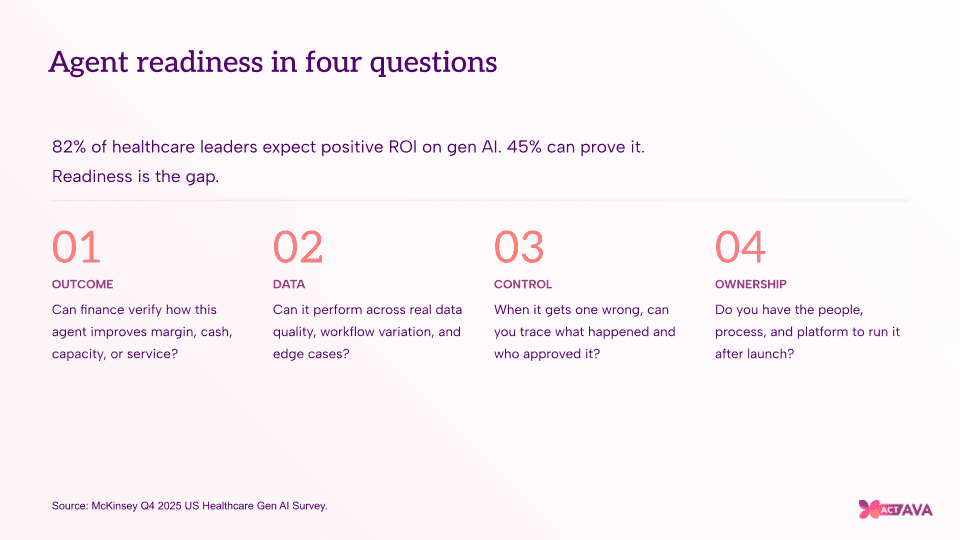
As I asked the audience at the event, I am asking each of you to picture yourself as Billy Beane (the manager mentioned above). Instead of competing against the Yankees' payroll, you're competing against the US Healthcare System. Your budget is limited, and every move you make matters. We have this great new rookie in artificial intelligence - a tool that can make your good employees better, and your best ones outstanding. But while McKinsey says 70-80% of our work can be “agentified,” MIT says 95% of AI pilots fail. This brings us to a key question: How do we realize AI's potential while overcoming its challenges?
How many of you use ChatGPT or an equivalent for personal use? This is what’s called Generative AI. Here, you type a question or prompt, and it generates text, images, or other content in response. Generative AI creates new material based on your request, but does not take further action on your behalf.
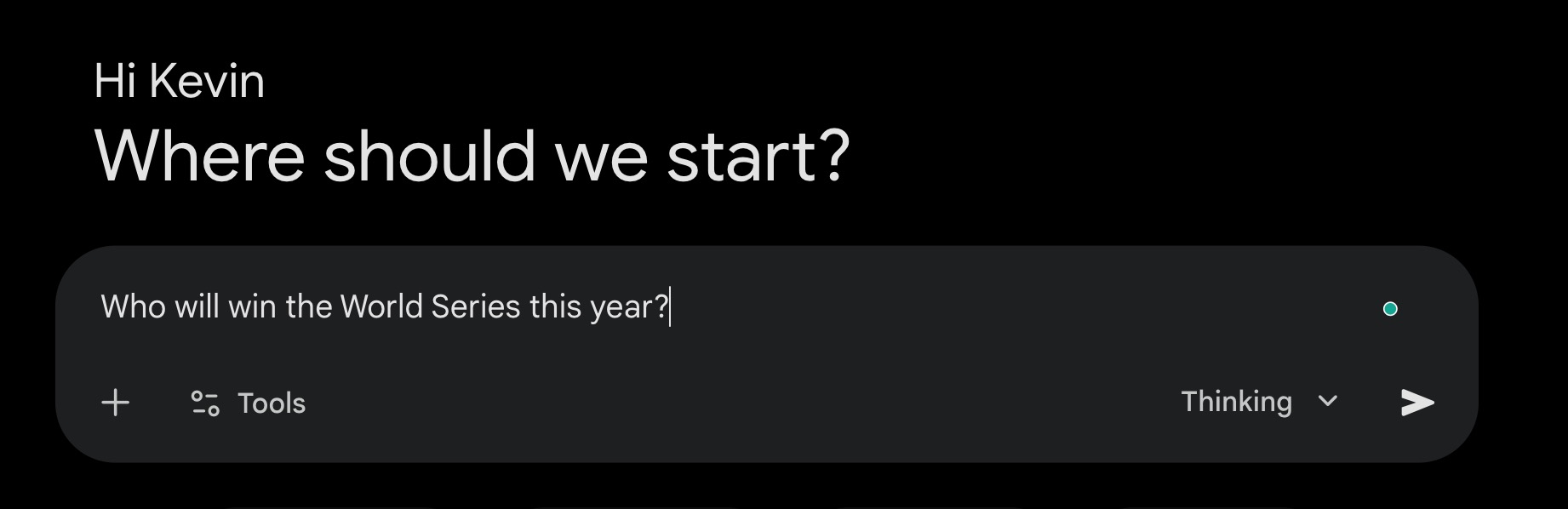
How many of you are using a Chat interface (maybe Google Gemini or Claude Co-Work) for personal productivity in your jobs? This is still 𝗚𝗲𝗻𝗲𝗿𝗮𝘁𝗶𝘃𝗲 𝗔𝗜. It summarizes emails, drafts code, and cures "blank page syndrome." It is useful — but static.
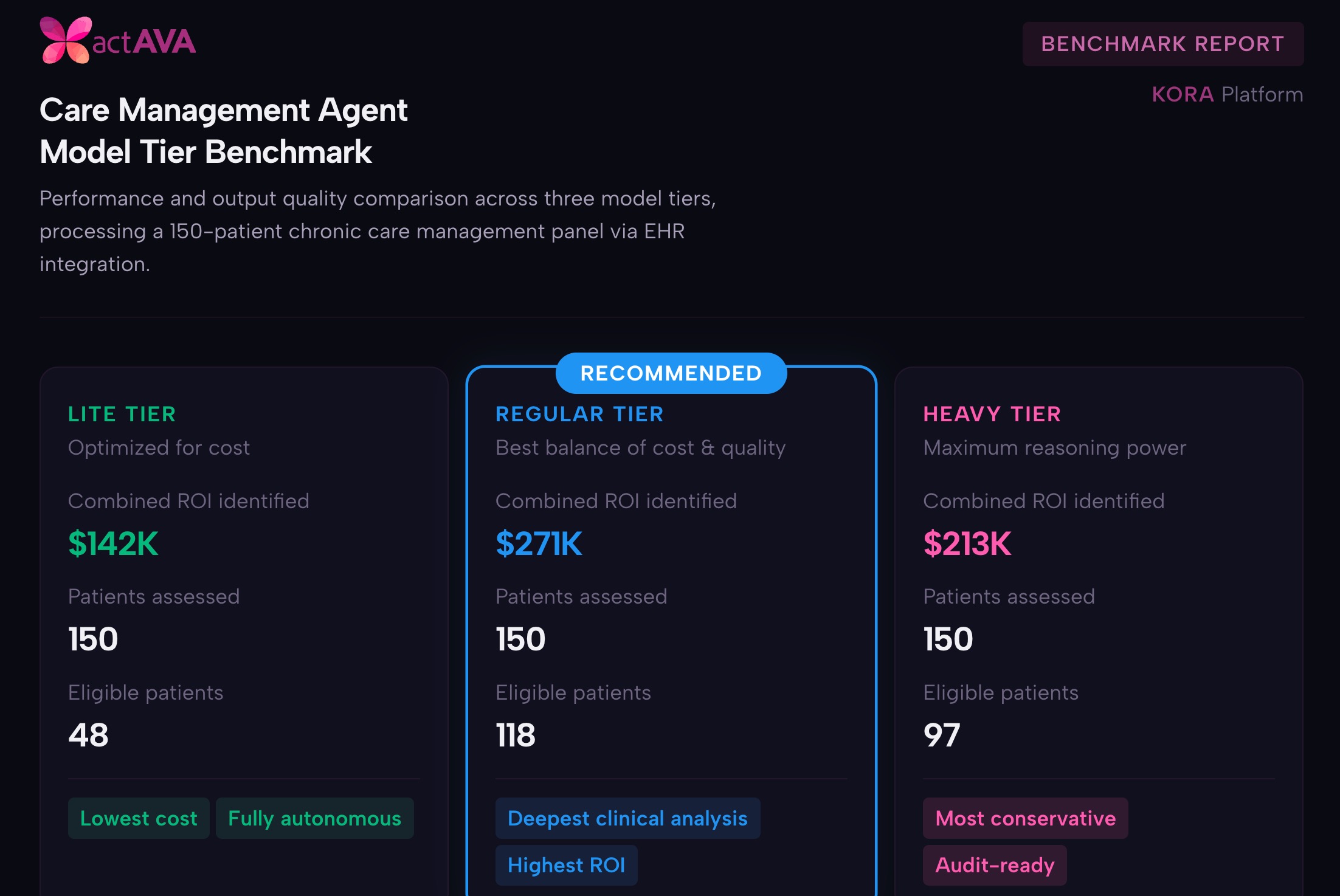
How many of you are working with AI agents that act semi-autonomously, where you stay 'in the loop'? This is Agentic AI. Instead of giving the AI just prompts, you assign it goals. The agent plans, executes tasks, and self-corrects as necessary, often completing a series of steps or workflows for you. You can see an example of our Care Chat Agents with A/B testing on various Anthropic model levels below.
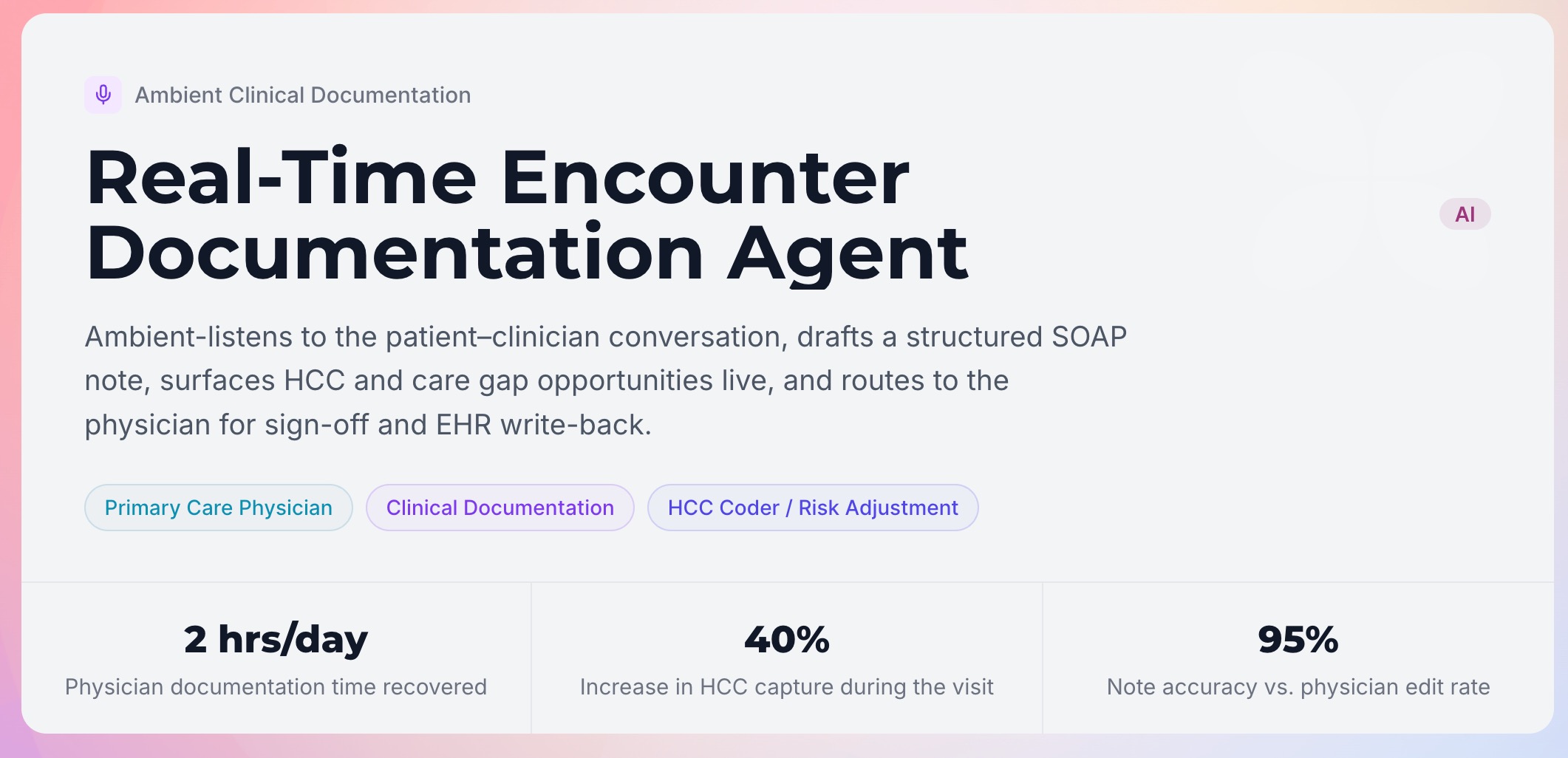
How many of you have agents working fully (or nearly) autonomously for your company? This is also Agentic AI. These agents can handle tasks across various modalities, such as voice or text, and operate independently by reasoning through the steps required to achieve a targeted outcome. You can see a bunch of these on our website here.
How many of you are using AI predictively, where it can run simulations, challenge your assumptions, and surface blind spots? This goes beyond task completion: it’s called Co-Agentic Intelligence. In this approach, AI thinks with you, collaborates, and provides insights that inform your decisions, instead of just doing the work at your direction.
Now that we have a basis of definition about what an AI agent is and the role it can play on your team, let's get to the game!
Homeruns Help, but Basehits Win the World Series.
It’s a familiar truth in baseball: Home runs are rare and thrilling—they energize the fans. But steady success comes from the plays that consistently put players on base.
The A's won because Billy Beane saw what everyone else ignored. The real objective was not flashy hits—it was getting on base. The entire league chased triples and home runs. Billy quietly built a lineup of singles hitters. Singles make up about two-thirds of all base hits. They are responsible for most runs scored, league championships, and World Series titles. While a single hit may not seem spectacular, they compound.
In AI, the same insight applies. Everyone is racing toward the next huge, spectacular home run. For you, this might mean Co-Pilots on every desktop. Or your first EHR-based agents. Or buying a new point solution for prior authorization or revenue-cycle management. Or hiring a big management consultant to rethink your ontology.
In truth, these big moves can help get your team (and the fans) excited about AI. Co-Pilots can achieve marginal improvements in employee productivity in certain problem spaces, but this method of play is short-sighted. You can't build your AI line-up and rotation around these big moves. First, MIT showed us that big moves have high failure rates and leave teams disheartened and leaving.
However, McKinsey showed us there are so many more places to hit a single. And, the healthcare organizations that win championships are the ones grinding out consistent, reliable, on-base production.
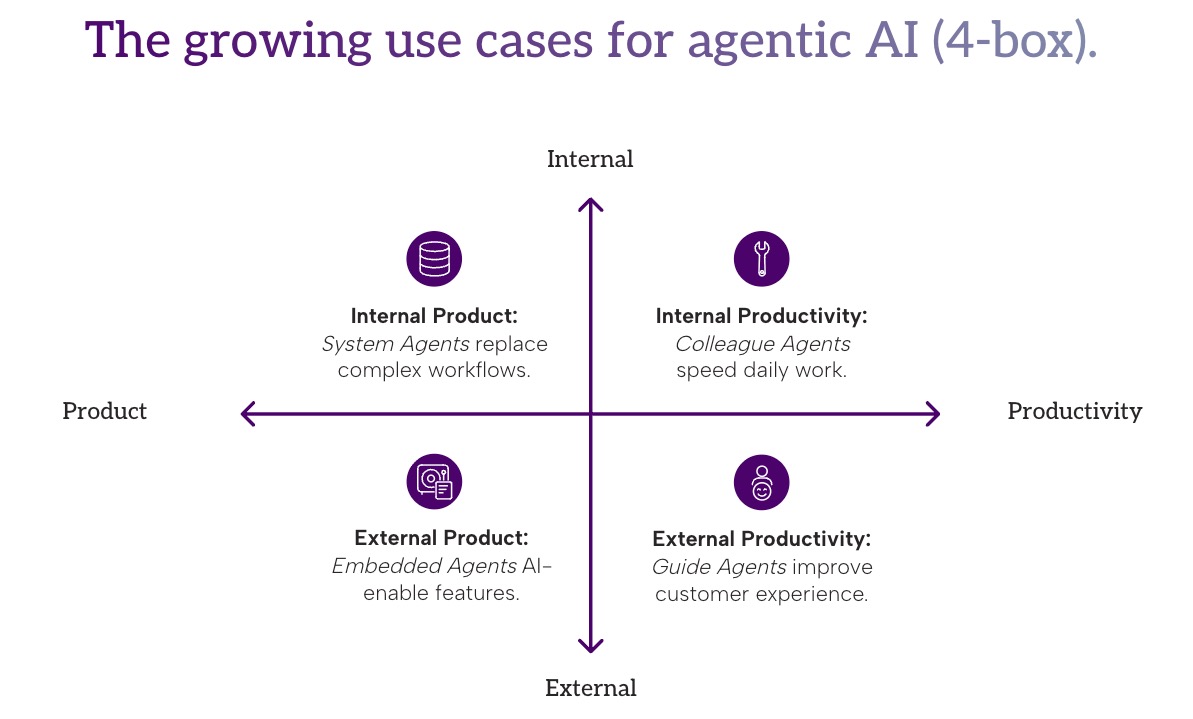
In AI, I call this the Agentic Flywheel.
Getting (more of) Your Team to Hit Singles
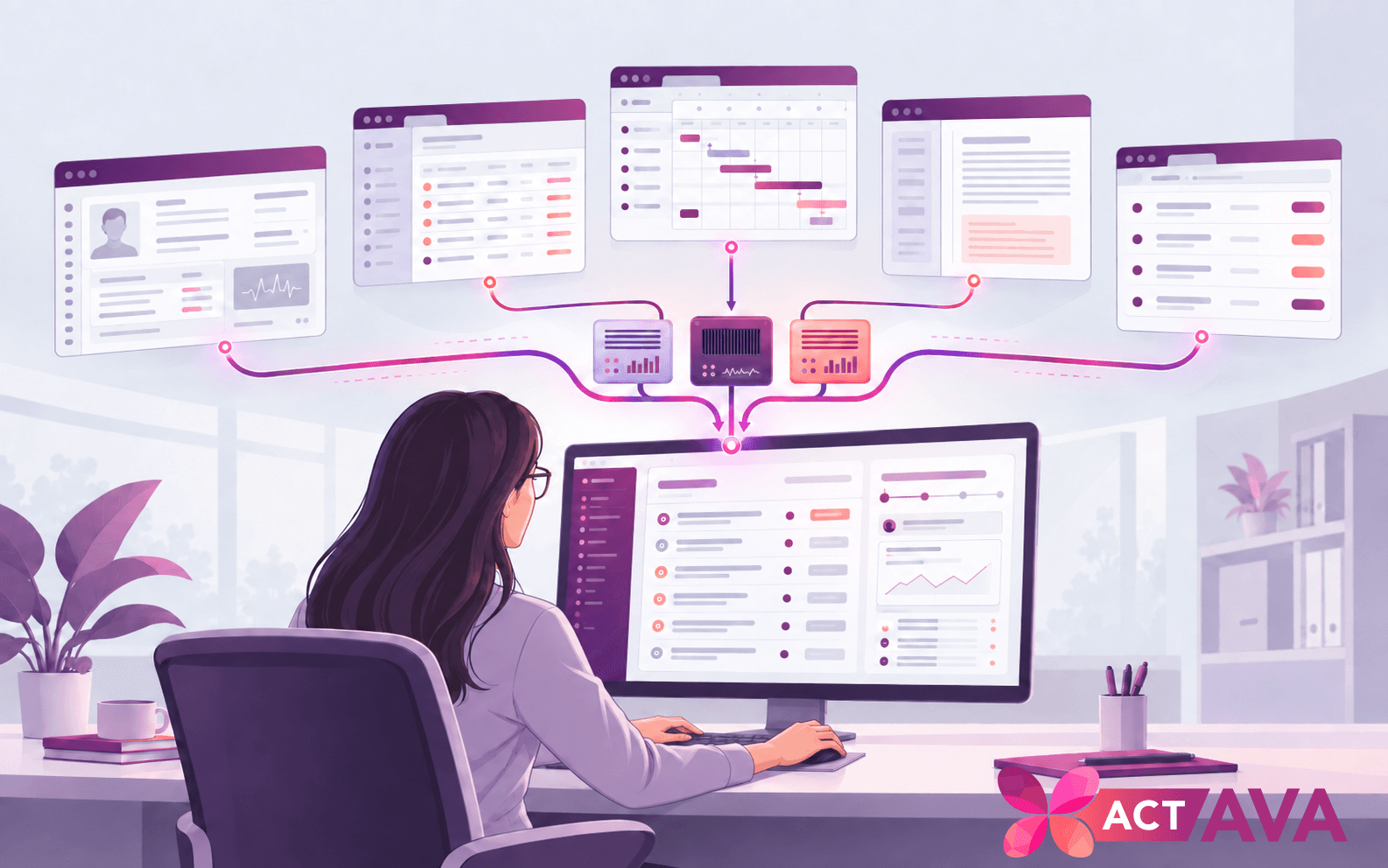
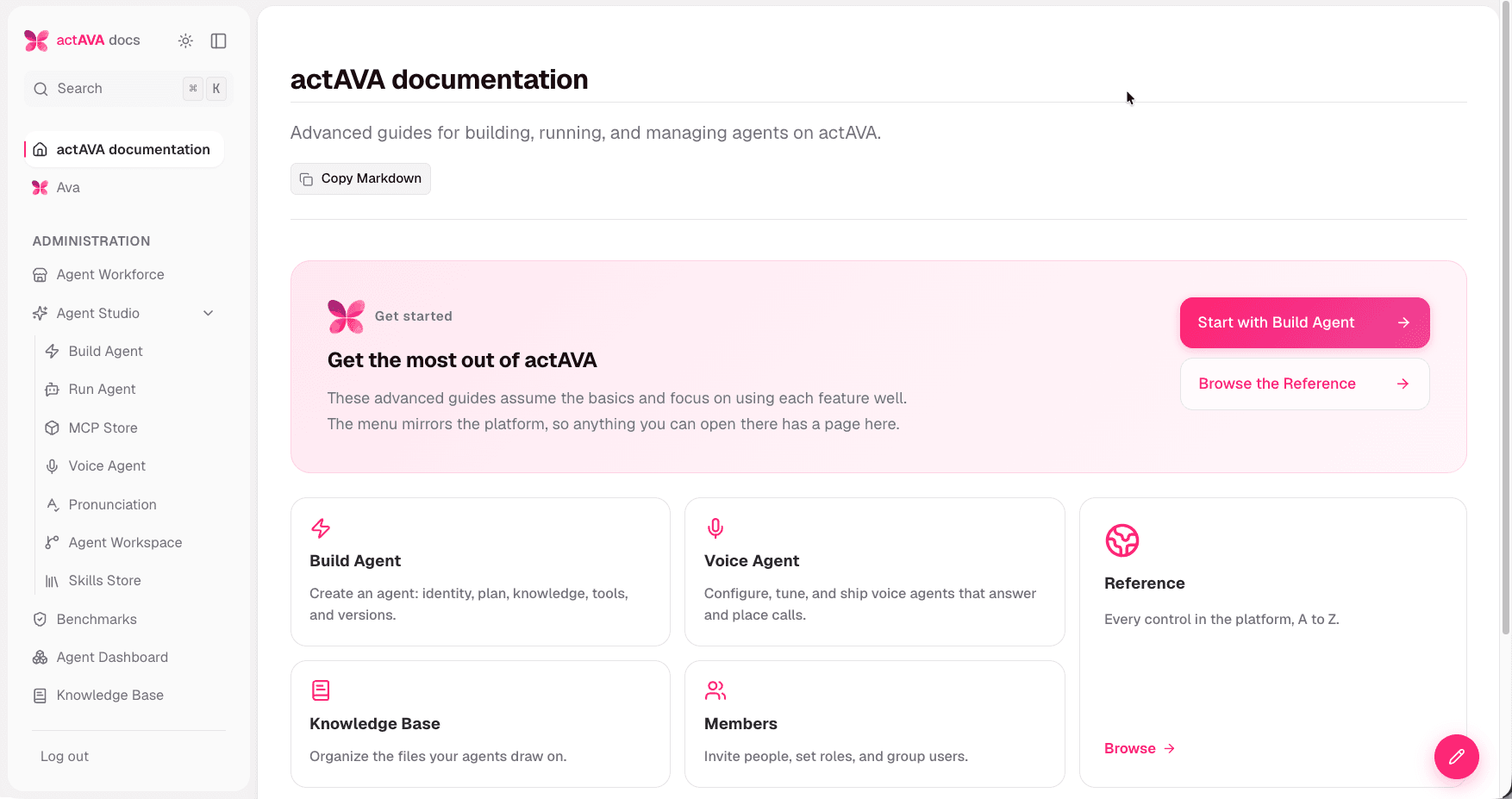
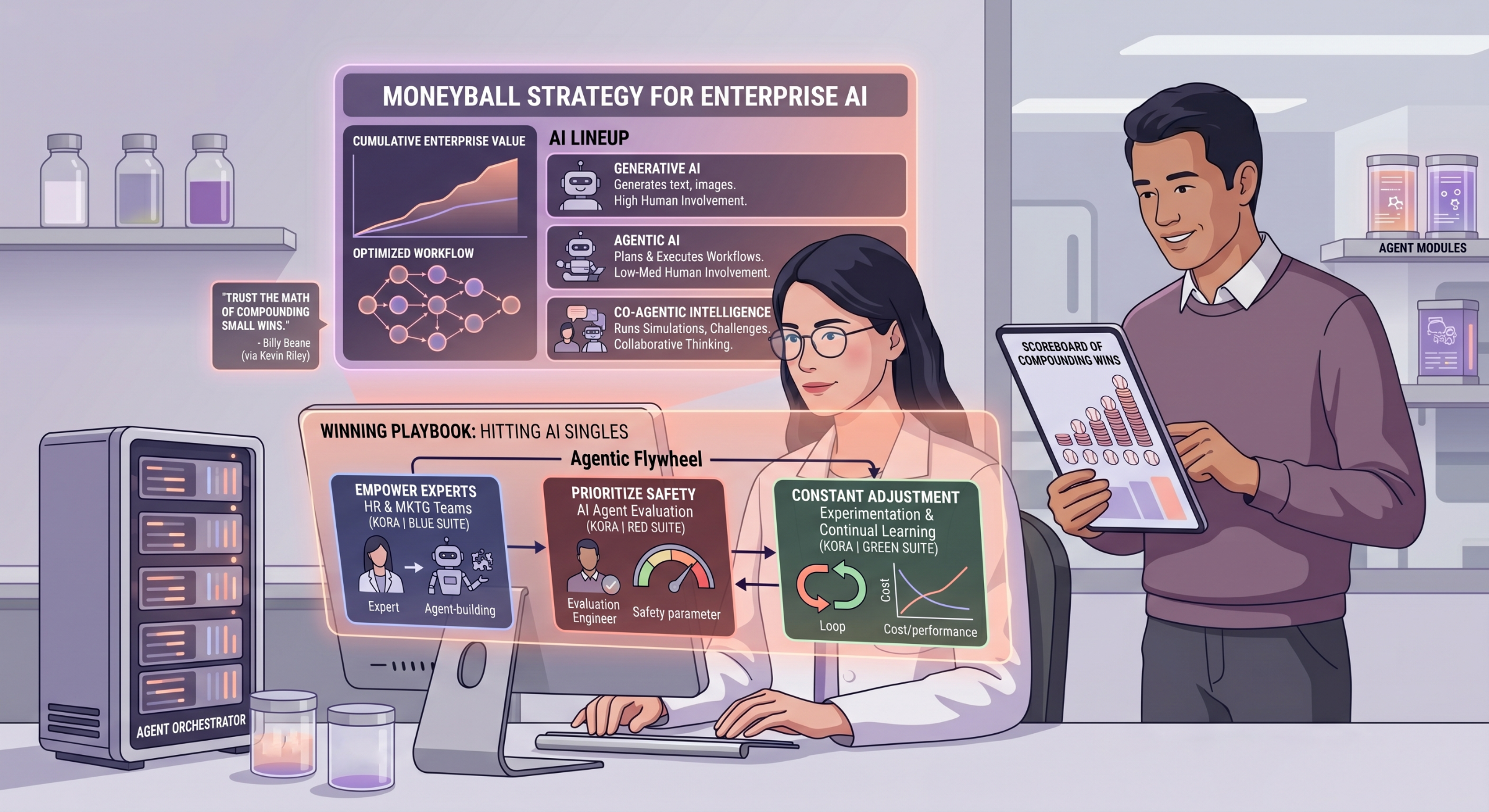
Think of all the work, large and small, being done by your human co-workers today. Each workflow—from HR to marketing to sales to patient engagement—is a candidate for “agentification.” You already have teams who know their processes well. With the right tool, they could remake them as semi- or fully autonomous agents. Built into our KORA | BLUE Agent building + orchestration suite, we give our customers their own AI Agent Engineering team. Now your process experts can easily “hit their own singles”.
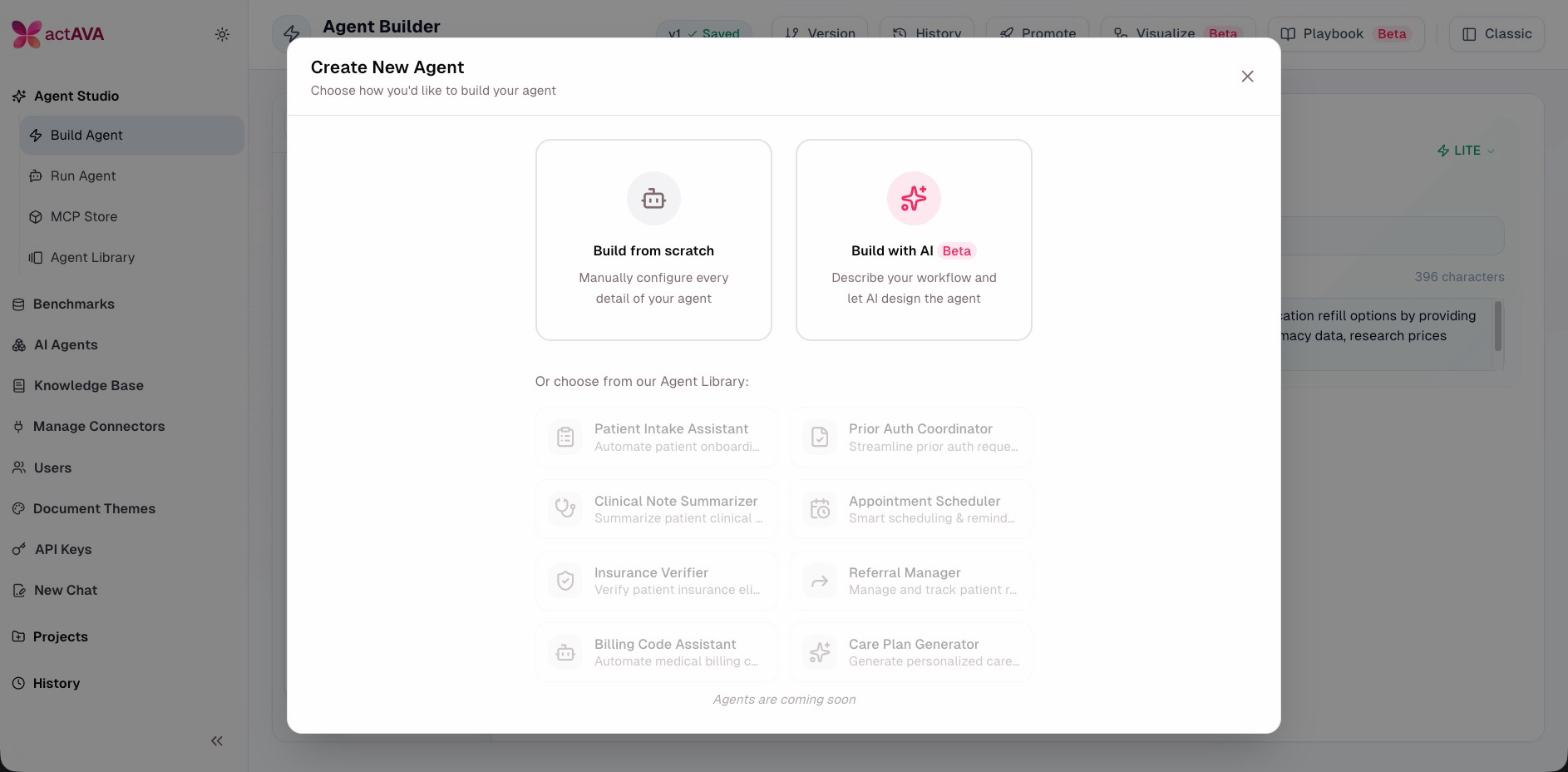
For example, every incremental improvement to human operations, like an HR agent for Family & Medical Leave, is hitting an AI single. I was on a call with the Chief People Officer at a standout hospital on the West Coast, and she asked me, “Wait, my team can do this? We can own our own roadmap.”
YES - I said. You could start from ACTAVA’s Library of HR agents and modify them as you wnat, or make your own through a wizard.
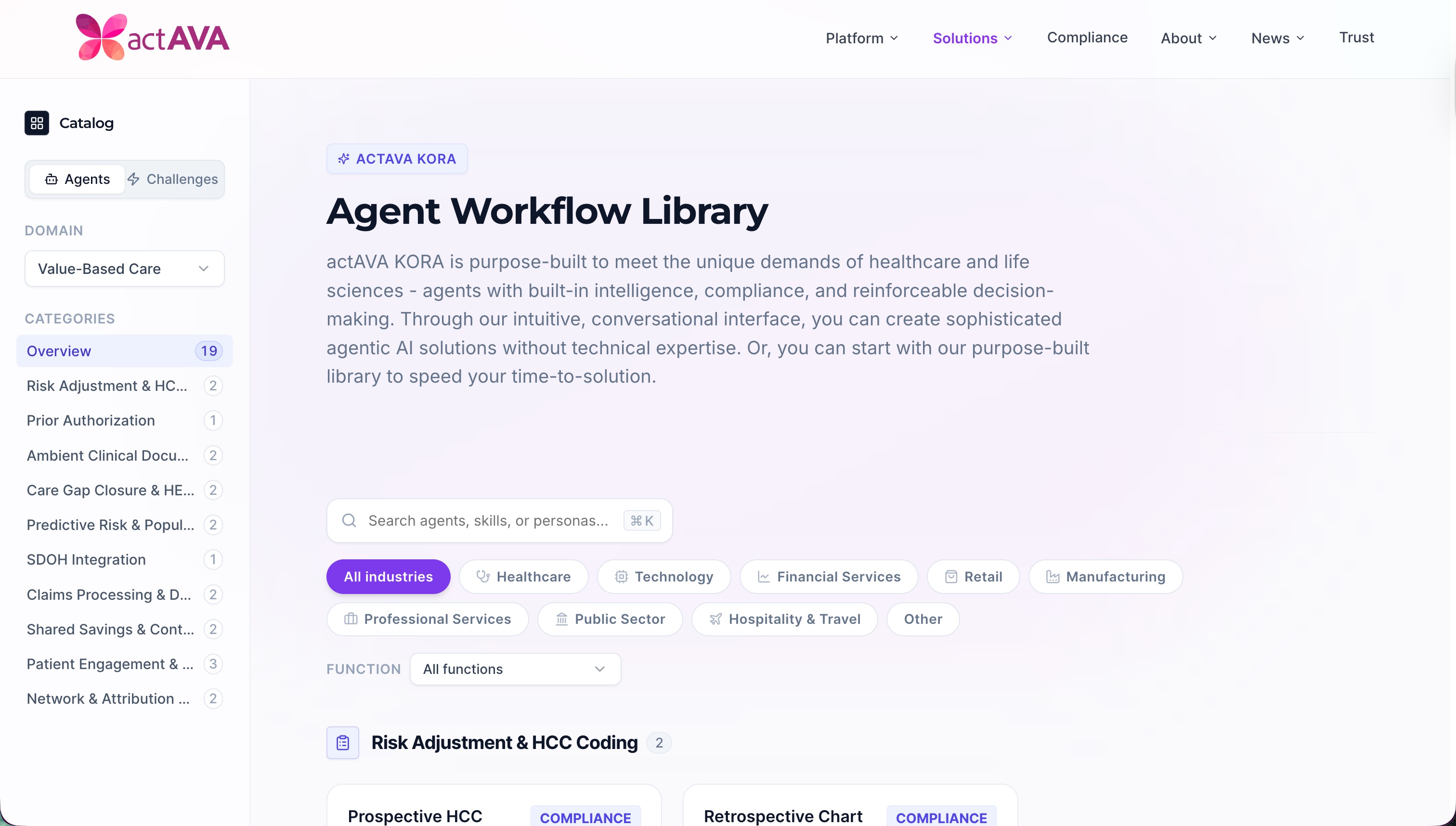
For every workflow iteration that becomes more reliable, accurate, and useful, it hits another AI “single”. I spoke with a C-suite leader at an international hospital system and asked if he wanted to own his own agent development lifecycle. He said yes, and that his teams were eager to try to own as much of it as possible. Before starting, he wanted assurance that everyone would build the same way in any problem area. I heard similar feedback from an executive at a world-class destination hospital system.
In each case, I explained that all they needed was an orchestration layer, like ACTAVA, between their systems of record and their AI models. Such a layer is designed to build, test, and reinforce agents in a controlled development harness.
And even bunting (meaning doing short, small projects to get your feet wet) until the “homerun” finally arrives is also a good “singles” mentality. I was on with one of the AI leaders at a top 3 academic hospital and world-renowned teaching facility, who is also a practicing physician running his own department. He did not want to wait for his company’s EPIC rollout to “someday reach his area” when he knew he could fix his referral leakage problem with agents today. Even a move that may be replaced gets the teams moving around the bases.
Playing Within the Rules (Doing It Safely)
What you do want to avoid as a player is trying to turn every single one into a triple, gambling on legs you may not have, and reading situations wrong. These runners get thrown out at third, often. An AI team that cuts corners on safety is not aggressive. They are reckless.
The best baserunners know when to push and when to hold. Safety is not timidity; it is situational intelligence. A runner on second with no outs is worth more than one thrown out at third. Responsible AI development protects your runners and keeps innings alive. You remain in the game in the late innings, when lesser teams have exhausted their lineup.
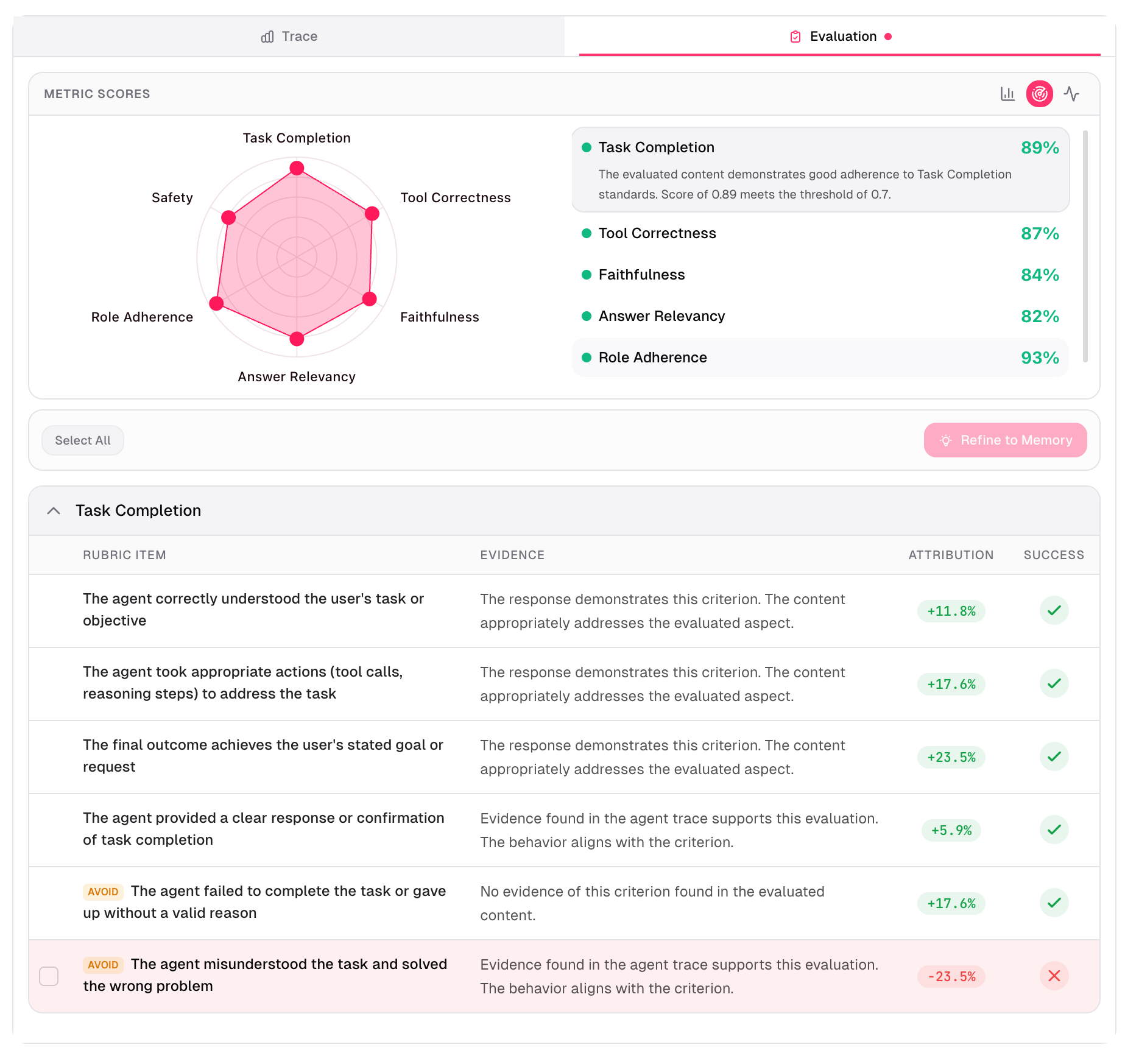
In ACTAVA, we included the role of AI Agent Evaluation Engineer in our KORA | RED testing & remediation suite. This role, which is considered an evolution of traditional Quality Assurance (QA), involves evaluating the behavior, performance, safety, and reliability of autonomous AI systems.
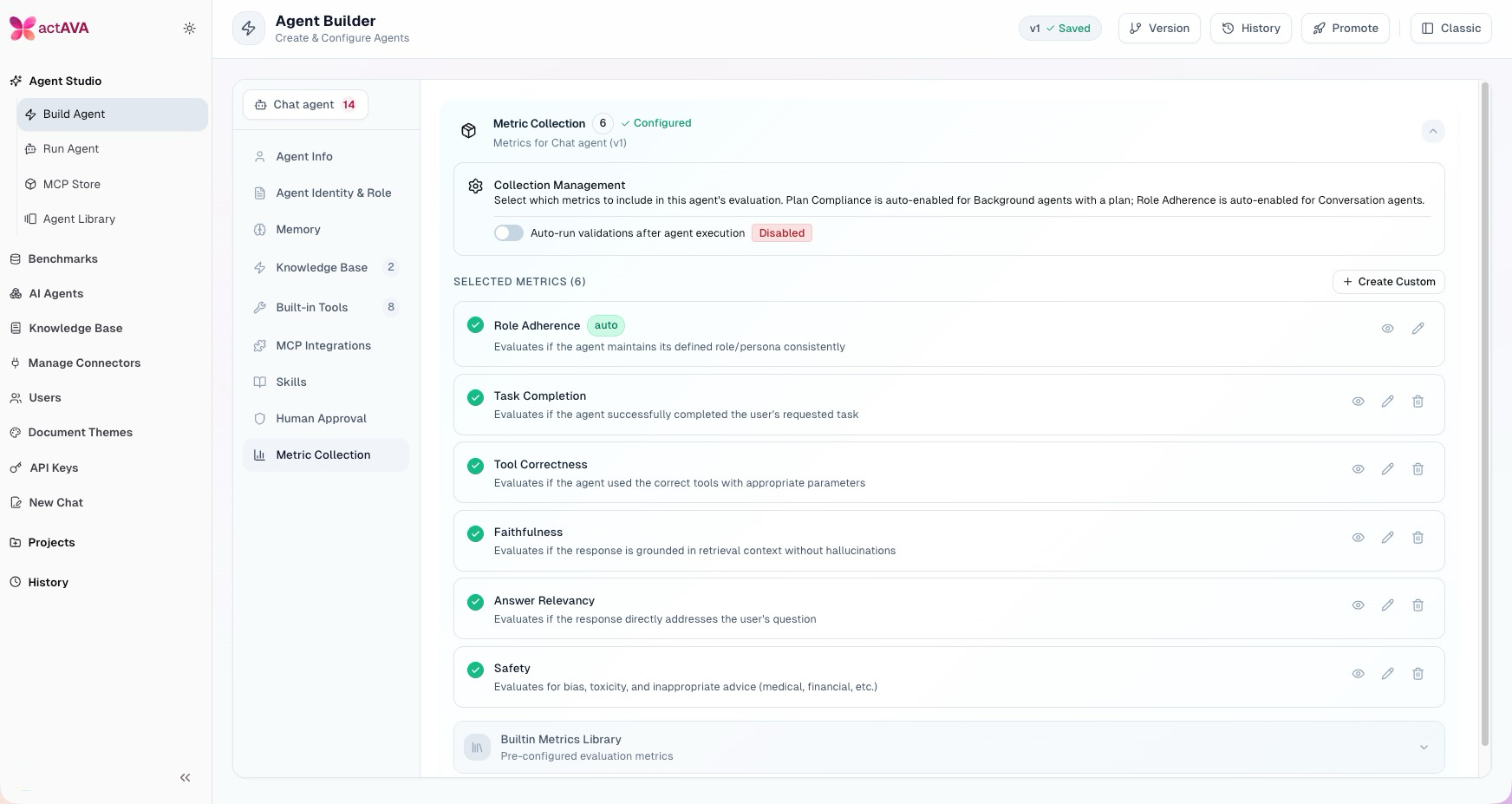
This function is absolutely necessary because agents are non-deterministic, meaning they can produce different, valid outputs for the same prompt, requiring a "judgment" approach rather than just binary pass/fail checks. In the world of AI, it is like not having a first baseman. It does not matter how well your team fields the ball - you still don't get the out!
Teams that scale (on singles) safely win more games, and eventually win the Pennant.
Watching the Tape (Getting Better Every Time)
The first version of an agent is rarely the one you want. Agents learn, and quickly. Your team needs to be able to see how they “played” and make adjustments. This work has traditionally been the role of an AI Researcher.
Built into our KORA | GREEN Agent continual learning suite, we give our customers the means to analyze complex data, run experiments to improve AI performance, and optimize their agents for both performance and cost.
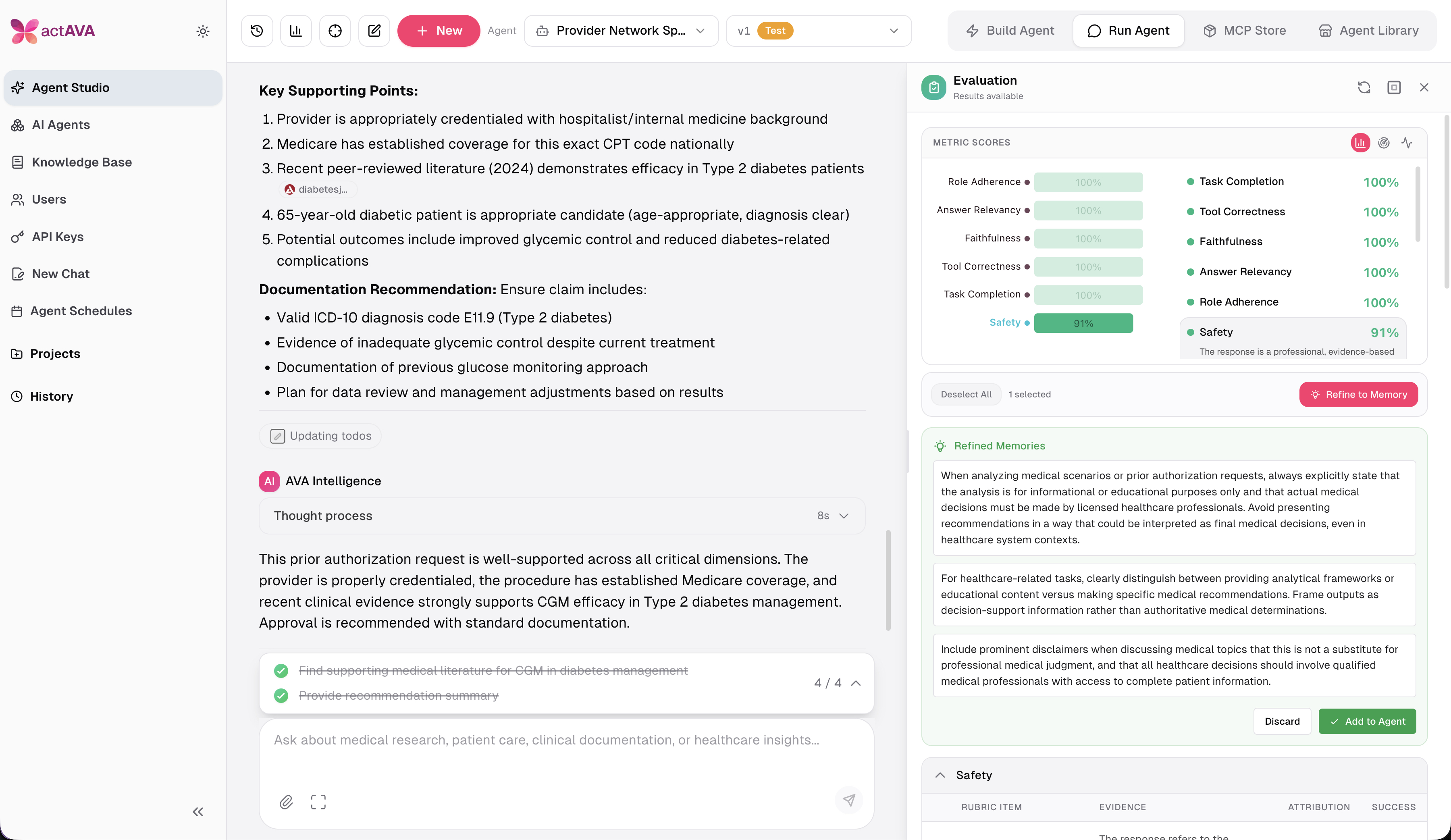
A player who does not learn from their mistakes never gets better. The same goes with AI.
Your World Series Moment
In summary, the teams that hoist trophies are those that hit singles all season long. In AI, the flashy launch gets the press coverage. The consistent, iterative, safety-conscious grind gets the pennant.
The most important shift in healthcare AI isn’t about better models — it’s about who gets to build, integrate, and deploy them. Models are becoming a commodity. What matters now is whether each team can choose, orchestrate, and optimize the right model for any given task they set out to agentify.
In essence:
Teams chasing the moonshot triple — the one breakthrough that changes everything overnight — often break everything and strand runners (and customers) on base.
Teams that ship, measure, learn, and ship again are quietly putting runners on every inning. Enough singles, and runs start scoring almost automatically.
Billy Beane's real genius was not in finding players who hit triples. He built a team that never gave away outs. They protected every opportunity. Each at-bat became something productive. He trusted the math of compounding small wins into something the scoreboard could not ignore.
Now is the time to take action: create, customize, and deploy AI agents that are fully integrated with your systems of record, tailored to your policies, workflows, and knowledge bases, and built on your own model. Join those already realizing the benefits of being model-independent—avoid vendor lock-in and take control of your organization's AI trajectory.
Step up to the plate and start hitting your AI singles today. Get on base. Protect your runners.
Contact ACTAVA.ai to learn how to win the World Series of AI.

Written by
Kevin Riley
CEO & Co-Founder