Resource
Regulatory submissions, medical writing, pharmacovigilance case processing, MLR review — pharma’s operational long tail is document-heavy, cross-system work that generic AI can’t reliably execute. actAVA turns non-deterministic AI into governed, repeatable workflows, witha named humanowner at every GxP-critical decisionpoint —built indays andauditedfrom the first action.

Video
Author expertise once, set the rules once, and let every agent inherit both without bloating a single prompt. Every agent needs two very different kinds of knowledge, and most platforms cram both into one system prompt. KORA separates them into first-class sections on the build screen. Skills carry the reusable how: org-wide capability bundles of instructions plus files, authored once and shared. Memory carries the always and never: the short standing rules unique to how one agent should behave. Different jobs, different homes. This video builds a real one. A nursing team writes an end-of-shift handoff report every shift, same format, different details, different rules per team. The user describes that job to Ava in plain language, and Ava proposes the shape of the agent rather than presenting a form to fill. Before drafting anything, she searches existing agents and the organization's Skills Store, so you surface expertise the org already owns instead of building a duplicate. Then the Skill goes on. The vetted shift-handoff-report skill carries the SBAR template, the section ordering, the step-by-step instructions, and a bundled blank PDF the agent fills, attached in a single action. Here is the architectural payoff: only the skill's name and description sit in the system prompt. At runtime the agent calls LoadSkill to pull the full instructions from the session workspace, and only when a task actually needs them. That is progressive disclosure, and it is what lets an organization attach many vetted skills without slowing any agent down. The standing rules land somewhere else on purpose. Always cc the on-call lead. Never include patient MRNs in the summary. Ava recognizes that always and never language and writes each one into Memory as its own visible, deletable entry. Guardrails stay legible and editable instead of buried in a prompt where nobody can find them, which is exactly what you want when a compliance officer asks what an agent was instructed to do. One more thing worth watching. Ava runs a server-verified readiness check and then submits the draft. Ava only ever drafts. A human admin reviews and approves before anything goes live. Skills are reusable expertise. Memory is standing rules. One agent, powered by both, built entirely in conversation.

Video
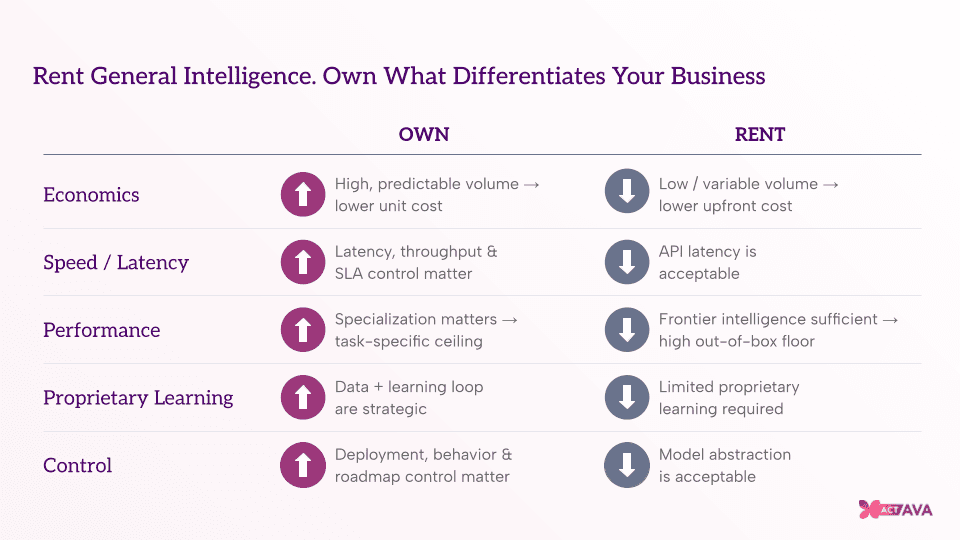
linical AI that reaches a patient has to survive evaluation first. The demand is real. Roughly 61.5 million U.S. adults need behavioral health care, and 40 percent of them live in a designated provider shortage area. That gap will never close on clinician headcount. Meanwhile about half of the patients who do start treatment disengage before it can work. The pressure to put agents into longitudinal care across millions of covered lives is obvious. The failure rate is the problem. Behavioral health is where general-purpose AI breaks down hardest. On χ-BENCH, frontier models fail 72 percent of complex U.S. healthcare workflows, and fewer than 8 percent of agents stay successful when the same task repeats. That second number is the one that matters here. Agents holding the thread between sessions have to perform on the thousandth interaction, not the first. Scaffolding, not model choice, decides whether an agent is deployable. χ-BENCH was reviewed by researchers from Stanford, Johns Hopkins Medicine, Yale, and Salesforce AI Research. actAVA is the factory underneath. With KORA, you evaluate before patients ever see it: simulate agent behavior against your clinical rubrics, log every call and trajectory, and benchmark against χ-BENCH before anything reaches live care, with reviewed work feeding back so behavior improves on evidence. With CURA, the intelligence stays yours: tuned on your clinical protocols and your population, running inside your own cloud at lower cost per interaction. Operate CURA, frontier models, or both, and swap as the frontier moves. And the safety scaffolding ships prebuilt, with crisis detection, consent validation, escalation routing, human-in-the-loop oversight, and audit logging as platform primitives, plus EHR, claims, and FHIR integrations in the box. The behavioral health agent library is yours to extend. The clinical core covers between-session support, multi-source crisis detection, outcome measurement against PHQ-9 and GAD-7, and predictive engagement. From there, intake-to-matched-provider, eligibility-to-payment, ABA session-to-billing, practice compliance, and workforce optimization become expansion surface. Every agent ships with HIPAA compliance, human approval gates, and full audit logging. Behavioral health agents you can govern, prove, and own. Every agent tests before it deploys, every action lands in the audit log, the clinician stays in the lead, and the intelligence stays in your cloud, under your control. Your protocols, your cloud, your model.
Resource
You're putting agents into longitudinal care across millions of covered lives. actAVA is the factory underneath — agents test against clinical rubrics before deployment, run with a clinician in the lead, and prove every action in an audit trail. Your protocols, your cloud, your model.
Resource
actAVA is the Enterprise AI Sovereignty Platform for Healthcare — the agentic innovation engine that carries agent ideas from prototype to production on one governed foundation. Your teams build, including the ones without engineers. And every agent carries a budget, a benchmark, an evaluation, and a named owner before it touches a claim, a chart, or a patient.
Resource
actAVA standardizes and accelerates how AI agents for care management are built, tested, deployed, and improved. We make it easy and safe to build governed digital co-workers, so your care teams can perform at the top of their license.

Video
The case for why care management can't scale on people alone, and what to do about it. Care management revenue runs on one equation: coordinators times billable minutes. To serve more patients, you hire more people. But the people aren't there. Turnover runs past twenty-five percent, HRSA projects a shortage of roughly 141,000 physicians by the late 2030s, and millions of patients who qualify for chronic care management stay unenrolled. You cannot hire your way out of that gap. General-purpose AI doesn't close it either. Care management is a longitudinal, multi-system coordination problem, with teams working across months rather than tickets closed in a single pass. On χ-BENCH, which grounds real administrative work in care policy across multiple tools, the strongest frontier agents finished twenty-eight percent of tasks on the first try. The problem isn't intelligence. It's variability, and single-task automation breaks on work this variable. Here is the finding that changes the design. The same frontier model succeeded with strict rules in the harness and failed outright without them, on the identical task. Reliability isn't the model. It's the system around the model. And governance is what makes that system inspectable: as Johns Hopkins frames it, accountability requires knowing which agent did what, under which policy, and with what result. Until you can measure reliability, you cannot measure ROI. That's why actAVA is three parts of one platform rather than a point tool. KORA is where you build the workflows, with multimodal agents across background, voice, and chat, each passing testing before it goes live. CURA is where you own the intelligence: five models reached the same decision 93 to 100 percent of the time with rules kept in the harness. CHRYSO is where you prove it, with timestamped sign-offs and audit packages on demand. And the stakes are rising on a schedule. CMS is expanding Medicare Advantage audits from about 60 plans a year to all 550. Audit readiness is moving from exception to expectation, which means the governance you build now is the audit package you will need soon. Build the workflows. Own the intelligence. Prove the governance.

Video
CURA delivering specialist-grade reasoning, not trivia recall. Frontier models are generalists. Healthcare punishes generalists. The cost of a confident wrong answer is measured in patient harm, denied claims, and audit findings. That is why actAVA built CURA, a 1-trillion-parameter model trained for clinical and administrative healthcare work, and why we tested it where it matters. Across six of the hardest healthcare benchmarks, CURA outperformed frontier models. This example focuses on the reasoning that utilization review, clinical documentation integrity, prior authorization criteria matching, and medical affairs work all depend on. MedXpertQA Text spans board-style questions across 17 specialties and 11 body systems. The cases read like real vignettes, with history, labs, and family history feeding a diagnostic and treatment decision that requires multi-step inference. MedXpertQA Multimodal goes further, pairing a medical image from radiology, pathology, or dermatology with patient records and exam results. The image alone is never enough. The model has to integrate visual findings with clinical context across multiple stages of the diagnostic process, which is exactly how imaging-adjacent workflows behave in production, from radiology worklist support to dermatology e-consults to pathology second reads. AgentClinic is the agentic test, and it is where reasoning has to hold up under pressure. A doctor agent starts with almost nothing, interviews a simulated patient, decides which tests to order, interprets the results, and commits to a diagnosis within a limited number of turns. Some cases add medical imagery. Others inject cognitive-bias perturbations such as anchoring or patient-introduced bias, designed specifically to degrade accuracy. CURA held up. For anyone building autonomous clinical agents on KORA, that is the difference between a demo and a deployable Non-Human Resource that manages its own line of questioning. Deployed through KORA, governed by CHRYSO, and measured continuously with χ-BENCH, CURA gives healthcare and life sciences teams a workforce-grade model for the thousands of workflows the industry has never been able to automate.

Video
CURA executing inside the EHR without breaking anything. Frontier models are generalists. Healthcare punishes generalists. The work is conversational one minute and transactional the next, and the cost of a confident wrong answer is measured in patient harm, denied claims, and audit findings. That is why actAVA built CURA, a 1-trillion-parameter model trained for clinical and administrative healthcare work, and why we tested it where it matters. Across six of the hardest healthcare benchmarks, CURA outperformed frontier models. This example focuses on where most models quietly fail, and where the long tail of healthcare administration actually lives. MedAgentBench v2 requires retrieving patient data through structured FHIR queries, documenting vitals and clinical notes, and placing medication, lab, and referral orders through correctly structured write operations. Tasks average two to three chained actions, mirroring routine inpatient and outpatient work, and a single malformed JSON payload or invalid API call counts as a failure. There is no partial credit for good intentions. CURA's performance here means agents that reason not only about the record, but work the record safely and in the required format. That is the capability every administrative workflow beyond prior authorization depends on, and it is the reason actAVA focuses on the complex, document-heavy, cross-system work that generic AI cannot reliably execute: the workflows that are hard, policy dense, long running, and unique to your organization. One model now covers the full arc of healthcare work, from an uncertain patient conversation through specialist reasoning to a correctly formatted order in the EHR. Deployed through KORA, governed by CHRYSO, and measured continuously with χ-BENCH, CURA gives healthcare and life sciences teams a workforce-grade model for the thousands of workflows the industry has never been able to automate.

Video
CURA talking with patients the way clinicians actually do. Frontier models are generalists. Healthcare punishes generalists. The work is conversational one minute and transactional the next, and the cost of a confident wrong answer is measured in patient harm, denied claims, and audit findings. That is why actAVA built CURA, a 1-trillion-parameter model trained for clinical and administrative healthcare work, and why we tested it where it matters. Across six of the hardest healthcare benchmarks, CURA outperformed frontier models. This example focuses on the messy front door of healthcare. HealthBench Hard tests exactly that: a patient describes vague or conflicting symptoms over a back-and-forth chat, and the model must infer the missing context before it can answer. It has to spot red flags and escalate to urgent care. It has to hedge when the evidence is thin rather than overcommit. And it has to perform in global health and resource-limited settings, not only in a well-resourced US academic center. For virtual care teams, nurse triage lines, and member services, this is the whole job. CURA's performance here means patient-facing agents that ask before they answer, escalate when they should, and stay honest about uncertainty. HealthBench Professional narrows further to the non-negotiables, testing behaviors physicians broadly agree are mandatory or forbidden, such as correctly recommending emergency referral when warranted, with near-zero error tolerance. That is the benchmark that maps directly to governance. When a health system asks how it can know the agent won't miss the thing it must never miss, CURA's results are the answer, and CHRYSO turns that answer into an auditable control. Deployed through KORA, governed by CHRYSO, and measured continuously with χ-BENCH, CURA gives healthcare and life sciences teams a workforce-grade model for the thousands of workflows the industry has never been able to automate.

Resource
CHI-Bench evaluates AI agents on end-to-end U.S. healthcare workflows across three long-horizon domains: provider prior authorization, payer utilization management, and population care management. Each task hands the agent a clinical case in a high-fidelity simulator of 20 healthcare apps exposed over MCP, with a 1,279-document Managed-Care Operations Handbook skill, and asks it to drive the case through tool calls and artifact authoring. This Hugging Face repository ships the task fixtures and shared worlds. The runner, judge, harness, Docker image, and CLI live in the source repository at actava-ai/chi-bench. The Managed-Care Operations Handbook skill is distributed as a separately gated Hugging Face dataset, actava/managed-care-operations-handbook (size + clinical-author provenance); request access there, then download it with your HF token.

Video
Non-technical people co-build governed AI agents just by talking. "Shadow AI," the unauthorized use of consumer AI tools, is a governance risk. At actAVA, we also see it as a signal of internal demand. Citizen developers, meaning domain experts without coding backgrounds, are now the primary engine of progress. Forward-thinking companies are shifting from restricting unauthorized usage to empowering these builders within a governed, secure framework. As businesses integrate autonomous agents to handle high-volume tasks, the nature of work changes with them. The modern professional is evolving from a doer into an AI Agent Supervisor, where one leader orchestrates the productive output that previously required a team of five. This doesn't replace professionals. It augments their roles, freeing them to focus on oversight and strategy while agents handle execution. That forces a strategic choice: are you selling the tool, or are you selling the work? Selling software puts you in a race against large language models. Selling the work means owning the outcome, whether in data processing, documentation, or compliance. By rebuilding operating models around AI-native delivery, businesses become faster and more efficient. The people who understand healthcare workflows best should be able to shape the AI agents that support them. actAVA makes that possible by embedding industrial-grade agent design, evaluation, and governance into a platform business and operational teams can use directly. Guided natural-language building, built-in guardrails, evaluation rubrics, and expert deployment support let non-technical experts move from workflow insight to deployed agent without sacrificing safety, and without waiting on scarce technical resources.

Resource
End-to-end automation of realistic healthcare operations stresses three capabilities underrepresented in current benchmarks: policy density, decisions must be grounded in a large library of medical, insurance, and operational rules; multi-role composition, a single task requires the agent to play multiple roles with handoffs; and multilateral interaction: intermediate workflow steps are multi-turn dialogs, such as peer-to-peer review and patient outreach. We introduce χ -Bench, a benchmark of long-horizon healthcare workflows across three domains: provider prior authorization, payer utilization management, and care management. Each task hands the agent a clinical case in a high-fidelity simulator of 20 healthcare apps exposed via 87 MCP tools, which it must drive to a terminal status through tool calls and writing the role’s artifacts, guided by a 1,279-document managed-care operations handbook skill. Across 30 agent harness/model configurations, the best agent resolves only 28.0% of tasks, no agent clears 20% on strict pass^3, and executing all tasks in a single session slumps the performance to 3.8%. These results raise the hypothesis that similar gaps are likely to surface in other policy-dense, role-composed, irreversible enterprise domains.