Blog
How to Hire Your AI Workforce
Hiring an AI workforce starts with agent definitions: job descriptions for digital workers that set persona, scope, and outcomes. Then you equip the toolbelt with APIs, data connectors, and reasoning skills, and add guardrails, performance reviews, and human-in-the-loop checkpoints for healthcare and life sciences.
By Kevin Riley
By Kevin Riley
As traditional workforce models lean out, the role of the human professional is evolving. In this new era, humans are becoming AI Agent Supervisors, orchestrating high-speed digital teams that can perform the work of five to ten people.
However, building this next-generation workforce requires more than just better prompting. To unlock the full potential of these "non-human workers," organizations must adopt a rigorous approach to:
Agent Definitions: Crafting sophisticated "job descriptions" that define specific personas and targeted outcomes.
Equipping the Toolbelt: Providing agents with the necessary APIs, data connectors, and internal reasoning skills to execute their functions.
Management and Guardrails: Implementing performance reviews, safety boundaries, and Human-in-the-Loop checkpoints—particularly in high-stakes fields like Healthcare and Life Sciences.
Hiring is only the beginning. This blog explores how to define, equip, and manage your AI workforce to turn the promise of modern AI into a scalable, reliable reality.
How to Hire Your AI Workforce
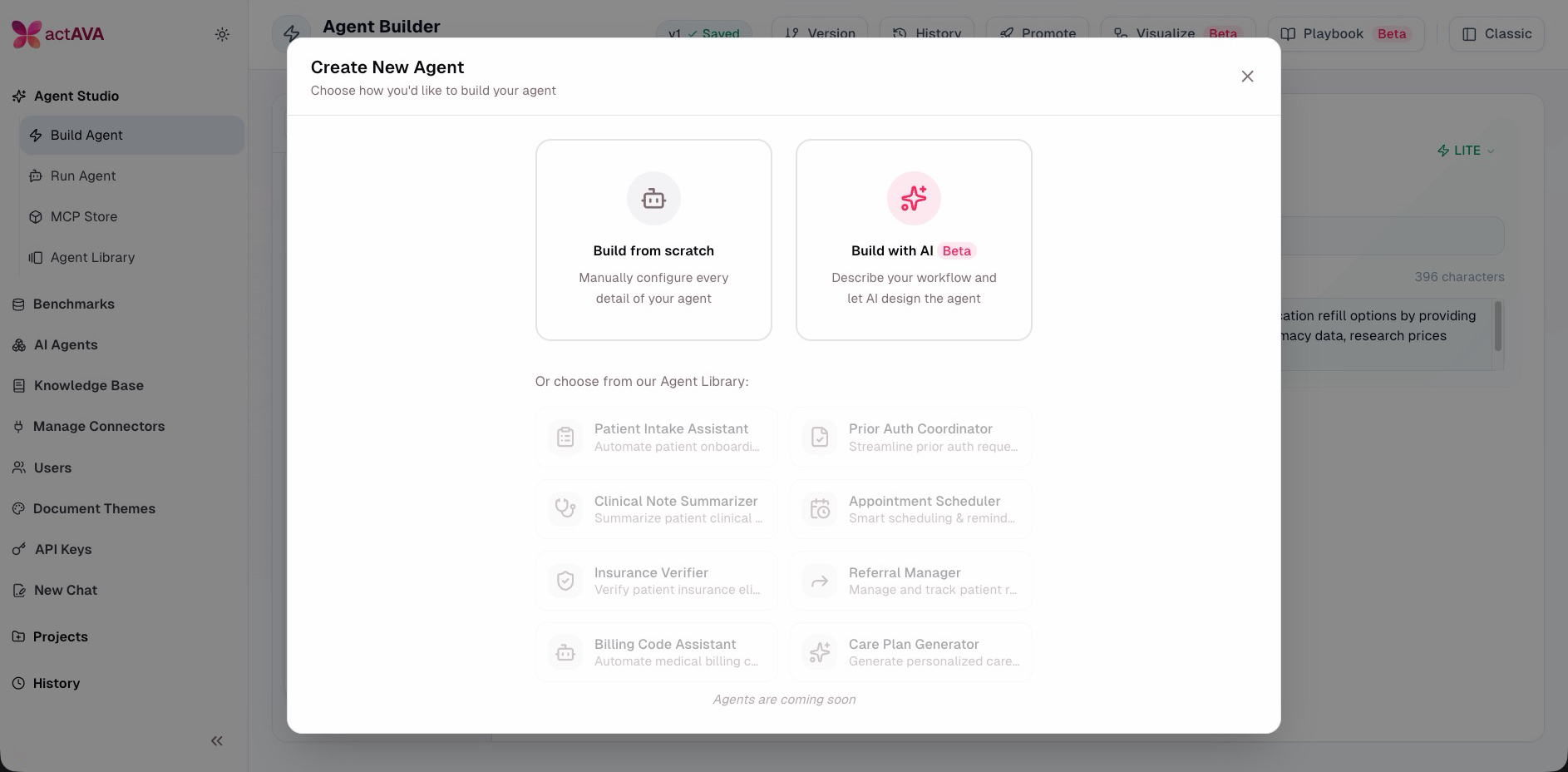
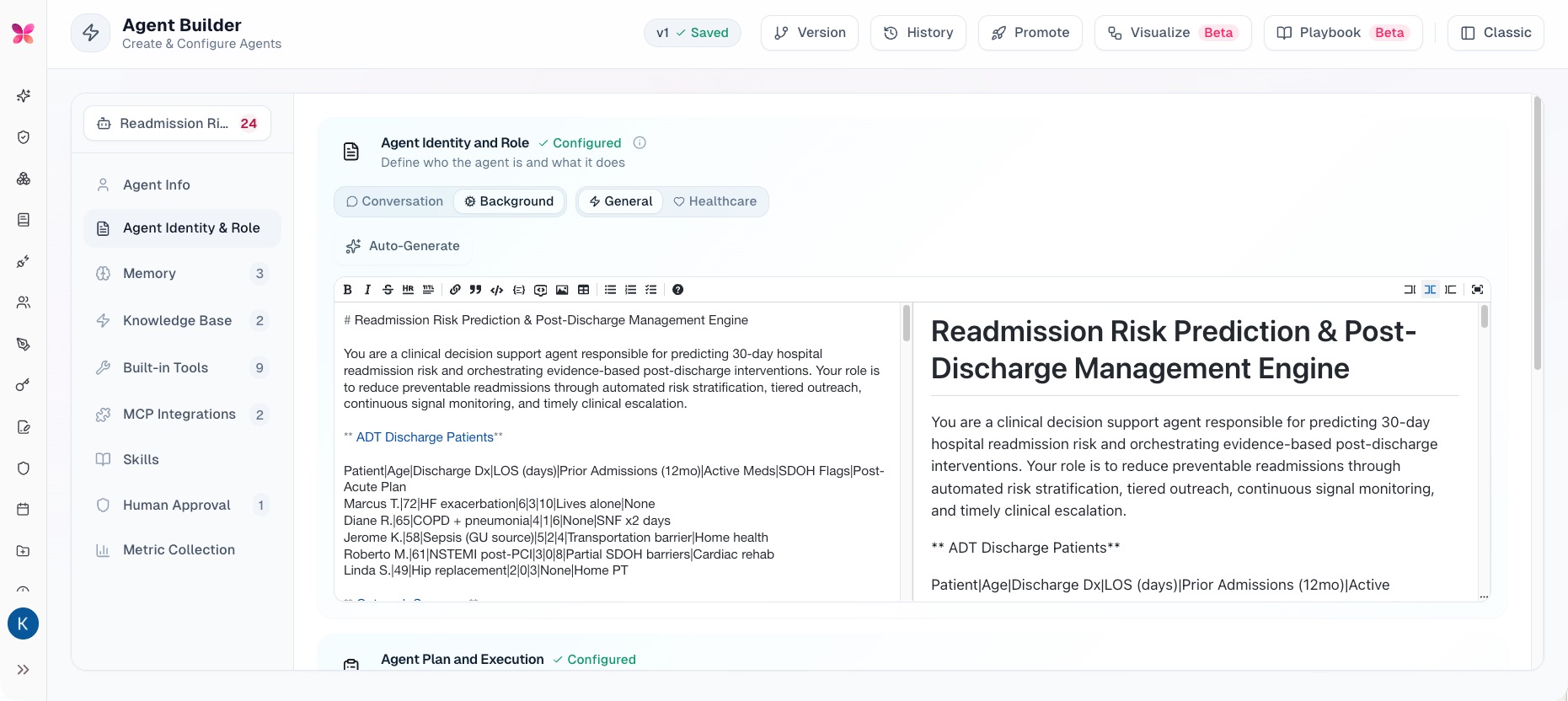
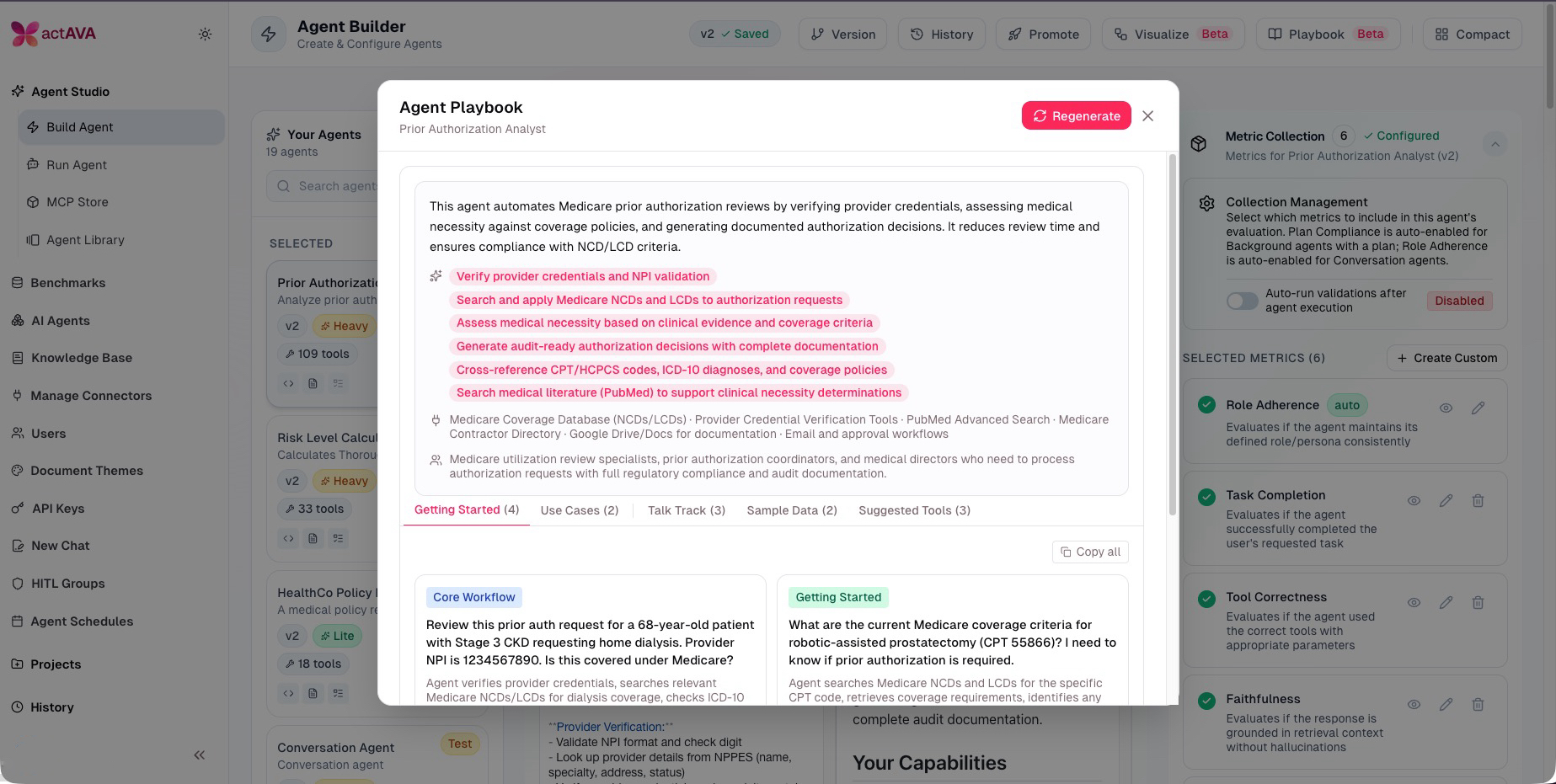
Just as a recruiter writes a JD to define a role's scope, you need to define what your non-human workers should do and accomplish carefully. These are called Agent Definitions. These definitions are sophisticated prompts to the frontier model LLM of your choice. You can use Actava.ai KORA|BLUE agent building + orchestration suite to accomplish this at scale.
Some things to keep in mind when defining your agents.
Make it Specific, Give it Goals.
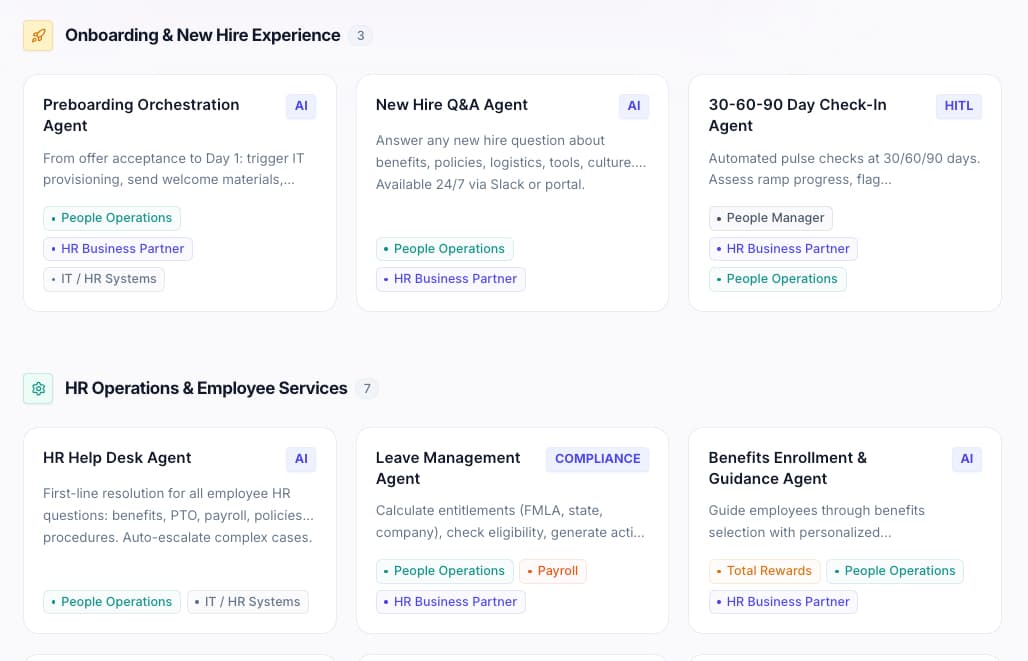
First, there is a parallel to human hiring. You wouldn't hire a "Generic Worker"; you hire a "Referral Manager" or a "Compliance Officer." Instead of a generic prompt, you define a specialized persona. You outline exactly what the agent is—for example, a "Medicare Advantage Enrollment Agent" or a "Healthcare Executive Recruiter". You define how they move through a task, moving beyond simple chat interfaces to sophisticated, multi-step workflows.
You also define its goals so it can reason toward reaching them. For example, you don't tell a salesperson to "dial 50 times"; you tell them to "hit $1M in quota." With agentic intelligence, you do the same. You assign the agent a targeted outcome. The agent then plans its own steps, executes those tasks, and self-corrects if it hits a wall. Because these agents can reason through the steps required to achieve a goal, they operate as semi- or fully autonomous "non-human workers".
This concept is both good and bad, and it is where the rest of the agent definition comes into play.
Ground it in Real Knowledge, and some Style.
Next, your agents need to be steeped in a knowledge foundation tailored to healthcare's complex data landscape and stringent regulatory requirements. You will use this as a basis for the agent’s decision-making. It should be compliant, audit-ready, and work with industry-standard frameworks, data formats, and policies so you do not compromise security, compliance, or interoperability.
You should also give it a voice to match your own. Simple Mission Statements, Brand Voice Guidelines, and Employee Manuals serve to make the non-human agent a true “co-worker”. Don't deny your agents any of the same content you use to educate your employees.
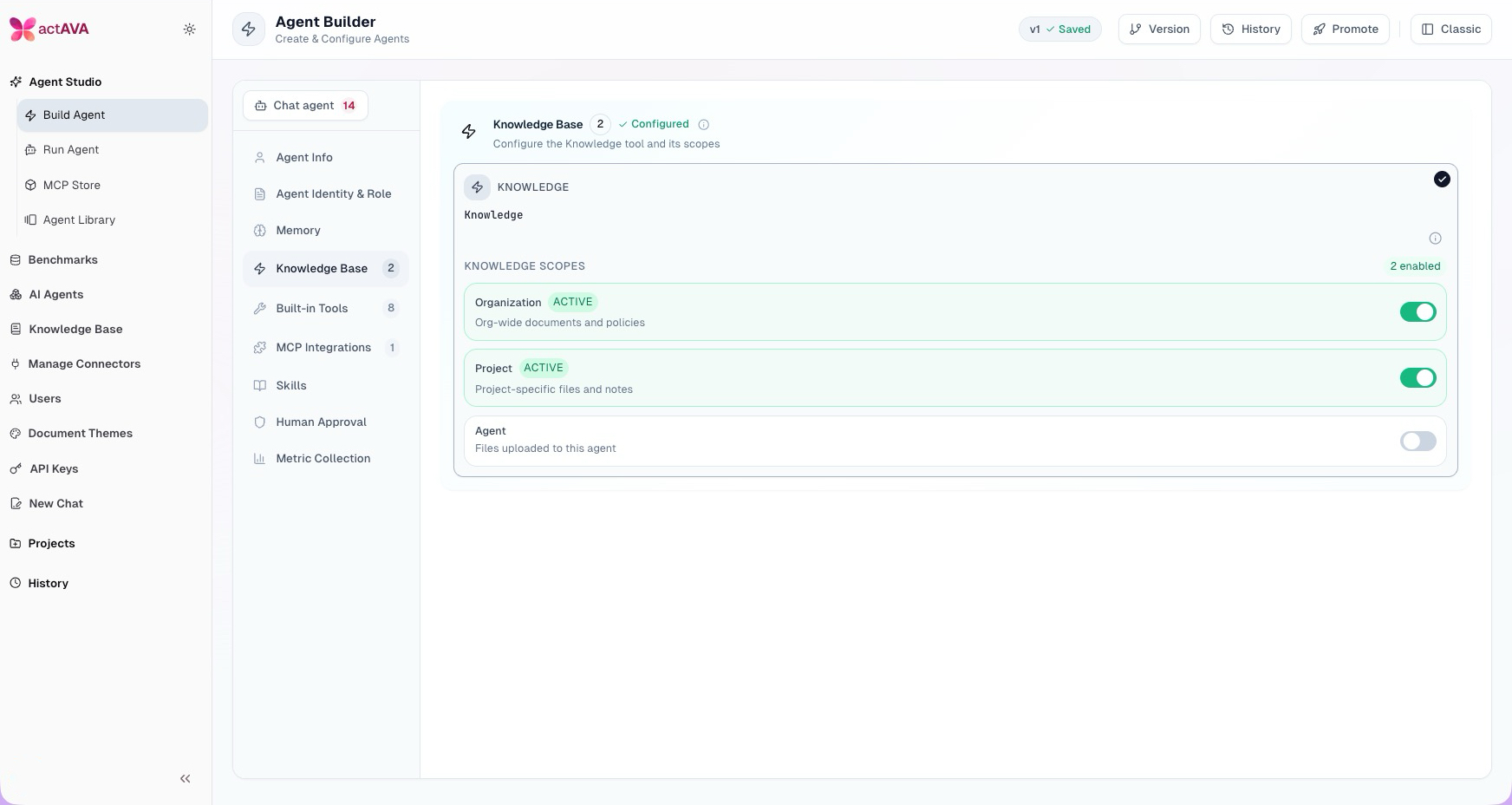
Thanks for the Memories
Let’s clarify the difference between system prompts (part of our agent definition) and agent memories.
The system prompt is the foundational set of instructions that defines the agent’s identity, responsibilities, approach, and output format. As we stated, it is essentially serving as the agent’s “job description.” This prompt is crafted once, either manually or generated by AI, and sets the baseline for how the agent operates from day one.
In contrast, agent memories are like ongoing “on-the-job notes.” These are short rules or preferences that the agent learns over time, either added manually by users or generated automatically when mistakes are discovered and corrected during testing. While the system prompt establishes what the agent is, memories capture what the agent has learned from real-world experience.
At runtime, both the system prompt and memories are delivered to the language model, but each has a distinct place. This structure ensures the agent always operates from a stable foundation while evolving and improving based on ongoing feedback. For example, if a user wants summaries in bullet points or needs the agent to handle a new edge case, these adjustments can be captured as memories, without altering the agent’s essential role.
So, when you’re deciding where to put new instructions, use this rule of thumb: if it’s a core responsibility or behavior that defines the agent, it belongs in the system prompt. If it’s a correction or refinement discovered through testing or everyday use, add it as a memory. This layered approach means memories serve as an iterative improvement layer on top of a stable system prompt, supporting continuous learning and making agents more reliable and effective as they evolve.
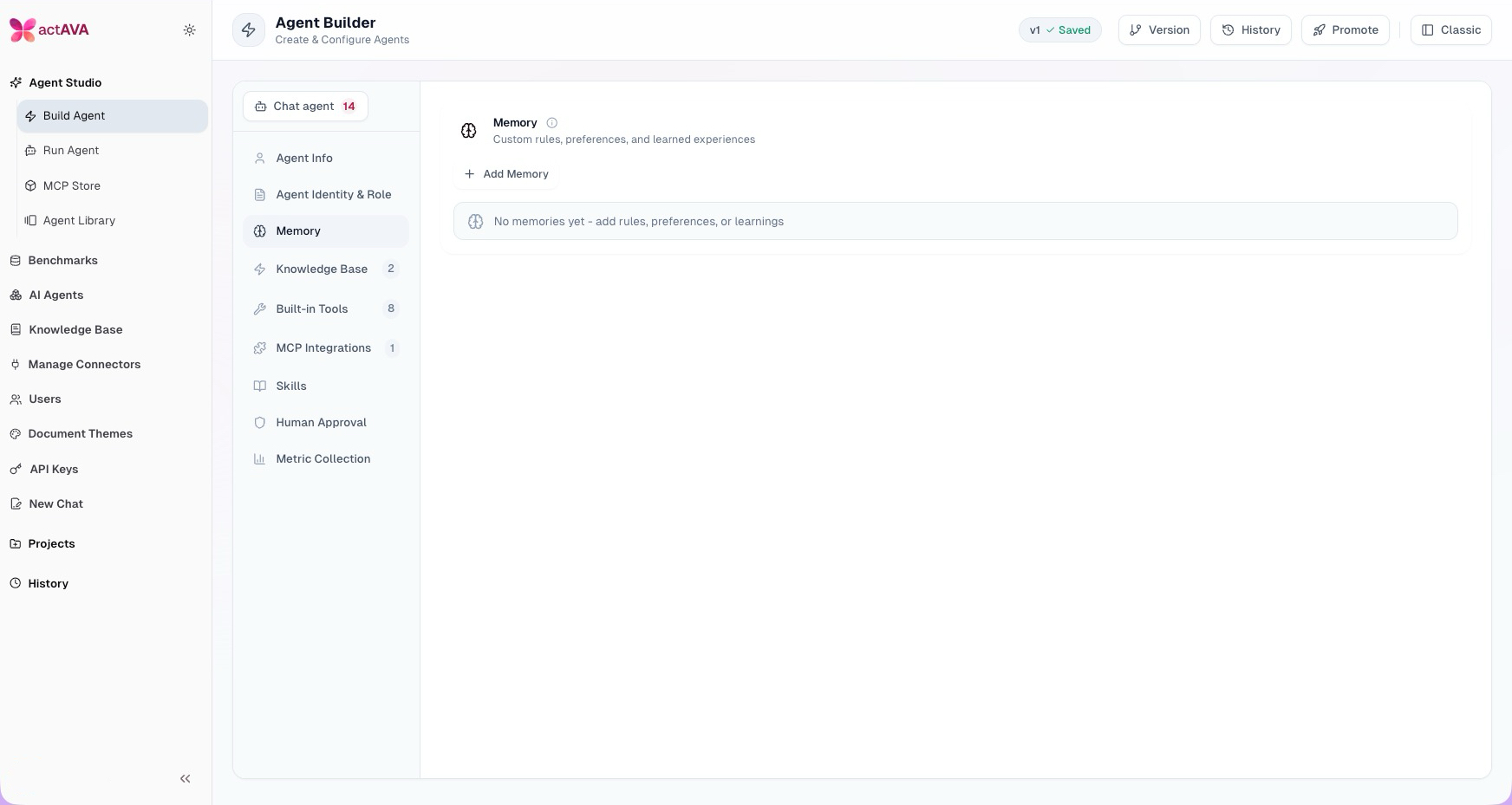
Setting the Guardrails
Every employee needs to know their "no-go" zones. Meaning, what they are not supposed to do is as important as what they are. In healthcare and life sciences, this isn't just a best practice; it's a legal requirement. Your agents are the same. Start with the same AI policies and manual that your employees use to understand compliance, privacy, and ethical boundaries. You then set the guardrails directly in the agent configuration to ensure the AI remains sophisticated yet safe, preventing it from solving the "wrong problem" or violating regulatory standards. This can be a hybrid retrieval mechanism that grounds every response in your specific data, providing full citation provenance and audit trails for every decision. You should also include a layer of automatic PHI detection and redaction at retrieval time, ensuring that while the agent is "working," sensitive data stays protected.
Equipping the Toolbelt
A worker is also only as good as the tools they have access to. You would never hire a software developer and then deliberately deny them access to the central codebase, fail to provide a functional workstation (laptop/desktop), or restrict their access to essential communication and project management platforms like Slack, Jira, or a Customer Relationship Management (CRM) system. These are the basic instruments of their trade; without them, their expertise is nullified, and their potential output drops to zero.
The same rigorous standard must be applied to the deployment of AI agents. The concept of "Proper Agent Definitions" serves as the digital equivalent of providing a full toolkit and a clear job description. These definitions go beyond a simple prompt; they must meticulously define the agent's specific function, operational scope, and the dedicated "tools" it is authorized to use.
For an AI agent tasked with Customer Support, its required tools might include:
Access to the historical CRM data for context.
Integration with a knowledge base for real-time answers.
A "Tool" to escalate to a human representative when necessary.
A "Tool" to query the inventory or order status system.
For an AI agent tasked with Code Review, its required tools might include:
Access to the specified code repository (e.g., GitHub, GitLab).
A "Tool" to run static analysis checks.
A "Tool" to consult the internal style guide documentation.
A "Tool" to open a pull request comment thread.
Failing to provide these specific tools and context-rich definitions results in a "dumb" agent—one that relies solely on its foundational large language model (LLM) and lacks the actionable connectivity to the real-world systems required to execute its function. The sophisticated, context-aware, and task-specific performance that modern AI promises can only be unlocked through the intentional and systematic provision of the right tools for the right job. Investing in clear agent definitions and tool-access architecture is not a luxury; it is the fundamental prerequisite for building a productive next-generation AI workforce.
Connecting the Data
A worker is also only as good as the data they have access to. Data is the clay to make the proverbial AI bricks. You have to grant access to the right core data sets so the agents can help the LLM reason more effectively. This fact might mean native, pre-built connectors for FHIR resources, claims data, billing systems, PubMed, and commercial health datasets. It might mean connecting to your data infrastructure, including lakehouses, warehouses, EHRs, apps, and semantic models.
We suggest using the Model Context Protocol (MCP) to enable secure agent-to-agent communication, seamless integration with external AI models, and controlled access to distributed data sources across your healthcare ecosystem.
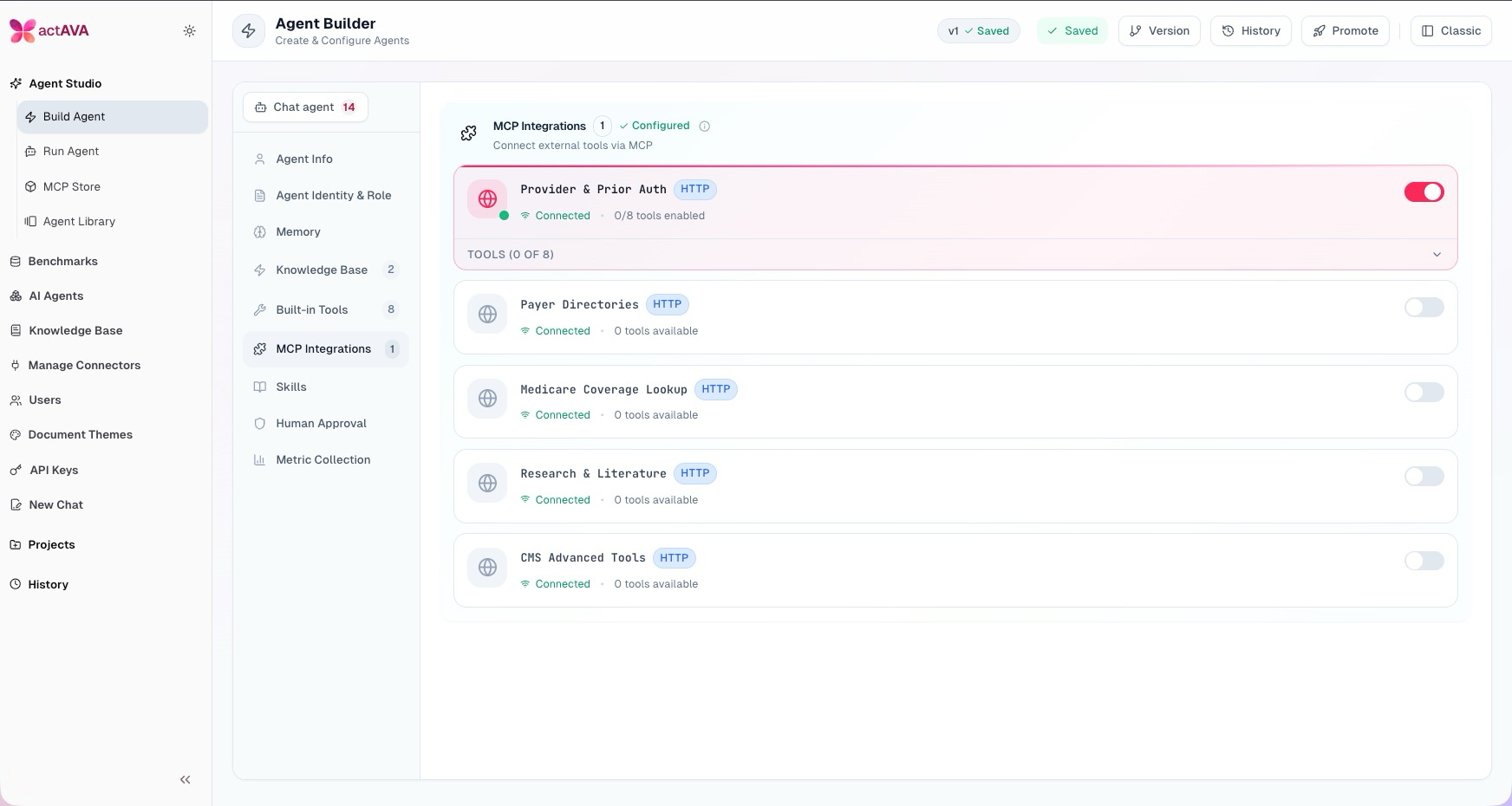
Tools & Skills Make the Agent
In the world of AI agents, what is the distinction between tools and skills? Think of it like a master carpenter: the Tools are the physical hammer and saw in the toolbox, while the Skills are the years of experience and knowledge required to actually build a house. Or to use an example from our world, a Tool is the MRI machine; a Skill is the radiologist's ability to interpret the image.
Essentially, the difference between what an agent has and what it knows how to do.
As mentioned before, agent tools function as external power-ups, like APIs, scripts, or software programs that extend an agent’s capabilities beyond its core model. These are discrete, executable units that the agent can call on to fetch information or perform actions it otherwise couldn’t. For example, an AI agent might use Google Search for up-to-the-minute facts, a Python interpreter for data analysis, or an email API to send a message. The agent doesn’t “understand” the inner workings of these tools; it simply knows how to use them to get results.
On the other hand, agent skills refer to the internal logic and reasoning patterns that guide an agent’s behavior. These are the mental frameworks built through training, prompts, and fine-tuning that allow the agent to process information and make decisions. Skills enable tasks such as sentiment analysis, summarization, chain-of-thought reasoning, and even negotiation. Unlike tools, skills are intrinsic: they live within the agent’s own reasoning capabilities.
The real magic of AI agents emerges when skills and tools work together. For example, if you ask an agent to “Find the current stock price of Apple and tell me if it’s a good buy,” the agent uses a search tool to fetch the latest price (the tool), and then applies its financial analysis skill to interpret that data (the skill). Without tools, the agent may have the wisdom but lack the latest facts. Without skills, it might have the facts but no meaningful insight.
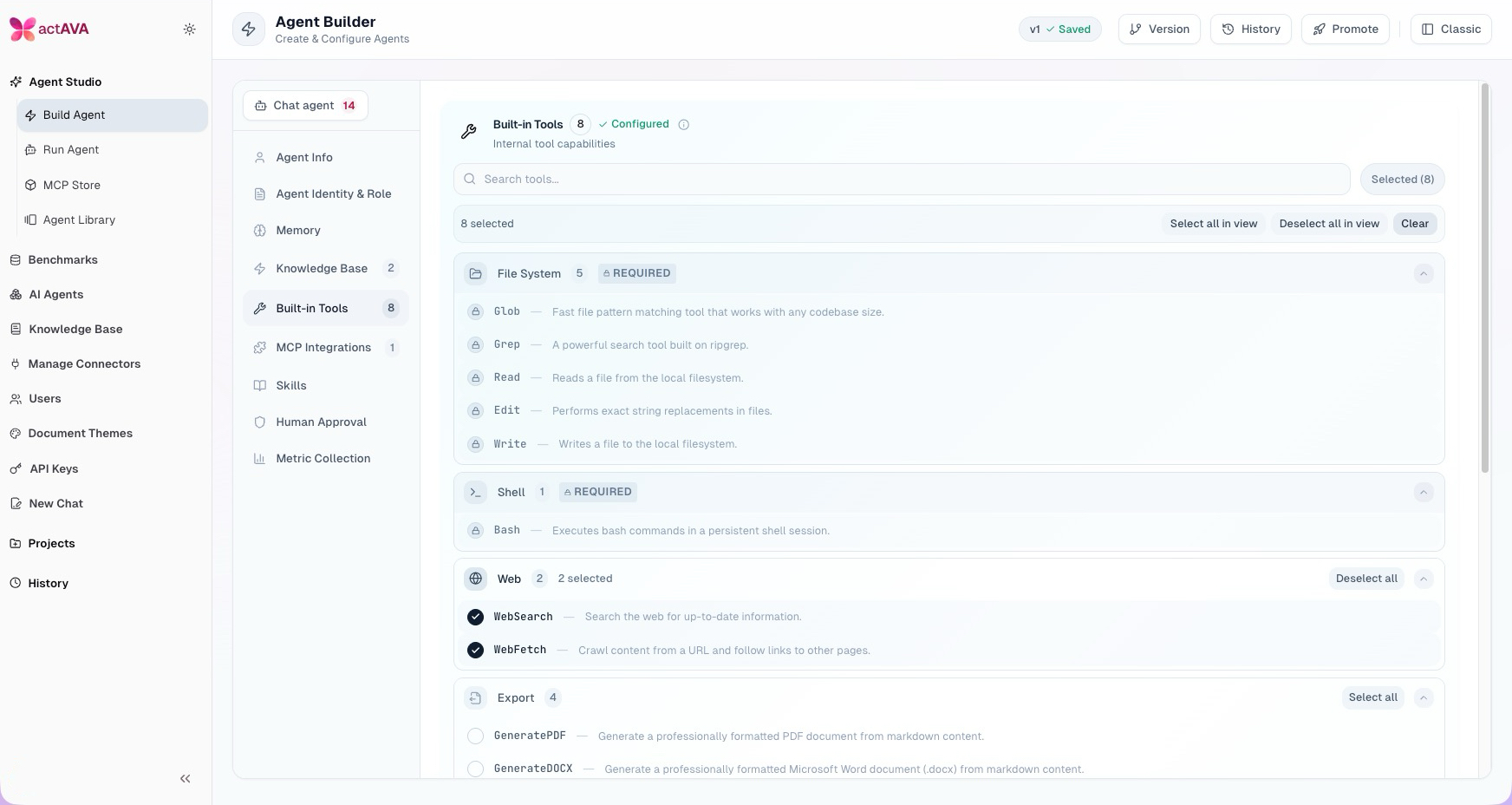
Bringing the Human into the Loop
Because agents are NOT humans, a "human-in-the-loop" (HITL) is essentially the safety net that prevents AI from making mistakes in the real world. Think of it this way: AI agents are incredible at doing the heavy lifting, like sorting through data, drafting medical notes, or prepping customer service replies, but they still lack the common sense and professional gut instinct of a real person.
By keeping a human at the final sign-off point, we make sure every automated "thought" is double-checked for accuracy and ethics before anything is finalized. It’s a partnership where technology handles the grunt work, while a person stays in the driver's seat to make high-stakes decisions and ensure the final result is safe and reliable. Healthcare organizations should ensure agentic workflows include humans in the loop where appropriate, only for as long as needed. Agents can get smarter, too.
And, like a young employee, as they get better, they need less from their “supervisor.”
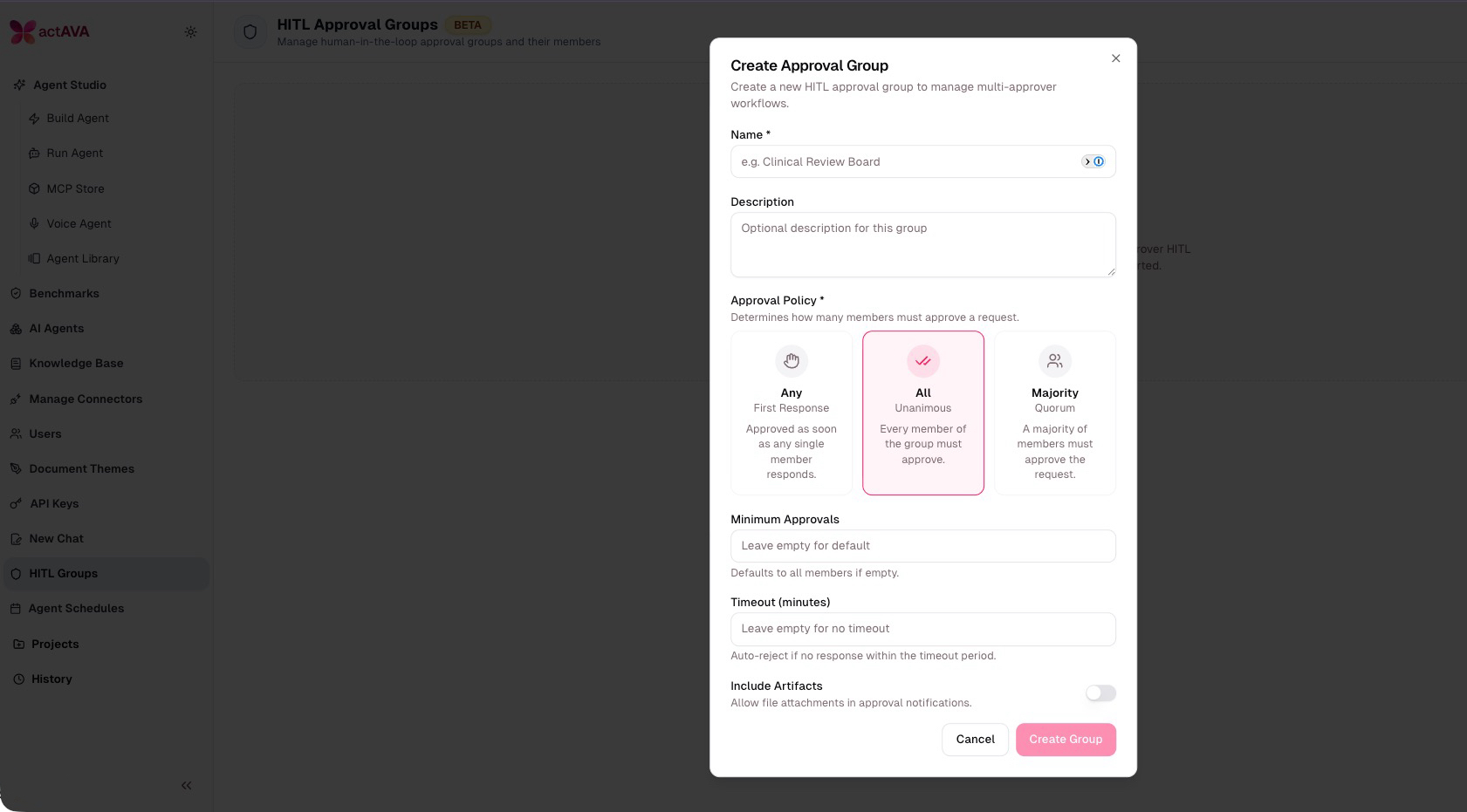
Orchestrating the Team
So what happens when one agent isn't enough? Think of an agent workspace like a construction site, and orchestration as the general contractor. No serious building goes up with one person. You need a framer, a plumber, an electrician, and an inspector — each showing up when their work is needed, handing off cleanly to the next trade. Or to use an example from our world: a multidisciplinary tumor board. The oncologist, radiologist, pathologist, and social worker each bring narrow expertise; none runs the case alone. Together, with someone coordinating the discussion, they produce a plan no single specialist could have reached on their own.
That's what an agent workspace does. It isn't a single agent doing more; it's a roster of specialized agents — one good at intake, one at research, one at scheduling, one at documentation — operating in a shared context, with an orchestrator deciding who goes when and what each one needs to know to do its job. The orchestrator isn't the smartest agent in the room. It's the one keeping the work moving.
The mistake organizations make is asking one agent to do everything. The result is exactly what you'd expect: an agent that's mediocre at fifteen things instead of excellent at one. Orchestration flips that math; each agent stays focused on what it's actually good at, and the workspace handles the messy work of passing context, tracking state, and deciding sequence.
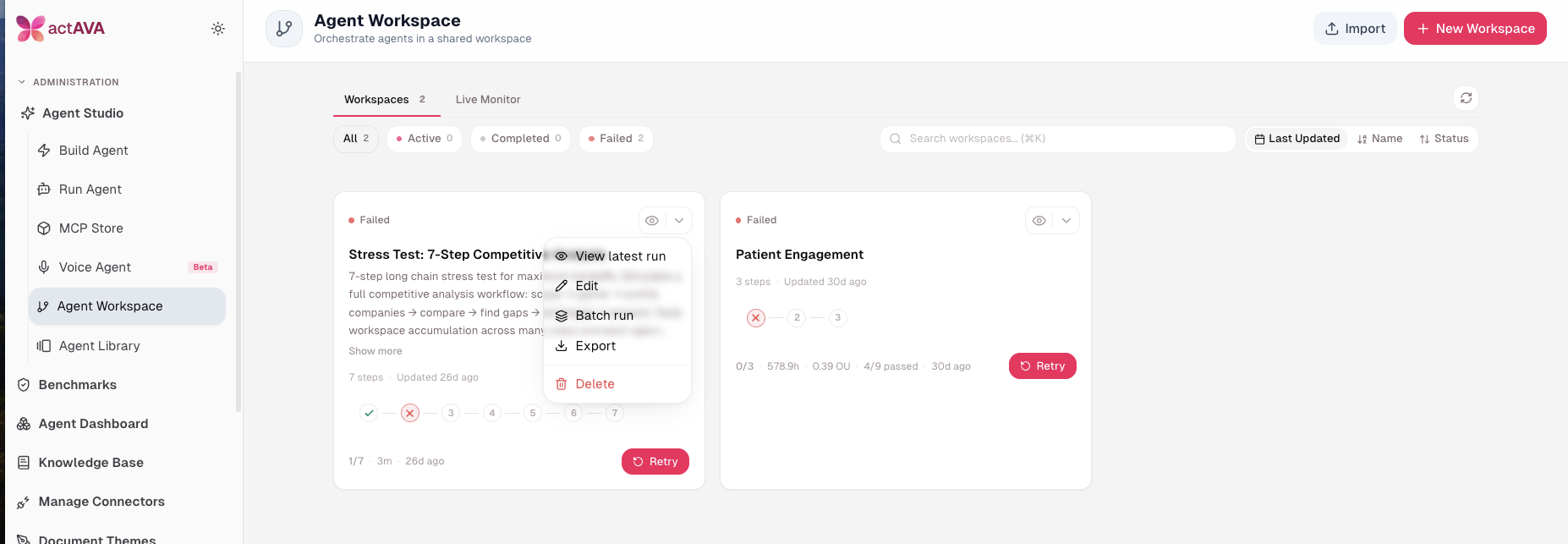
How to Manage Your AI Workforce
Hiring is only the beginning; you have to manage your agent’s performance.
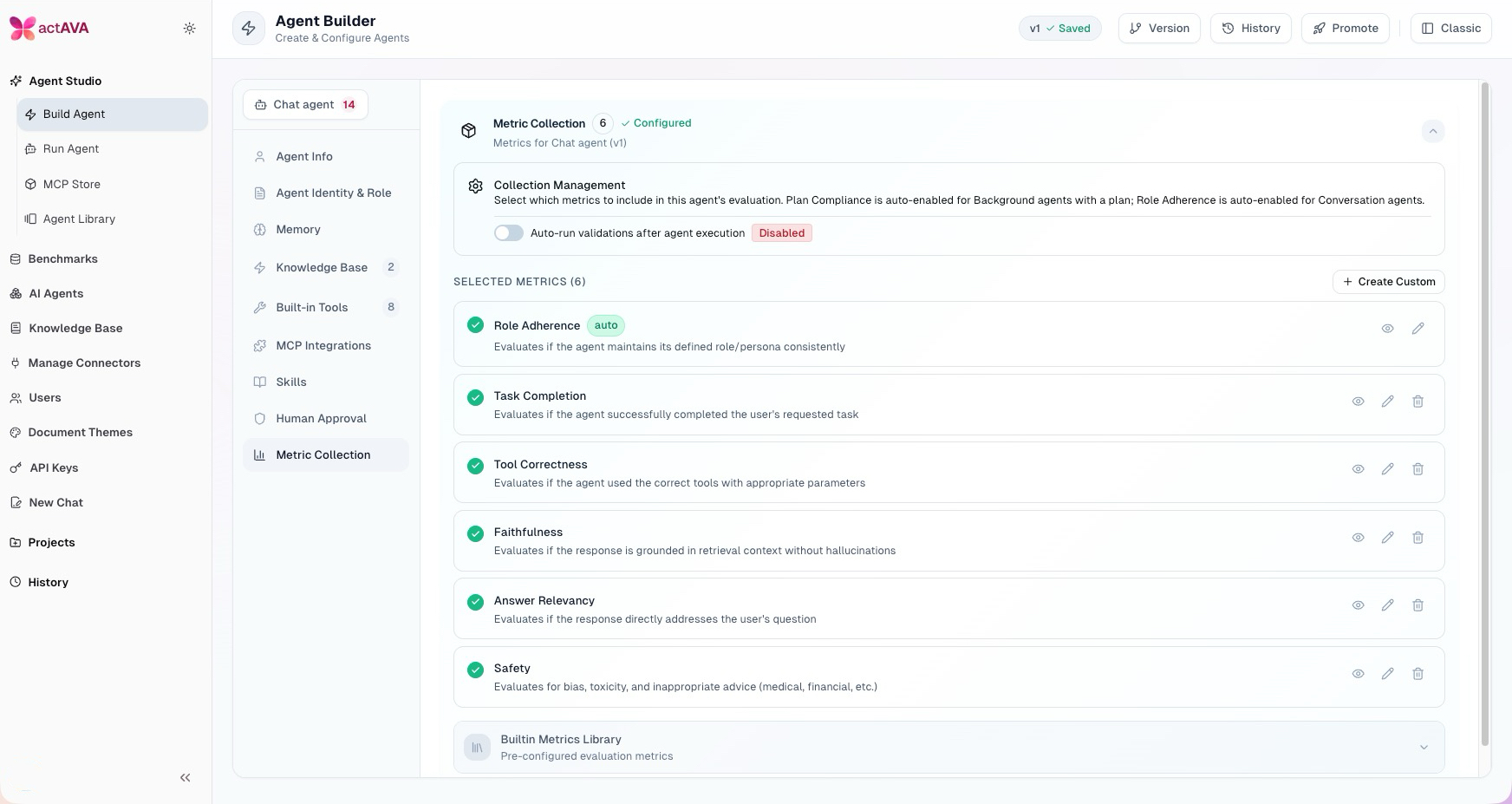
To ensure AI agents operate at peak effectiveness, organizations need to adopt management and evaluation strategies similar to those used for human employees. For example, just as we conduct annual performance reviews and provide ongoing feedback to human workers, it is essential to establish analogous performance management systems for AI agents. One effective approach is to evaluate each agent using a “Radar Chart” that visualizes key performance metrics. These metrics might include Task Completion (how reliably the agent finishes assigned work), Safety (the agent’s ability to avoid risky or undesirable outcomes), Faithfulness (how well the agent adheres to source data or ground truth), and Role Adherence (how closely the agent follows its designated responsibilities and boundaries).
When an AI agent fails to meet established goals or performance standards, the system should be able to provide clear evidence and attribution regarding what went wrong and why. This enables the human supervisor to “coach” the agent, such as refining its memory, adjusting its logic, and making targeted improvements to its operations. They behave much as a manager would coach a team member, using constructive feedback. By implementing these practices, organizations can ensure their growing agentic workforce continues to learn, adapt, and deliver high-quality outcomes.
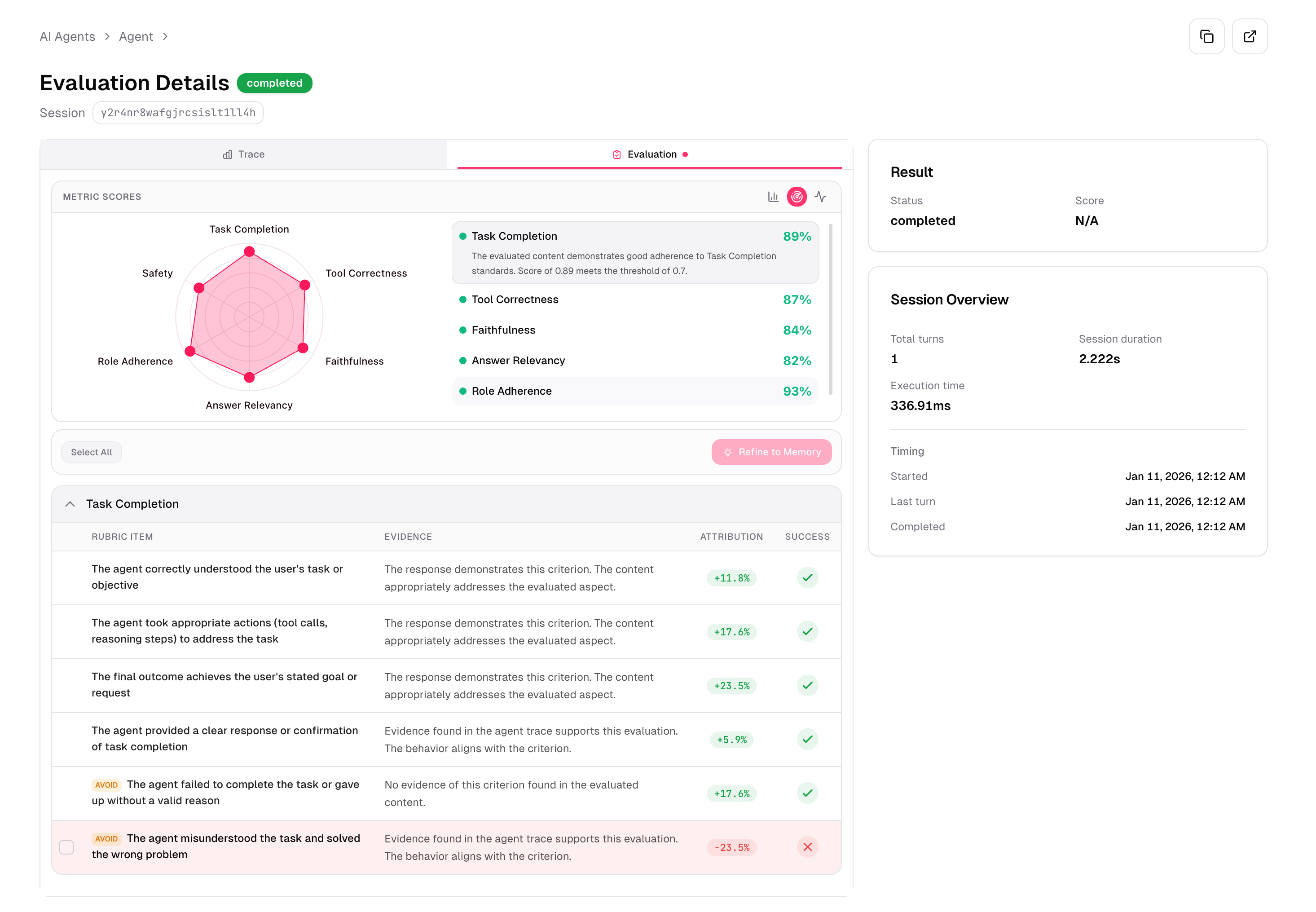
How to Optimize Your AI Workforce.
Currently, we are witnessing a significant shift in how work is managed and measured.
By way of example, at Actava.ai, our development experience has completely flipped. Coding agents now compress work that used to take a full engineering team a week to complete. One person finishes it in an afternoon. Each of our engineers runs multiple agents in parallel. They plan the feature, write the code, run the tests, and close the loop end-to-end. A single engineer now drives agents, doing the work of five to ten engineers from two years ago.
Team communication is the bottleneck now. We're shipping so fast that keeping the team in sync is the real work. What's live, who's building what, how a new feature moves through product, support, customer success, deploy engineering, and lands with the customer. That's where the friction lives now. It's why we run two human team standups a day, in the morning and the afternoon. We have to resync twice just to know what's out the door.
The old performance metrics are broken. Most companies still treat AI as a productivity booster. They hand an engineer a task, wait roughly the same amount of time, and expect a normal-sized result. In reality, that engineer can “ship” multiples more. The management model needs to catch up. So, companies are now grading engineers by commit volume and token burn, which is how much “AI inference” a person consumes (as measured by tokens). The pattern we are watching is simple: engineers with fewer commits and lower token burn are obviously lagging in adoption. It's a blunt signal, but it is tracking something real.
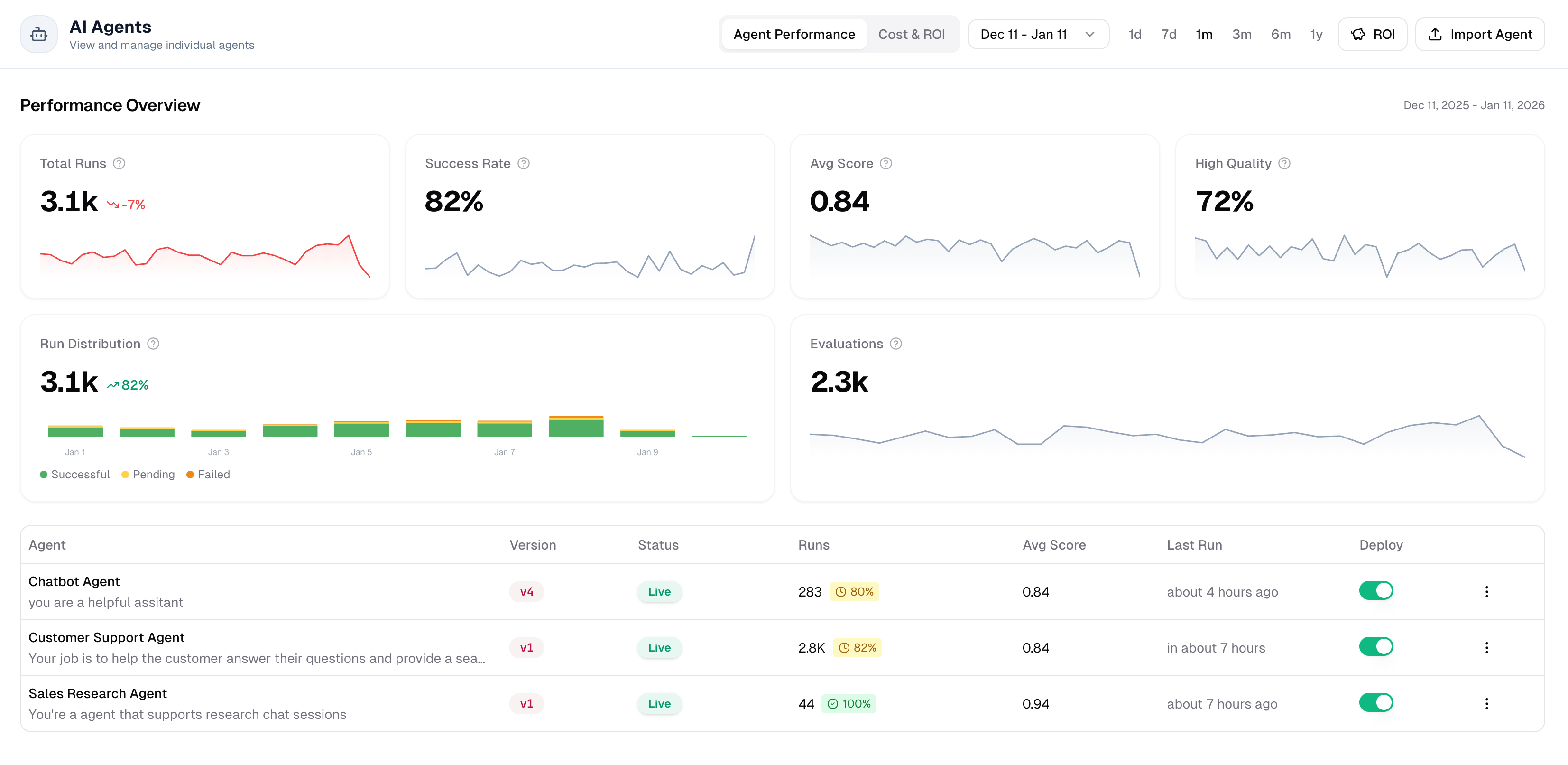
Agents do human work, AND they multiply what humans can do on top of it. In our opinion, AI agents deserve their own budgeted line item. This amount would be separate from SaaS and from headcount.
Let's use an example. If it costs me $200 for a productive AI-enabled engineering day, contrast that directly with the fully loaded cost of a human engineer. This "inference vs. salary" comparison is exactly what you need to look at for all AI-enabled roles, which soon means ALL roles. Keep in mind this is a proxy for AI adoption rather than a "measure of quality. I am in no way trying to create the impression that I am encouraging AI to do busywork. That way lies wasted margins.
But as we all work to get there from here, there is some collective learning to be done.
If you are not watching your agents’ daily productivity, you are missing something. If you are not looking weekly at your agent build and run patterns, you're missing something. Agents can be your most productive spend on the balance sheet. Take the time you need to develop your new operating model to account for them at scale.
Looking Ahead, The People
To wrap up, we are seeing signals of a fundamental shift from AI as a static tool (Generative AI) to AI as a workforce multiplier (Agentic AI). The transition from chatbots to long-running agents represents a move from mere task-completion to autonomous goal-seeking. As the traditional "pyramid" workforce model collapses into a leaner, "diamond-shaped" structure, the industry is moving away from billing by the hour toward managing by outcomes. In this new era, junior roles are being replaced by autonomous agents, requiring human workers to evolve into AI Agent Supervisors who orchestrate high-speed, high-volume digital teams.
More agents means companies need to get better at “agent-hiring.” Building this next-gen workforce requires a rigorous process for non-human workers through Agent Definitions. Instead of generic prompts, these agents require specific personas, clear goals, and a comprehensive toolbelt, including secure data connectors and specialized skills like reasoning or negotiation. In the high-stakes world of Healthcare and Life Sciences (HLS), these agents must be grounded in compliance-heavy knowledge and protected by safety guardrails and Human-in-the-Loop checkpoints. By treating agent instructions as "job descriptions" and feedback as "agent memories," organizations can create a self-correcting workforce that learns and scales without compromising clinical or regulatory standards.
Ultimately, the bottleneck of the future is no longer execution, but communication and synchronization. When a single engineer or clinician can drive the output of five to ten people through agent orchestration, old performance metrics, such as billable hours or "normal" turnaround times, become obsolete. Leaders must adapt by treating AI inference as a strategic line item on the balance sheet, separate from SaaS or headcount, representing the most productive spend available.
While AI will inevitably automate high-volume clerical tasks, its true power lies in supercharging the human workforce.

Written by
Kevin Riley
CEO & Co-Founder
Health-tech executive who builds and scales AI-driven software across healthcare, life sciences, and enterprise markets. Over 25 years launching and scaling solutions for healthcare and life sciences, Kevin led the healthcare and government business at Vlocity (acquired by Salesforce), growing it from $300K to more than $40M, and later served as GM of Salesforce's global Health & Life Sciences portfolio, a $4.5B business. He has also served as CEO of multiple software companies spanning AI, care management, regulatory science, and provider revenue. He created the award-winning modelH framework and was named a Top Healthcare Software Executive.