Release Notes
Actava.ai launches CURA, a 1-T-parameter model built for the realities of enterprise healthcare.
Cura 1T is Actava.ai's healthcare-specialized language model: a 1-trillion-parameter model post-trained through recursive self-improvement for patient care, clinical reasoning, and agentic EHR workflows. It's the strongest model on 5 of 6 healthcare benchmark panels we ran, holds top-5 on every out-of-domain leaderboard we track, and runs at 5 to 20 times lower cost per output token than the frontier models it beats. Here's what it does, how we trained it, and how to start building on it.
By Kevin Riley, Frank Wang and Weiran Yao

Introducing CURA 1T
Actava.ai's healthcare-specialized model. Strongest on 5 of 6 healthcare benchmark panels, and priced for the way agents actually work.
Today we're launching CURA 1T, our healthcare-specialized language model. It's a 1-trillion-parameter model, post-trained from Kimi-K2.6 through recursive self-improvement, and built for the three things healthcare AI has to do well: talk to patients safely, reason like a clinician, and act inside real EHR systems.
The short version. CURA 1T is the strongest model on 5 of 6 healthcare benchmark panels we ran, it stays competitive with frontier generalists on reasoning outside healthcare, and it runs at 5 to 20 times lower cost per output token than the models it beats.
Why build for the domain
Healthcare doesn't hand over training signal the way coding or math does. Useful supervision sits scattered across clinical guidelines, board exams, medical images, and EHR workflows. Add examples to sharpen one behavior and you can quietly break another that already worked.
General frontier models cover for that with raw scale. We took the other path and trained for the work clinicians and health systems do every day.
What CURA does
Patient care. High-stakes communication like consultation, triage, and safety-conscious guidance. CURA is trained against physician-authored rubrics, so it communicates clearly, surfaces red flags, and escalates when it should. Patient care is where the training loop moved the model furthest.
Clinical reasoning. CURA works board-level cases across 17 medical specialties and 11 body systems, reasoning over clinical images alongside patient records and examination results.
Healthcare agentic workflows. CURA runs multi-turn diagnostic dialogue and real execution. It takes a history, orders tests, narrows the differential, then drives FHIR tool calls against live EHR systems to order labs, place referrals, and record decisions.
The benchmarks
We evaluated CURA 1T on six healthcare panels covering patient-facing response quality, expert reasoning across text and images, and agentic execution against live EHR tooling. CURA leads 5 of the 6 and ranks 2nd on the sixth.
| Panel | CURA 1T | Best frontier reference |
|---|---|---|
| HealthBench Professional | 66.2 | Claude Fable 5 (66.0), Claude Opus 4.8 (55.8) |
| HealthBench Hard | 36.8 | GPT-5.5 (31.5) |
| MedXpertQA, text | 60.0 | GPT-5.5 (59.6), Claude Opus 4.8 (56.2) |
| MedXpertQA, multimodal | 72.2 | GPT-5.5 (77.1) |
| AgentClinic | 79.6 | Claude Opus 4.8 (79.4) |
| MedAgentBench (live FHIR) | 94.0 | Claude Opus 4.8 (93.7) |
A few results worth calling out. On HealthBench Professional, the physician-rubric panel, CURA reaches 66.2, the strongest score of any model and more than 10 points clear of Claude Opus 4.8. On HealthBench Hard it scores 36.8, a 14.6-point jump over its Kimi-K2.6 base. On AgentClinic it doubles the base model's NEJM case score, from 0.400 to 0.800, and on MedAgentBench it hits 94.0 task success calling tools against a running FHIR server.
Specialization without the usual tax
Specializing a model usually costs you general ability. CURA 1T stays in the top 5 on every out-of-domain leaderboard we track, and leads outright on AIME 2025 (96.7), τ²-Retail (88.6), and τ²-Telecom (100.0). The healthcare focus didn't erode general reasoning or agentic skill, which is the whole point of the retention data we anchor training on.
How we trained it
CURA learns in rounds. Each round, a training agent picks a target capability, trains with SFT, RL, and continual learning, then folds the results back into the next data mixture based on where the model failed.
A human gates every plan and every keep-or-revert call. Reverted rounds stay in the record, including one that lifted headline scores while quietly damaging a held-out subset. We kept that receipt on purpose, because knowing what didn't transfer matters as much as knowing what did.
The economics change the math
Specialization changes the cost structure. Per output token, CURA 1T costs 5x less than Gemini 3.1 Pro, 10x less than Claude Opus 4.8, 12x less than GPT-5.6, and 20x less than Claude Fable 5, the frontier models it's benchmarked against.
Launch pricing is $0.50 per million input tokens, $2.50 output, and $0.20 for cached input, at any context length up to 256K. For agentic healthcare work, where a single task can burn millions of tokens re-reading records and calling tools, that gap compounds on every turn.
Built to drop into your stack
CURA ships with an OpenAI-compatible API. Point any OpenAI SDK at inference.actava.ai/v1, change the model id to actava/cura-soar, and you're running. 256K context, text and vision, function calling, streaming, and prompt caching.
One honest caveat. CURA 1T is a research model. It's not a medical service, and it's not a substitute for a clinician. Strong benchmark scores don't establish safety for unsupervised clinical use. Deploy it with humans in the loop and governance around it, which is exactly what our KORA platform is built to provide.
Build healthcare AI with CURA 1T
OpenAI-compatible API, 256K context, text and vision. Read the technical report for the full round-by-round training record, or point your SDK at the API and start building.

Authors
Kevin Riley
CEO & Co-Founder
Health-tech executive who builds and scales AI-driven software across healthcare, life sciences, and enterprise markets. Over 25 years launching and scaling solutions for healthcare and life sciences, Kevin led the healthcare and government business at Vlocity (acquired by Salesforce), growing it from $300K to more than $40M, and later served as GM of Salesforce's global Health & Life Sciences portfolio, a $4.5B business. He has also served as CEO of multiple software companies spanning AI, care management, regulatory science, and provider revenue. He created the award-winning modelH framework and was named a Top Healthcare Software Executive.
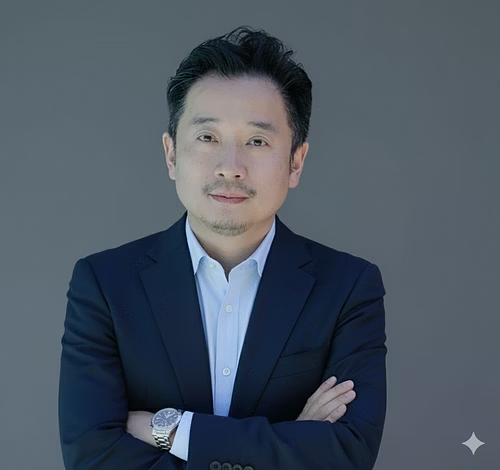
Frank Wang
CTO & Co-Founder
AI engineering leader who turns frontier research into market-defining enterprise products across agentic and vertical platforms. As Head of Engineering at Salesforce AI Research, Frank led breakthrough work on autonomous agents, deep research agents, agent orchestration, and the Agentforce advanced RAG & reasoning engine, post-training the agent, reasoning, deep research, and RAG models behind them. Earlier, as employee #11 and founding engineer at Vlocity (acquired by Salesforce in 2020), he built core platform technology in enterprise software — inventing the award-winning Salesforce OmniStudio Mobile Platform and six vertical industry applications, and growing OmniStudio into a platform spanning 14+ industries that has helped more than 100 large enterprises.
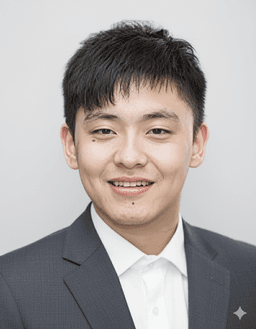
Weiran Yao
CAIO & Co-Founder
AI research leader with deep expertise in large-scale model training, reasoning engines, and multi-agent systems. At Salesforce AI Research, Weiran led the post-training team behind the xLAM large action models, along with the Agentforce planning engine and the CodeGenie agent, and drove the pre-training of Salesforce's CoDA code diffusion model. He recently spearheaded open-source releases including Enterprise Deep Research, Webscale-RL, and CoDA-1.7B, advancing applied AI from research into production at enterprise scale. A CMU Ph.D. in Machine Learning, he has published 70+ papers, holds 13 U.S. patents, and serves on NeurIPS, ICML, ICLR, and ACL committees.