Blog
Beyond the Note: Why Health Systems Need an Orchestration Layer Above Ambient Scribes
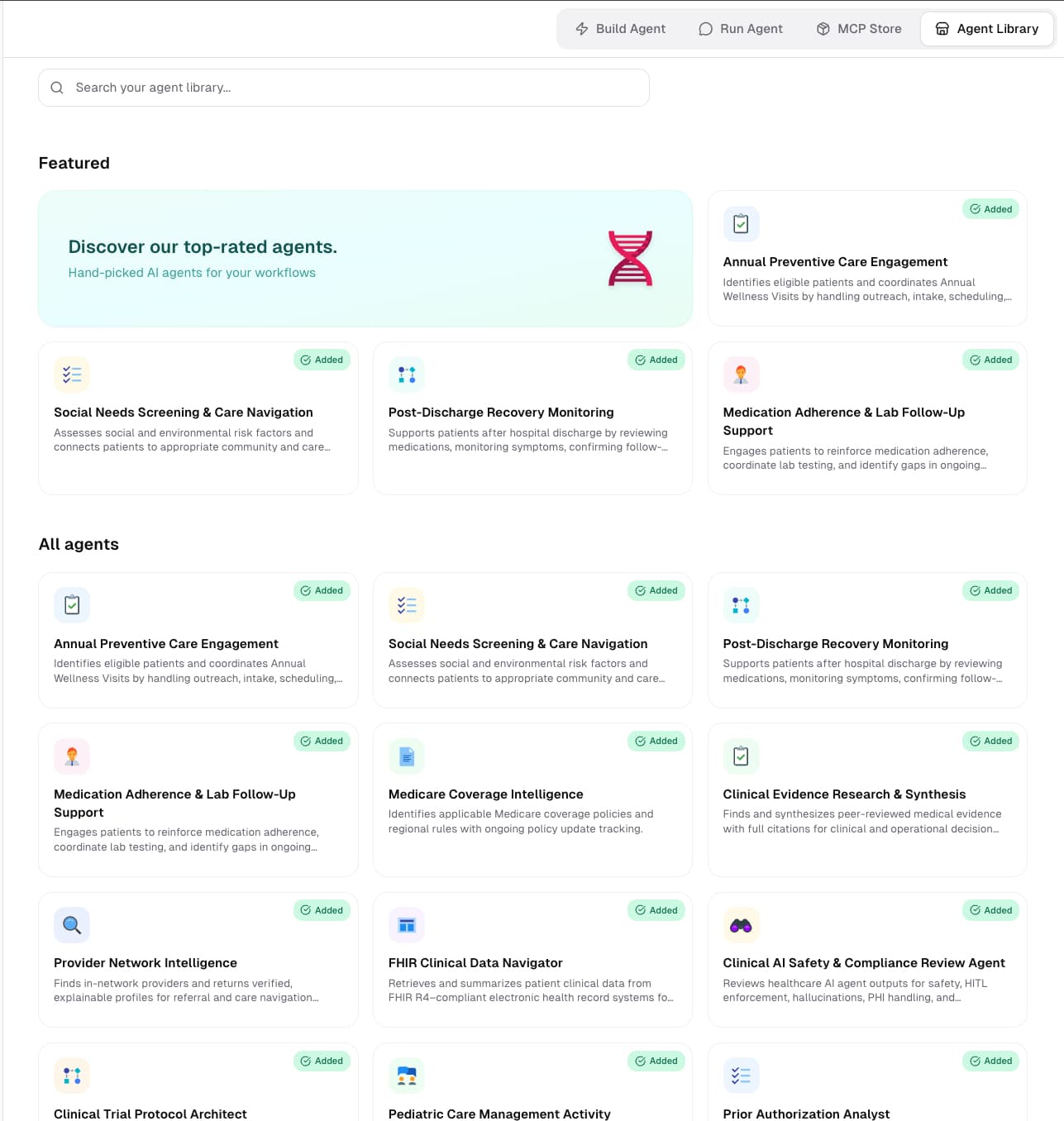
Although ambient AI scribes successfully reduce clinician burnout by automating note-taking, they are passive tools that leave the remainder of the clinical workflow unintegrated and manual. To achieve true efficiency, health systems must adopt an active "orchestration layer" that utilizes specialized AI agents and a healthcare-specific retrieval engine to transform this passive documentation into automated, compliant patient care workflows.
By Frank Wang
The healthcare industry is adopting ambient AI scribes to address clinician burnout, but this solution addresses only part of the challenges in clinical workflow. While these technologies offer efficiency by converting conversations into structured notes, their isolated use leaves broader clinical processes unintegrated. To achieve truly improved workflows, health system leaders must focus on integrating these tools with other elements of care delivery—moving beyond documentation toward system-wide orchestration.
Orchestration: The Missing Link in the AI Stack
Capturing the conversation is a major win, but it’s passive. It is one more in a growing field of point solutions sold to providers. Ambient scribing is a "must-have" for clinician retention. However, a health system that relies solely on a scribe is trading one type of manual labor (typing) for another (managing the AI’s output).
A scribe records audio, a frontier model processes text, and a note is entered into the EHR. But clinical care does not end here; often, the real work starts after the note.
A scribe preserves events. An orchestration layer like Actava.ai uses these notes to automate workflows and guide care teams, transforming documentation into actionable processes that directly enhance patient care.
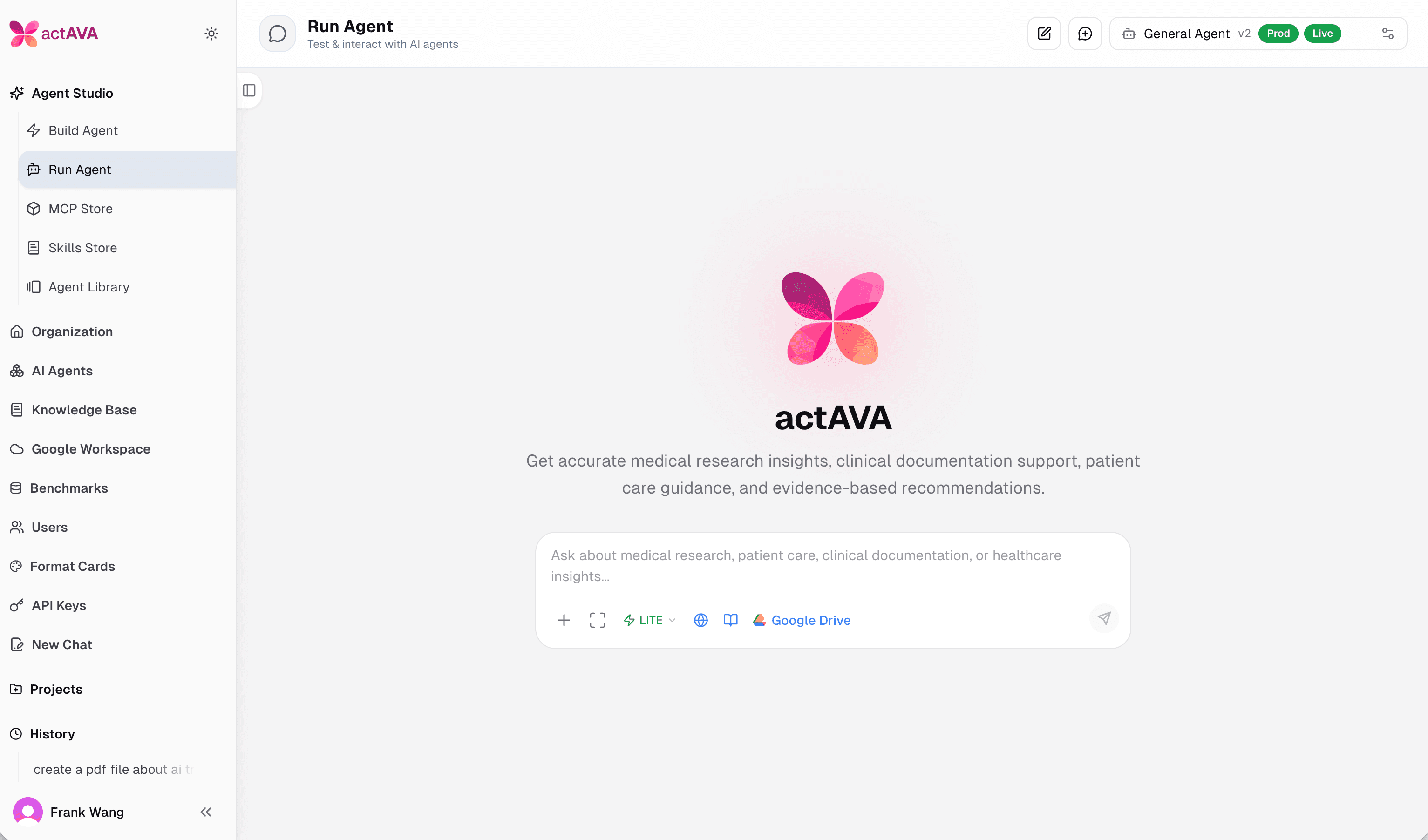
To advance from basic digitization to AI-native operations, health systems need an orchestration layer that connects frontier models, ambient scribes, and care teams into a cohesive, integrated workflow.
Actava.ai is that orchestration layer.
From Documentation to Action
An ambient scribe records what happened; a clinician determines what happens next.
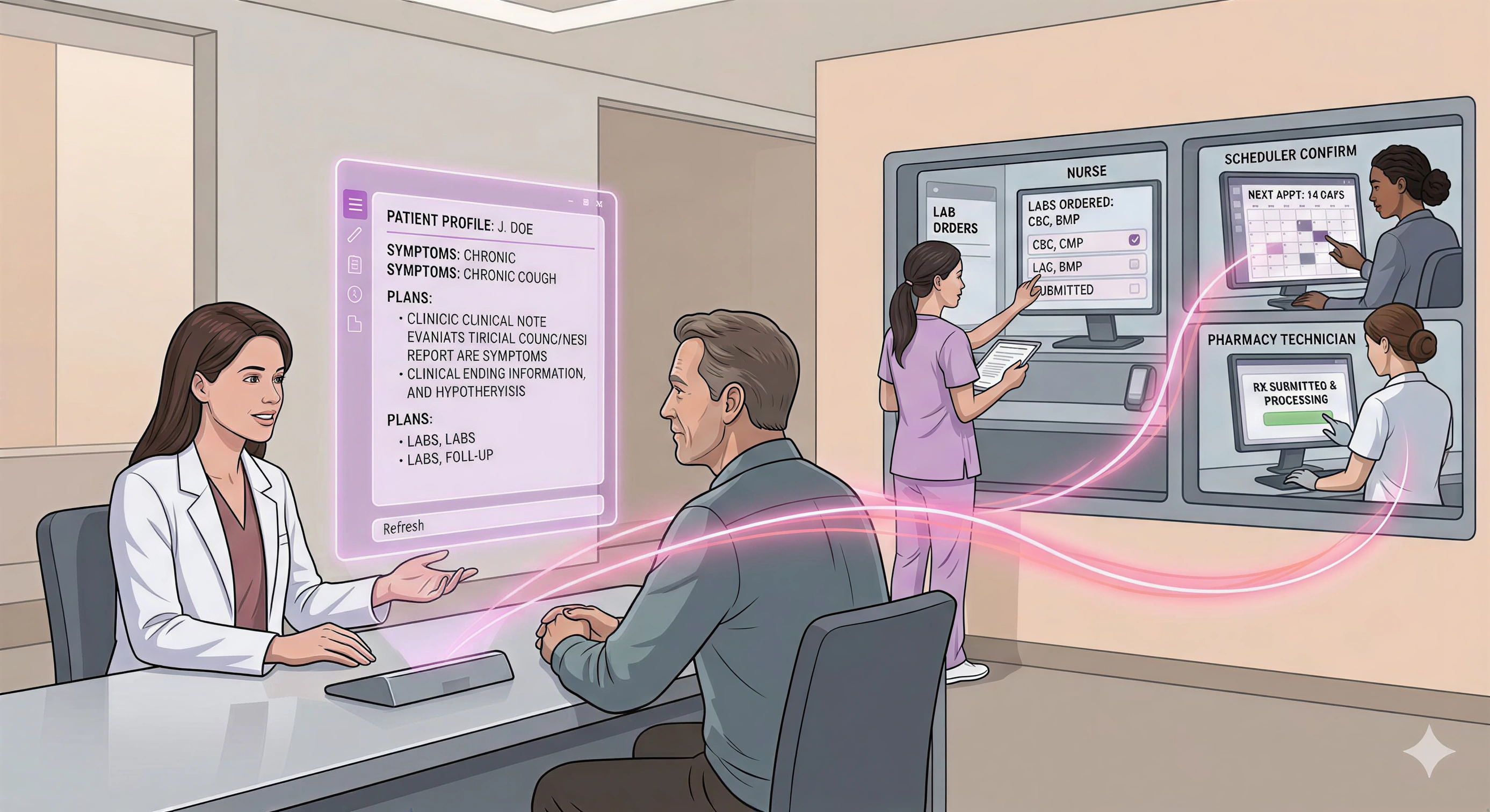
When a doctor tells a patient, "We’re going to start you on 5mg of Lisinopril, I want you to get some blood work done at the lab downstairs, and we’ll see you back in three weeks," the scribe captures those words beautifully.
Agents turn those words into action. They identify intent within the transcript to trigger referrals, queue lab orders, and update the patient's task list. While scribes focus on the past (the encounter), agents focus on the future (the care plan).
For example, shortly after the appointment, an agent can check in with a patient by phone or text to ensure they understand the plan. It can ask open-ended questions like "Can you explain how you'll be taking your new medication?" to identify and correct misunderstandings.
Agents can also ensure that chronic conditions (such as Stage 3 CKD) are captured annually to reflect the patient's true risk profile. If the doctor mentions "Pneumonia" but the Chest X-ray was negative, the agent flags this discrepancy for the doctor to clarify before the note is signed.
And, once a scribed note is finalized, agents can provide a "best-coding” packet that maps clinical language directly to ICD-11 or CPT codes and attaches the specific note snippets that justify those codes.
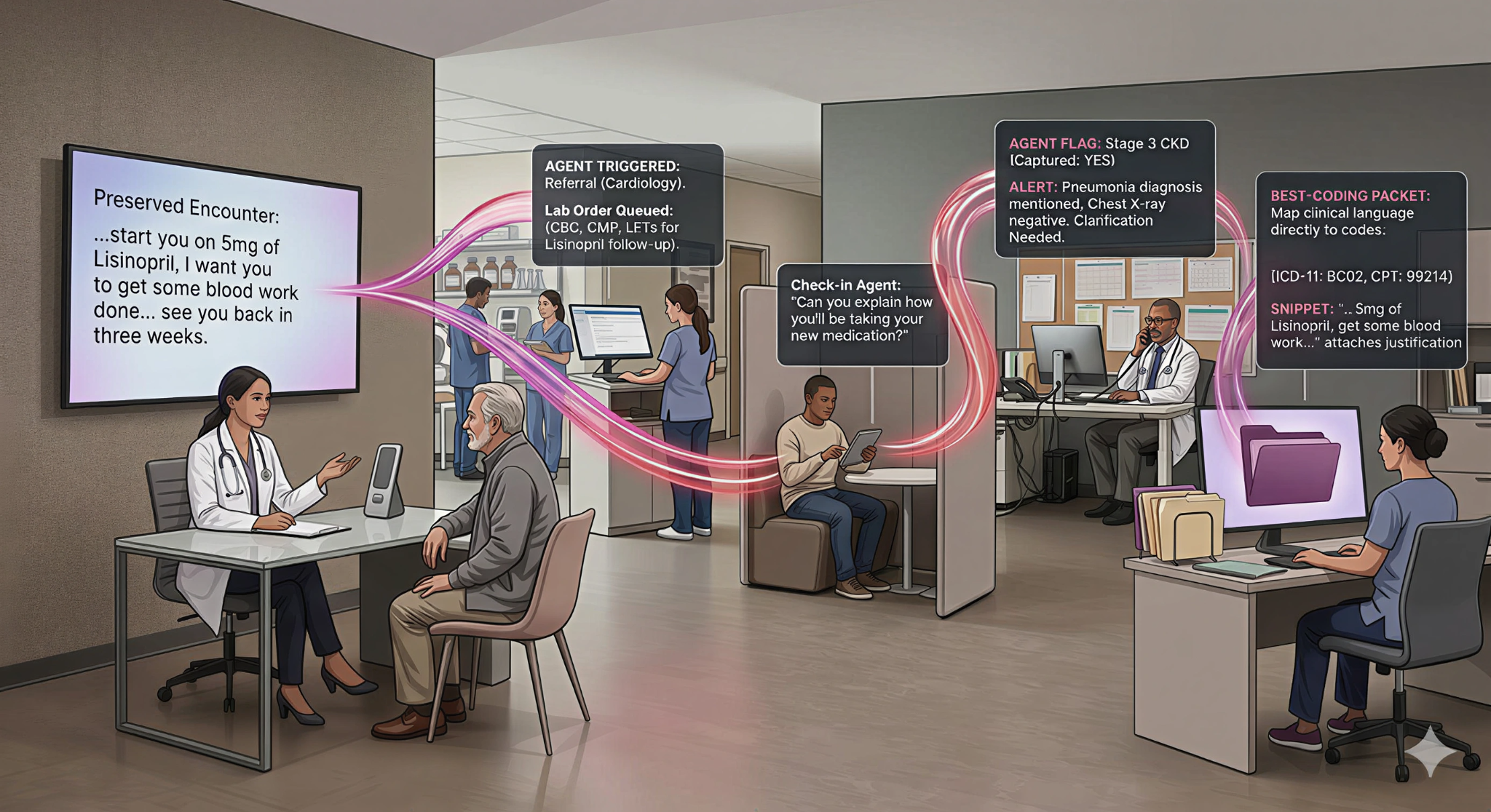
There are many agentic workflows stemming from this initial encounter that require orchestration. Let's take a look at a few.
Engagement Agents
Engagement agents provide "frontline" interactions directly with patients and their caregivers.
Teach-Back Agents: AI-driven "clinical bridge" that automates the gold-standard medical practice of verifying patient comprehension immediately after a care plan is issued.
Adherence & Motivation Agents: Use motivational interviewing rather than reminders to encourage adherence. Adjusts tone—empathetic or humorous—if a patient misses doses, based on patient profile.
Symptom Triage Agents: Analyze patient-reported side effects against care plan "red flags," distinguishing between common reactions and those requiring immediate escalation to a nurse.
Documentation Agents
Clinical Documentation Improvement (CDI) agents ensure clinical specificity and accuracy between a clinician’s narrative and the final billing code.
Concurrent Review Agents: Review as the doctor dictates or types, comparing live notes to patient history, labs, and imaging.
Specificity Gap Detection Agents: Flag unclear diagnoses and suggest specific alternatives, prompting the doctor to clarify or approve for higher accuracy.
Clinical Validation Agents: Ensure documentation supports the Acuity (Severity of Illness) and the correct Hierarchical Condition Categories (HCC).
Coding Agents: Provide an evidence trail for coding decisions, making audits significantly easier.
Logistics Agents
Background agents reduce administrative barriers that undermine care plans and prevent proper billing to follow prescribed care.
Prior Authorization Agents: Check insurance, gather documentation, and submit authorization requests for drugs and procedures within minutes.
Scheduling Optimizer Agents: Schedules and optimizes appointments, tracks cancellations, and rebooks open slots to fit patient schedules.
Formulary & Pharmacy Agent: Verifies medication coverage, and if not covered, recommends a lower-cost, same-class alternative and prepares a draft prescription change.
Monitoring Agents
These agents monitor data streams in the background, add to the original diagnosis and note, and improve all agents' performance for that patient (and similar patients) in the future.
Remote Patient Monitoring (RPM) Agent: Ingests data from wearables and detects early signs of concern, such as weight gain in heart failure patients, by spotting trends.
Digital Twin Agent: Maintains a virtual patient model that simulates care outcomes based on genetics and lifestyle, helping doctors predict dosage effectiveness.
Guardrails, Compliance, & Connectivity
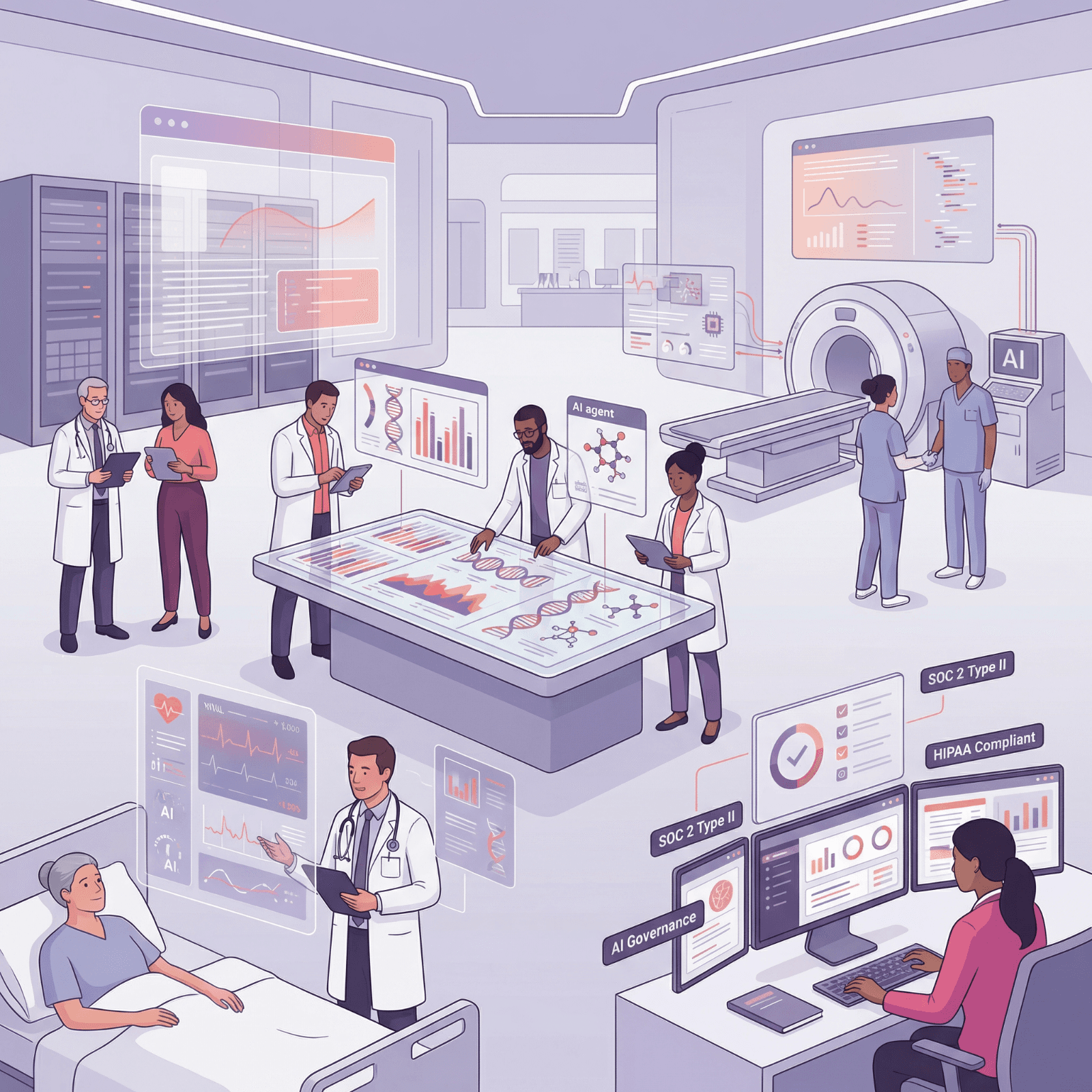
While agentic AI offers substantial potential to enhance provider work, it also introduces several critical risks that require careful consideration. Frontier models, though powerful, are general-purpose tools that can generate inaccurate or misleading information (a phenomenon known as hallucination), which may compromise patient safety if left unchecked. Their lack of "institutional memory" means they cannot automatically align with the nuanced policies, protocols, and best practices unique to individual health systems. This disconnect can result in recommendations that contradict established standards of care or introduce inconsistencies in clinical documentation. Health systems, therefore, should not permit raw large language models (LLMs) to make autonomous decisions regarding the standard of care without stringent oversight and validation processes in place. Additionally, most ambient scribes serve as adjuncts to the Electronic Health Record (EHR), requiring manual intervention, such as copying, pasting, and data verification. This workflow not only increases the risk of introducing errors but also creates additional administrative burdens, potentially negating some of the efficiencies these technologies are intended to deliver. Without robust safeguards, oversight, and integration, the adoption of agentic AI could inadvertently compromise care quality, patient privacy, and institutional compliance.
This is why AI orchestration is the critical next step for health systems seeking to transform workflows, ensuring that point solutions actually improve care delivery.
Actava.ai acts as the connective tissue between the clinical documentation and the broader tech stack. Rather than simply moving text, it actively integrates with the patient’s longitudinal record and the health system's protocols. This orchestration enables agents to transform documentation into concrete actions, ensuring compliance, improving efficiency, reducing manual intervention, and directly supporting care delivery from the note to execution.
Organization-specific protocols: Ensuring documentation complies with the healthcare provider's policies, guidelines, and accepted standards of care.
Regulatory requirements: Ensuring documentation meets specific billing level requirements (ICD-10, CPT) without upcoding or running afoul of governing laws.
Safety checks: Flagging if a scribe’s summary misses a critical condition mentioned in the transcript or suggests a dosage outside of standard safety limits.
By orchestrating data flow between frontier models and the EHR, Actava.ai ensures that recorded information is not only stored but also activated across the care team. This means documentation is consistently leveraged for task coordination, error reduction, regulatory compliance, and real-time follow-through—delivering measurable benefits in workflow and care quality.
The Hierarchy of AI Health Tech
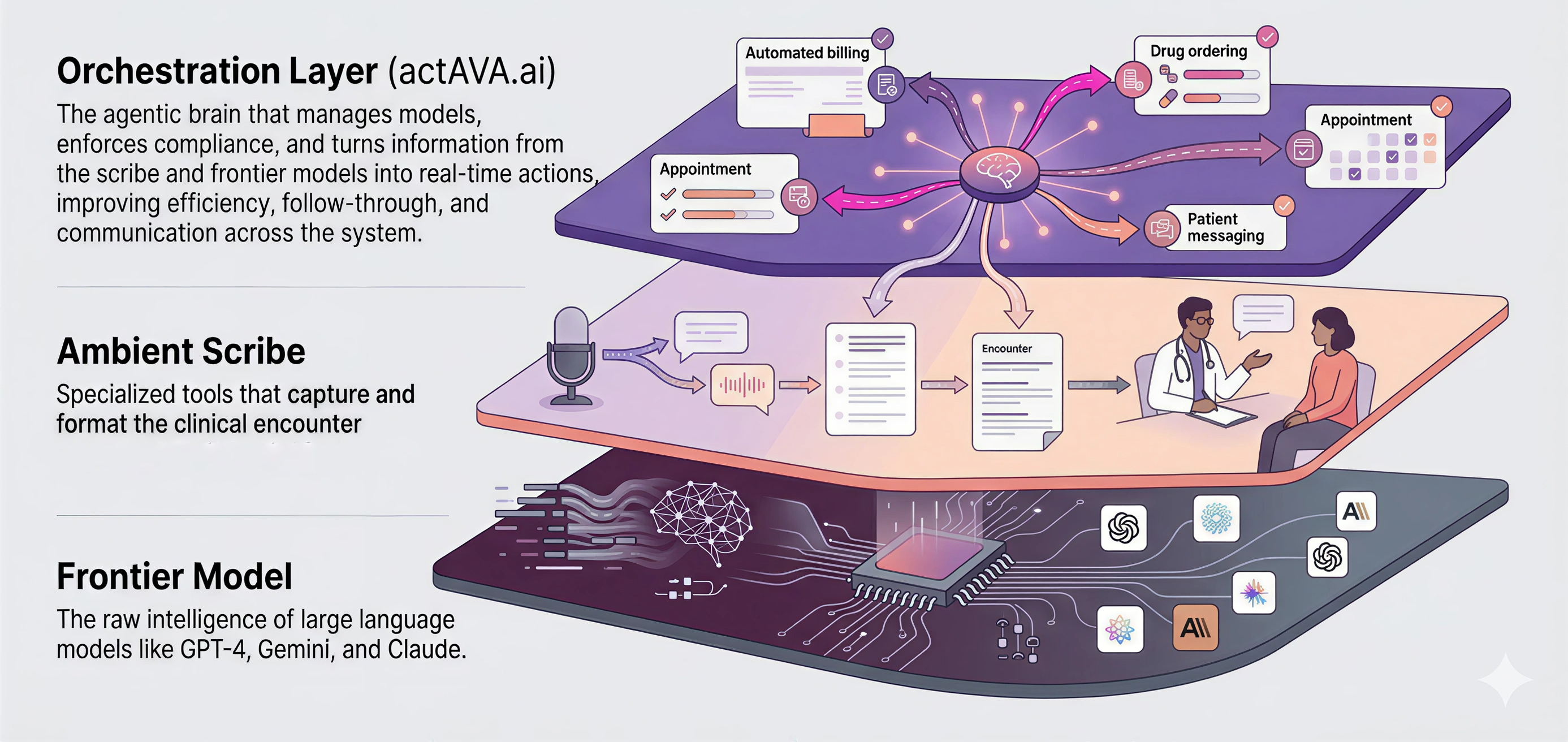
To visualize the future of clinical AI, think of it in three layers:
Frontier Model: The raw intelligence of large language models like GPT-4, Gemini, and Claude.
Ambient Scribe: Specialized tools that capture and format the clinical encounter, such as Heidi Health and Abridge.
Orchestration Layer (Actava.ai): The agentic brain that manages models, enforces compliance, and turns information from the scribe and frontier models into real-time actions, improving efficiency, follow-through, and communication across the system.
In summary, operational excellence in health systems requires a strategy that integrates documentation with action through orchestration. By establishing Actava.ai as an orchestration layer, leaders transform AI investments into better outcomes, compliance, and truly automated workflows. Effective orchestration, not documentation alone, allows health systems to fully realize the promise of both ambient and agentic AI.
The scribe captures the story. Actava.ai executes the work.
Ambient Scribe Success Stories
Beth Israel Lahey Health (BILH): During a six-month rollout, 1,000 clinicians across 47 specialties were offered access to Heidi’s AI scribe, with adoption driven largely by physician advocacy and word of mouth.
Mass General Brigham: After a pilot program, over 2,500 physicians (including 90% of primary care providers) adopted the technology, reducing daily documentation time from 90 minutes to under 30 minutes.
The Permanente Medical Group: Physicians saved a combined 16,000 hours in documentation time, with 84% reporting a positive effect on patient communication.
Northwestern Medicine: Achieved a 112% return on investment, with clinicians saving 7 minutes per encounter and adding 5 additional appointments per clinic day.
UChicago Medicine: Over 800 clinicians use the technology, reporting a drop in burnout from 52% to 39% and a decrease in cognitive load.
Houston Methodist: In the emergency department, 90% of clinicians using the tool said they could not imagine working without it.

Written by
Frank Wang
CTO & Co-Founder
AI engineering leader who turns frontier research into market-defining enterprise products across agentic and vertical platforms. As Head of Engineering at Salesforce AI Research, Frank led breakthrough work on autonomous agents, deep research agents, agent orchestration, and the Agentforce advanced RAG & reasoning engine, post-training the agent, reasoning, deep research, and RAG models behind them. Earlier, as employee #11 and founding engineer at Vlocity (acquired by Salesforce in 2020), he built core platform technology in enterprise software — inventing the award-winning Salesforce OmniStudio Mobile Platform and six vertical industry applications, and growing OmniStudio into a platform spanning 14+ industries that has helped more than 100 large enterprises.