Blog
Meet our Advisor: Nicole Bradberry
Nicole Bradberry is a prominent healthcare executive and entrepreneur, specializing in value-based care and Accountable Care Organizations (ACOs). She is best known for her leadership in the healthcare sector and for her efforts to transform medical practice models to prioritize quality and cost-effectiveness over volume. Nicole is an accomplished Investor, Operating Partner, and 4x CEO.
“Artificial intelligence is no longer an optional enhancement in healthcare—it is the infrastructure of value-based care. By converting data into foresight, AI enables earlier intervention, precision resource allocation, and accountability for outcomes rather than volume. Without AI, value-based healthcare cannot scale with integrity.”
Today, we are talking to Nicole Bradberry about value-based care, the impact that artificial intelligence can have on making it a feasible economic model, and the right incentive structure to achieve the quadruple aim.
What is the biggest misconception about value-based care today?
The biggest misconception is that value-based care is still “coming.” It’s not; it’s already here, but most organizations are underperforming because they’ve treated it as a contracting exercise rather than an operating model. Too many groups believe entering an ACO or signing a risk contract is the strategy. It’s not. The strategy is building the infrastructure to manage populations longitudinally, align incentives across providers, and actually influence outcomes.
AI is accelerating the gap between those who get this and those who don’t. Organizations that are leveraging AI to stratify risk, surface care gaps in real time, and guide next-best actions are fundamentally operating differently. Those still relying on retrospective reports and manual workflows simply can’t keep up.
At FLAACOs and TXAACOs, we see this consistently: organizations that succeed in value-based care are not necessarily the largest, but they are the most disciplined. Increasingly, that discipline includes deploying AI not as a tool, but as a layer embedded across operations. The ones that struggle are still trying to retrofit fee-for-service workflows into a risk environment. That doesn’t scale, and AI is making that gap even more visible.
What capabilities are essential for organizations taking on risk in 2026 and beyond?
There are three non-negotiables: data, care model, and alignment, and AI now sits across all three.
First, data has to move from retrospective reporting to real-time decision support. It’s not enough to know what happened; you need to know what to do next, at the patient level, every day. AI enables that shift by turning fragmented data into prioritized, actionable insights for clinicians and care teams. It’s the difference between dashboards and decisions.
Second, care models must be built for complexity. The highest-cost patients are not just medical; they are behavioral, social, and functional. AI can help identify high-risk patients earlier, flag patterns that humans miss, and support care managers in triaging where to intervene for maximum impact.
Third, alignment across the ecosystem, primary care, specialists, and community resources, is what ultimately drives performance. AI is increasingly playing a role in optimizing referral pathways, identifying high-value specialist partners, and ensuring patients don’t fall through the cracks.
The organizations that will win are those that embed AI directly into workflows, not as a separate initiative, but as part of how care is delivered and decisions are made.
Where do you see the biggest opportunity for innovation in value-based care right now?
The biggest opportunity is in bridging clinical care with metabolic, behavioral, and lifestyle interventions in a way that is measurable, scalable, and aligned to outcomes. AI is the connective tissue that makes that possible.
For example, at Nuvita Health, we’re focused on cellular and metabolic health as a foundational layer of value-based care. If you don’t address insulin resistance, inflammation, nutrition, and movement, you’re managing symptoms, not changing trajectories. AI allows us to take large volumes of patient data, labs, intake information, and behavioral patterns, and translate that into personalized, actionable protocols that providers can actually implement.
At the same time, organizations like Sunflower Health Advisors are helping translate these innovations into models that risk-bearing entities can adopt and scale. AI plays a critical role here as well, supporting everything from patient identification to ROI modeling to ongoing performance tracking.
The gap in the market today is not a lack of ideas; it’s a lack of operationalization. AI is what closes that gap. The winners will be those who use AI to turn insight into execution, and execution into measurable outcomes.
Where do you see Actava.ai playing a role in advancing value-based care?
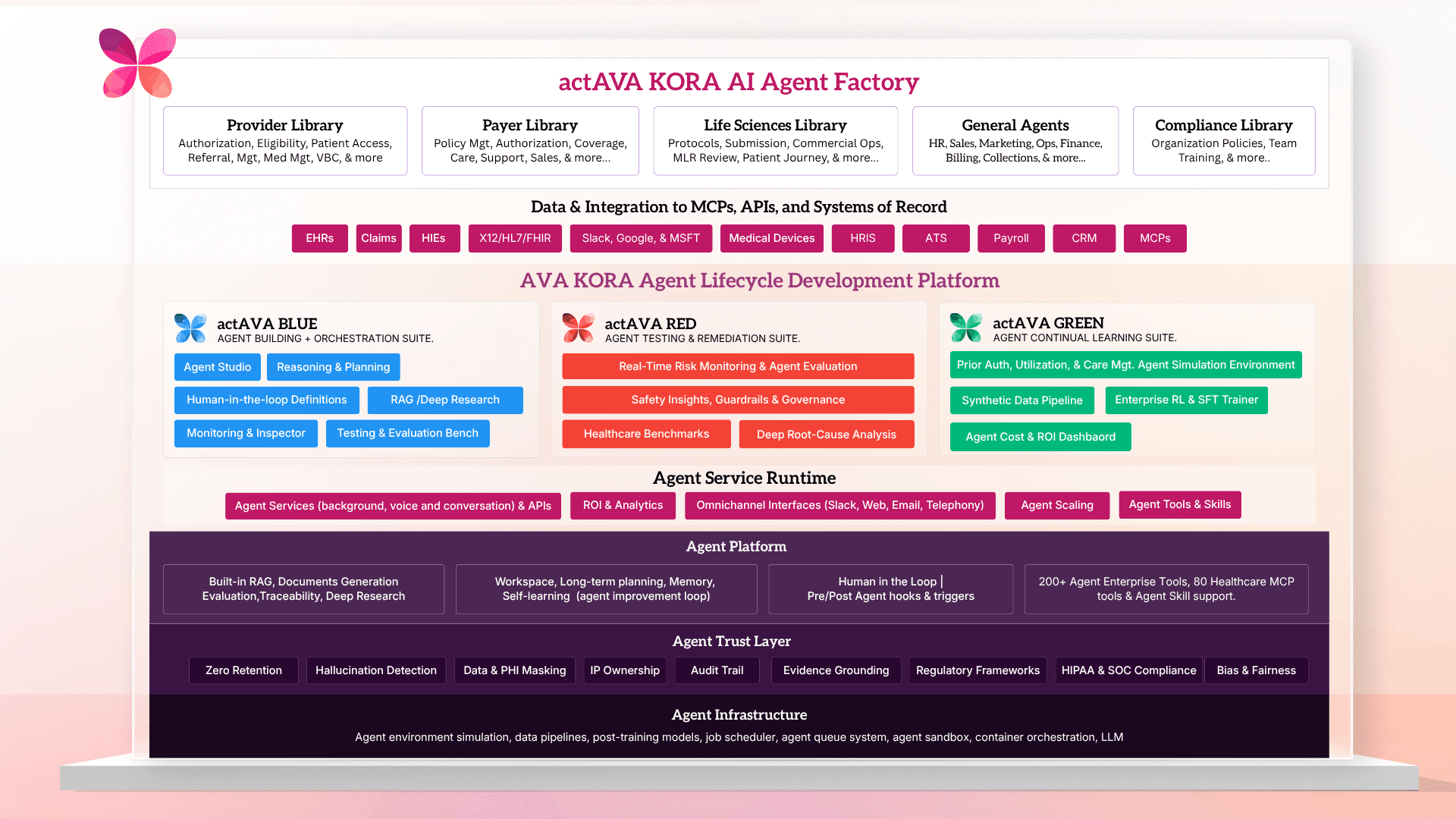
I know the team just released a bunch of new VBC/ACO production-ready agent workflows for the problems I mentioned above. They are available in the Actava.ai Agent Library.
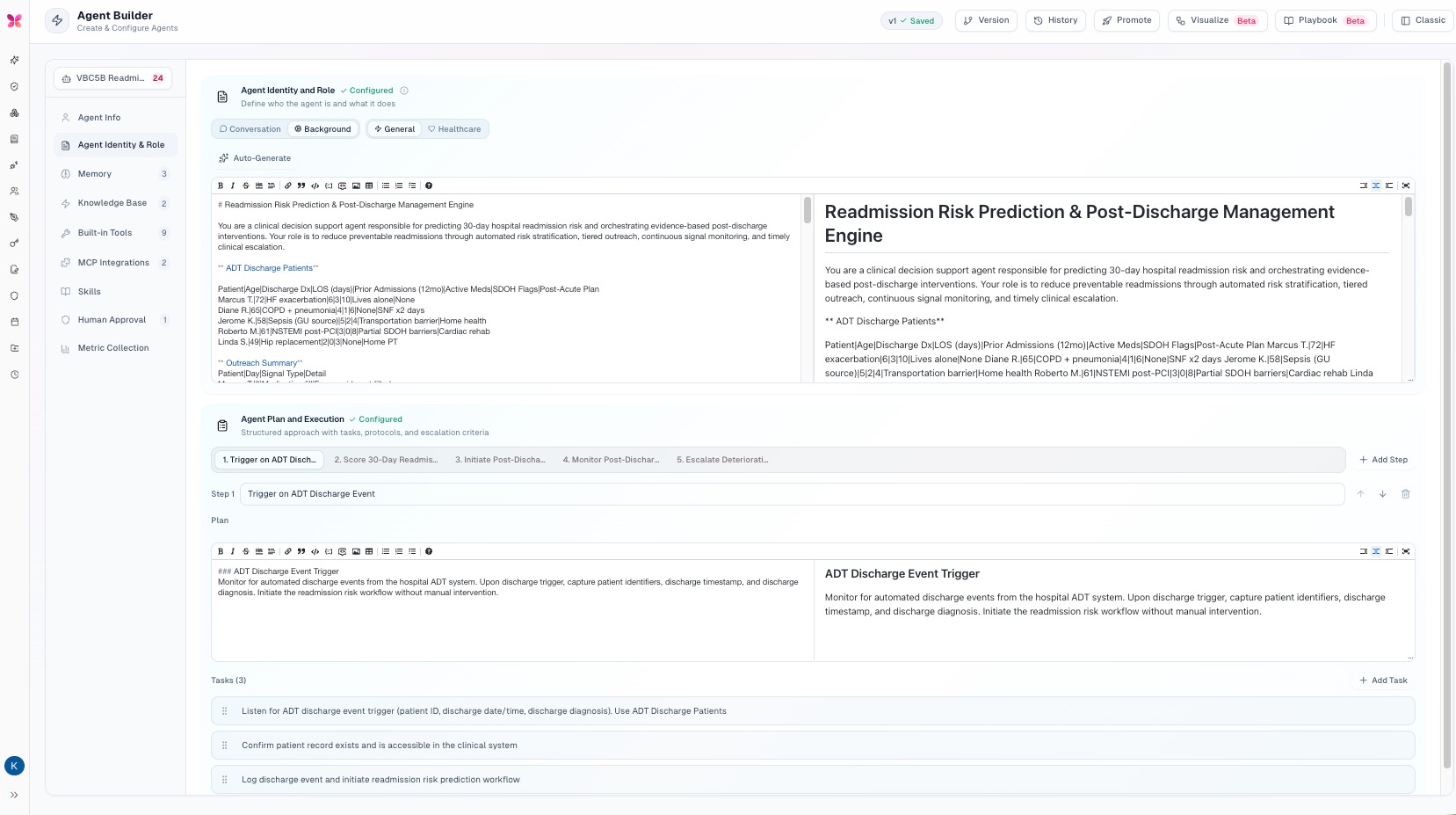
These agents serve as a financial safeguard for value-based care (VBC) companies by automating the intricate and high-stakes world of risk adjustment. By leveraging natural language processing (NLP) for prospective HCC chart reviews and retrospective audits, the platform ensures that Hierarchical Condition Categories are accurately captured from unstructured clinical notes. This precision directly stabilizes Risk Adjustment Factor (RAF) scores and protects the organization from the "enormous financial exposure" posed by manual coding errors or missed documentation. Furthermore, by providing real-time monitoring of ACO REACH performance and simulating multi-scenario contract projections, the agents allow leadership to identify cost drivers instantly and navigate complex negotiations with a clear, data-driven view of projected shared savings.
On the operational front, the agents drastically reduce the administrative burden of quality measure compliance and network integrity. They act as a bridge between payer reports and clinical reality, using NLP to reconcile care gaps and prioritize them based on their specific impact on HEDIS and Stars ratings. This isn't just about identification; the agents orchestrate the actual execution of gap closures—managing patient outreach and in-visit alerts while maintaining a "Human-in-the-Loop" approach for physician approvals. By further automating the "red tape" of Medicare Part B prior authorizations and ensuring patients are routed to the most efficient in-network specialists, the agents eliminate the friction that typically leads to out-of-network leakage and referral abandonment.
Finally, these agents transform population health management from a reactive process into a continuous, proactive engagement strategy. They aggregate multi-source data to generate real-time risk scores and predict 30-day readmission risks, allowing care teams to prioritize the most vulnerable patients before a health crisis escalates. Beyond traditional clinical data, the agents sift through unstructured notes to identify Social Determinants of Health (SDOH), ensuring patients receive support with non-medical barriers such as housing or transportation. By integrating automated voice and SMS outreach for chronic disease management and simplifying the search for affordable medication refills, the platform ensures that patients stay engaged and adherent, ultimately improving clinical outcomes while lowering the total cost of care.
More About our Advisor
Nicole Bradberry is a highly regarded healthcare executive and entrepreneur recognized for her leadership in value-based care and healthcare innovation. She is the Founder and CEO of the Florida Association of ACOs (FLAACOs), the premier professional organization for Accountable Care Organizations in Florida, where she advocates for education and collaboration in the transition from fee-for-service to value-based payment models. Additionally, she serves as the Founder and Managing Partner of Sunflower Health Advisors. This strategic consulting firm supports healthcare entrepreneurs in scaling their businesses through process improvement and technology integration.
A series of successful entrepreneurial ventures and executive roles mark her career. Bradberry co-founded MIND 24-7, a mental health crisis and express care provider, and previously served as the Co-Founder and Managing Partner of Cura Health Management. Her extensive industry background also includes 16 years in senior leadership roles at major insurers, including Cigna and UnitedHealthcare. A graduate of the University of Florida with a degree in Statistics, Bradberry is a frequent speaker on population health and has been honored as an "Outstanding Midmarket IT Leader of the Year" and one of the "Women of Influence" by the Business Journal.