Blog
Meet our Advisors: Robby Peters
Robby Peters is a Co-Founder and Managing Partner at SemperVirens Venture Capital, an ecosystem-driven venture firm dedicated to backing the B2B companies shaping the future of health, wealth, and work. He is also an advisor to ACTAVA.ai. Driven by the core philosophy that the best venture capitalists must act like operators to truly earn their spot on a startup's cap table, Robby Peters has spent his career bridging early-stage founders and massive enterprise networks. Under his leadership, SemperVirens has grown into a premier investment force across workforce technology, digital health, and fintech, empowering startups with the precise go-to-market strategies and distribution channels needed to conquer complex, regulated industries.
"The companies building AI for healthcare don't just need capital — they need access to the buyers, operators, and decision-makers who can move regulated markets. That's where the real acceleration happens. AI that can navigate complexity, prove itself inside a health plan or provider group, and scale without breaking compliance is the category I'm most excited about right now."— Robby Peters, Managing Partner, SemperVirens Venture Capital
Today, we're speaking with Robby about investing in companies focused on healthcare and people operations — taking a deep look at how AI is driving his thesis and shaping the companies he backs.
THE CONVERSATION
Agentic Workflows for Clinical AI
ACTAVA: You've been an early and consistent investor in digital health infrastructure. How are you thinking about the shift from AI tools to AI agents in clinical settings?
The distinction between a tool and an agent matters enormously in healthcare. Tools answer questions. Agents complete tasks. When we talk about agentic workflows for clinical AI, we're talking about systems that can take a clinical decision — a prior auth request, a care plan adjustment, a utilization review — and carry it through to completion across multiple systems, without requiring a human to hold its hand at every step.
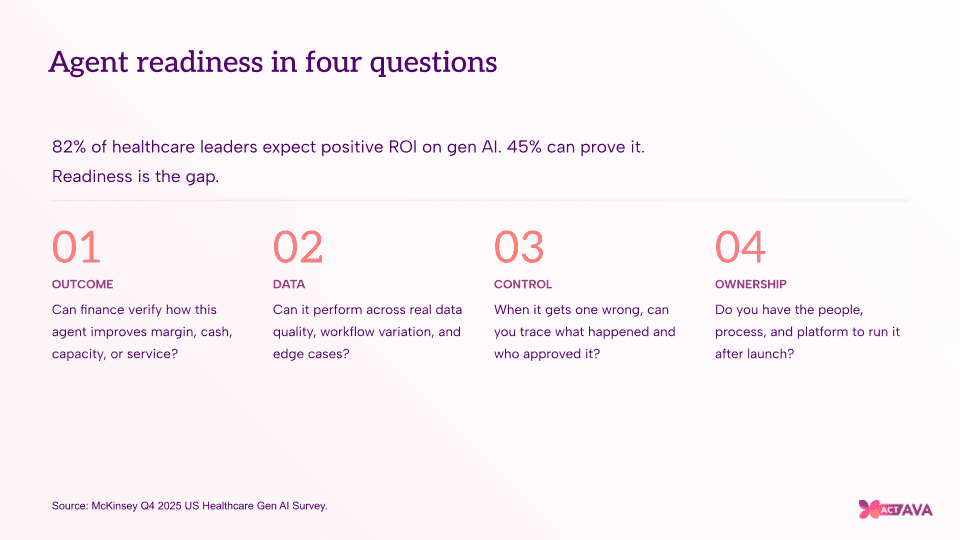
That's a fundamentally different category of investment. The companies I'm most interested in aren't building AI models — they're building the infrastructure to deploy those models as governed, accountable agents that health systems and payers can actually trust. The trust problem is harder than the intelligence problem right now. Frontier models are extraordinarily capable. What's missing is the governance layer that lets a Chief Medical Officer say, "Yes, I know exactly what that agent did, why it did it, and what happens when it's wrong."
The companies that crack this (combining genuine clinical task completion with audit trails, human oversight gates, and measurable ROI) will define a new generation of healthcare infrastructure. That's where we're placing conviction.
Specialty Practice Back-Office Automation
ACTAVA: SemperVirens has backed companies across behavioral health, women's health, and care delivery. What's your read on the back-office opportunity in specialty practices?
Specialty practices are dramatically underserved by the software they're running on. A behavioral health practice, a women's health clinic, an Applied Behavior Analysis (ABA) provider — these organizations have billing complexity, documentation requirements, and payer relationships that general-purpose RCM tools were never designed to handle. They're patching it together with manual workflows and staff hours, and the margin pressure is real.
We've seen it directly in our portfolio. SemperVirens companies like Rula and Spring Health are scaling behavioral health networks, and the operational complexity of doing that (credentialing, scheduling, outcomes tracking, payer contracting) is enormous. The practices that will survive and grow are those that can automate the back office without adding headcount linearly. AI agents built specifically for specialty workflows are the only way to do that at scale.
I'm particularly excited about ABA. It's one of the most complex billing environments in all of healthcare, and the gap between what practices need and what their current software provides is substantial. The right AI agent in that workflow — one that understands supervision ratios, concurrent codes, session-by-session data requirements — could transform the unit economics of a provider organization overnight.
Healthcare Cost Containment for Self-Insured Employers
ACTAVA: SemperVirens has a unique vantage point through its corporate LP base, including MetLife, Cigna, and ADP Ventures. How does the self-insured employer lens shape your healthcare AI thesis?
The largest employer in almost every U.S. state is a healthcare company — that's something we think about constantly. But the self-insured employer angle is equally important. When a Fortune 500 company is bearing direct financial risk for its employees' healthcare costs, every dollar of administrative waste, every denied claim that should have been approved, every care management touchpoint that didn't happen — that's a cost the CFO owns. Not a premium line item. A real liability.
Companies like Rightway in our portfolio are helping employers navigate this — guiding employees toward higher-value care while reducing total cost. The next frontier is using AI to automate the operational layer: prior authorization on behalf of self-insured employers, real-time utilization management, proactive care coordination. The employers who get this right won't just control costs; they'll improve outcomes, which, in a self-insured world, are financially the same thing.
Our strategic LP relationships with companies like Cigna and MetLife aren't just capital relationships. They are a window into what the largest buyers of healthcare services actually need from AI vendors. That intelligence is invaluable when we're evaluating early-stage companies in this space.
Healthcare Workforce Supply & Retention Tech
ACTAVA: Workforce is a theme across your portfolio. From Stepful to Multiverse to your HR tech roots. How does that connect to your healthcare thesis?
Healthcare has a workforce crisis that won't be solved by training more nurses or paying locum agencies more. The supply problem is real, but the retention and utilization problems are at least as large and much faster to address with technology. A nurse who spends 60% of her shift on documentation and administrative follow-up isn't providing 60% less care because she doesn't care — she's providing it because no one has automated the work that doesn't require a clinical license.
That's where AI has an enormous role to play. Companies like Stepful, which is training the next generation of allied health workers, are addressing the supply issue. But addressing retention means reducing the administrative burden that drives burnout — and that is an AI automation problem, not a training problem. The two approaches are complementary, and we're positioned to support both ends.
I'm also closely watching the intersection of workforce analytics and AI. Health systems that can forecast staffing needs, detect early signs of burnout, and optimize scheduling with AI-powered tools will have a structural advantage in retention over those still relying on spreadsheets. That's an investment thesis with a very large TAM and a very clear buyer. Every health system CFO who has lost staff to travel nursing in the last five years.
Payer Operations Automation (Claims, Appeals, and Beyond)
ACTAVA: Payer operations is arguably the highest-concentration area of administrative waste in US healthcare. Where do you see the AI opportunity?
The payer operations space is where I see the most immediate and measurable ROI from AI agents. We're talking about prior authorization, claims adjudication, utilization management, denial management, appeals — processes that are running at enormous volume, consuming massive amounts of human labor, and generating wildly inconsistent outcomes. Prior auth alone costs the healthcare system somewhere between $12 and $40 per transaction when processed manually. Multiply that by the volume of transactions flowing through a mid-size payer, and you have a cost problem that makes even the most expensive enterprise software look cheap by comparison.
What's compelling to me now is that the regulatory environment is catalyzing adoption. CMS-0057-F's electronic prior authorization mandates have created a hard deadline that payers cannot ignore. MHPAEA parity enforcement is adding compliance complexity that manual processes cannot handle consistently. The payers that were dragging their feet on automation are now running out of runway to delay. That's an environment where the right AI platform — one that handles the full workflow end-to-end, produces the documentation a regulator can audit, and integrates with the actual systems payers run — has an enormous addressable market opening up in real time.
Personalized Healthcare and Wellness
ACTAVA: SemperVirens has backed companies like Midi Health in women's health and Carrot in family benefits. How does personalization fit into your AI investment lens?
Personalization is where the consumer experience of healthcare starts to look like that of every other consumer category — and the gap between what's possible and what most people experience remains enormous. We backed Midi Health because Joanna Strober and her team saw that women going through perimenopause and menopause were essentially invisible to a healthcare system that wasn't designed to serve them well — and that insurance-covered, personalized care was both clinically superior and economically viable at scale.
AI changes the personalization equation fundamentally. It makes it possible to deliver care that adapts to an individual's clinical history, preferences, and real-time health data at a cost that allows broad access — not just the kind of white-glove concierge medicine that has always existed for wealthy patients. The companies I want to back in this space are the ones using AI not just to make recommendations but to coordinate the actual delivery of personalized care: connecting the right clinical resource at the right moment through the right channel, with documentation and billing handled automatically in the background.
The patient who gets a follow-up from their care manager 48 hours after a behavioral health appointment because an AI identified a dropout risk signal — that's personalization. The patient whose prior authorization was submitted before she even left the specialist's office because an agent was running in the background — that's personalization. The companies building that layer are where I'm spending the most time.
BONUS ROUND
What excites you about ACTAVA, their problem space, and the team?
The companies I back face a consistent problem as they scale: the healthcare operations workflows that drove their early growth become the operational ceiling that limits their next phase. A behavioral health network hitting 500 providers suddenly has a utilization management problem. A digital health platform expanding into self-insured employers suddenly has a prior authorization problem. A value-based care company that suddenly adds Medicare Advantage lives to its care management documentation has a problem. These aren't edge cases; they're the table stakes for reaching enterprise scale in this market.
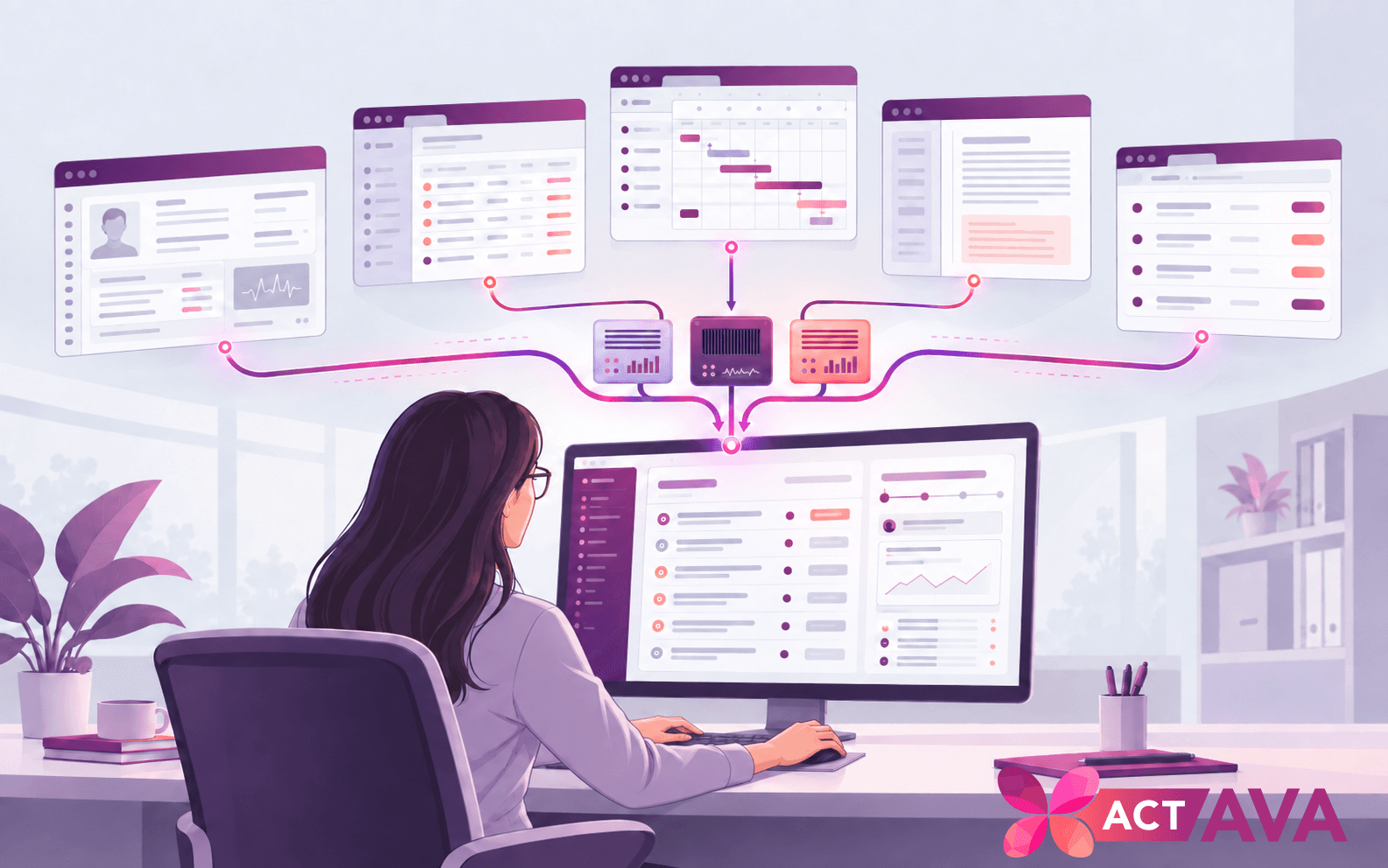
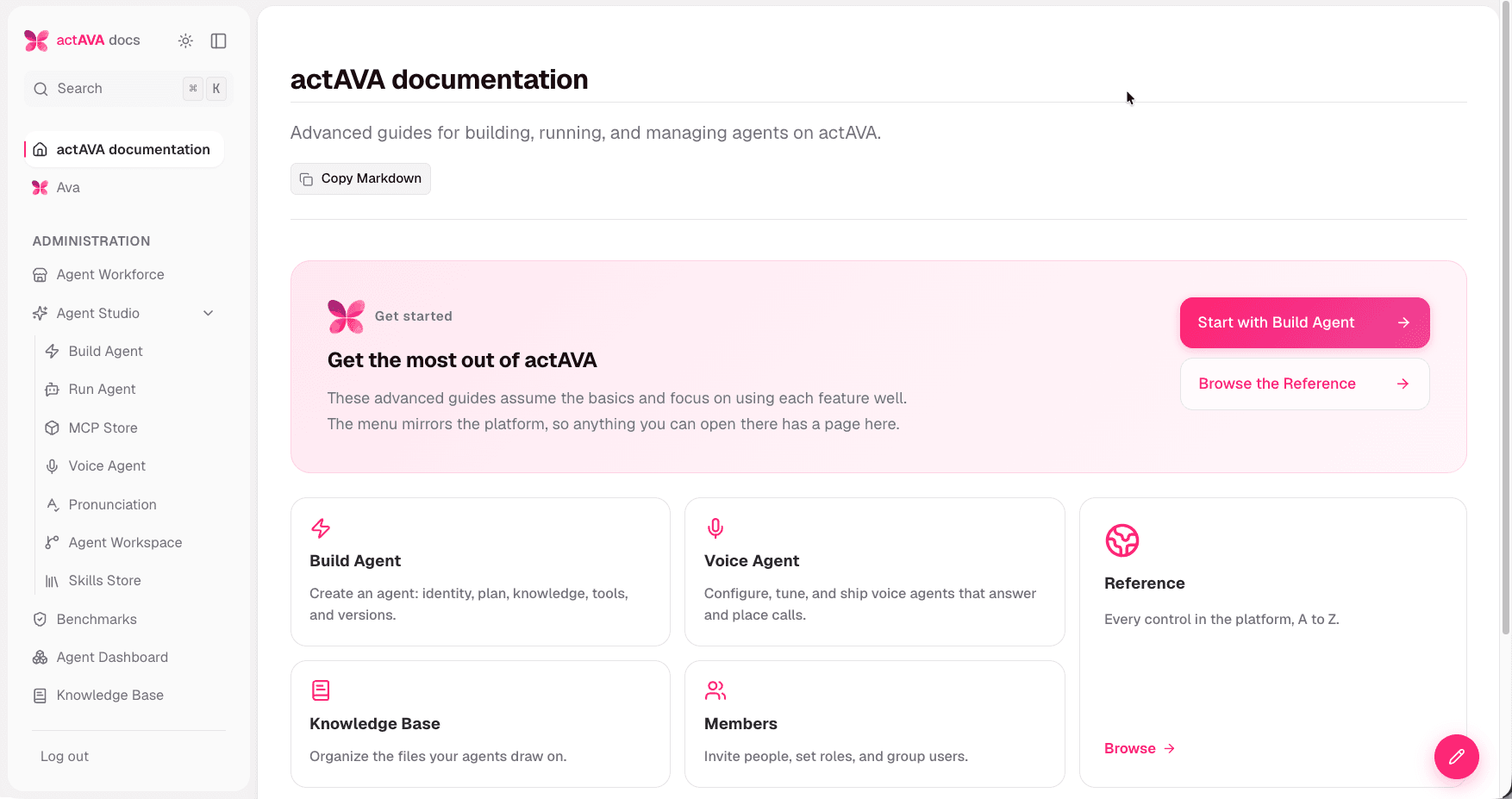
What ACTAVA has built with KORA is the platform that addresses those problems at the agent level. Not a point solution for one workflow, but a governed orchestration layer that can deploy purpose-built agents across the full stack of payer operations — prior auth, utilization management, claims, care management, compliance — with the audit trail and human oversight architecture that regulated healthcare requires. That's a platform that has direct utility for practically every company in our portfolio operating in the health and people operations space.
Three things specifically excite me about the ACTAVA team and their approach. First, they're healthcare-native. This isn't a horizontal AI platform trying to find a vertical. They built KORA for payer operations from day one — the agent library, the workflow taxonomy, the compliance infrastructure. That specificity is a real moat in a regulated market where generic solutions consistently fail. Second, they've done the work to measure what agents can actually do. χ-Bench is the kind of honest, rigorous self-assessment you rarely see in enterprise AI — a published benchmark that tells the market where agents currently perform and where the work remains. That builds the kind of trust that enterprise buyers require. Third, the KORA governance architecture (approval lifecycle, audit log, versioned agents) directly addresses the governance gap that is the primary reason health plans and health systems don't deploy AI at scale. ACTAVA isn't selling intelligence. They're selling accountable intelligence. In healthcare, that distinction is the whole game.
More About Our Advisor
Robby's investment strategy is deeply anchored in his background as both a corporate consultant and an ecosystem builder. Prior to co-founding SemperVirens in 2018, Robby sharpened his expertise in enterprise adoption and workforce dynamics as a Benefits Consultant at Sequoia and as a Co-Founder of PeopleTech Partners. These roles provided him with firsthand insights into how Fortune 500 employers, health plans, and HR executives evaluate new technology — a playbook he now uses to help his portfolio companies scale.
Today, SemperVirens manages approximately $500 million in assets under management, anchored by a $177 million fund close across Core Fund III and Growth Opportunity Fund II. Robby and his team focus primarily on Seed and Series A rounds, with a strong emphasis on startups leveraging AI to transform enterprise workflows, care delivery, and financial infrastructure.
Spearheaded by Robby to combat the rising complexity of enterprise sales, the founder-focused SemperVirens Accelerator equips early-stage startups with immediate access to over 200 senior corporate executives. The program is heavily supported by strategic industry titans, including ADP Ventures, Paychex, MetLife, and The Cigna Group. Across its portfolio, SemperVirens has directly influenced more than $175M in ARR and facilitated over 5,000 customer introductions for its companies.
Based in the San Francisco Bay Area, Robby continues to build a specialized, high-impact venture model that offers startups the intimate focus of a boutique firm alongside the massive distribution engine of a multi-stage fund. You can connect with Robby on LinkedIn or learn more about SemperVirens at sempervirensvc.com.