Blog
How Johns Hopkins is Owning its Agentic Future
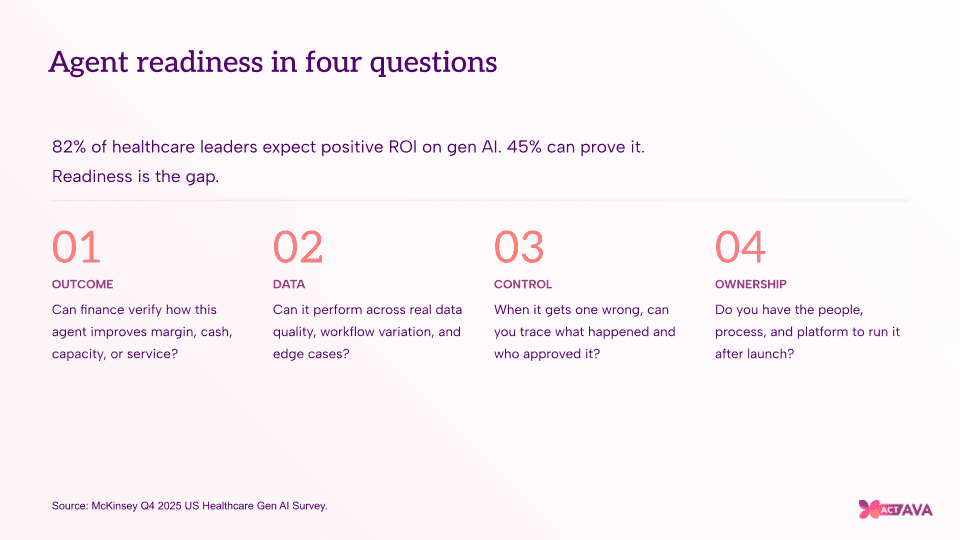
Dr. T. Y. Alvin Liu directs the Gills AI Innovation Center at Johns Hopkins, launched by a $10 million gift from Dr. James Gills, an ophthalmologist and early NVIDIA investor. His view on where healthcare AI is heading is blunt: buy the application, and you still rent the intelligence underneath it. In this interview, he walks through the AI brain he's building to capture the center's institutional memory, why "own our AI destiny" is the answer every health system gives when you remove the resource constraint, and the gap that should worry everyone. AI-native vendors sell the top 10% of workflows, the biggest problems with the biggest markets. Nobody sells the other 90%, because they're too small, too specific, too idiosyncratic to your organization. That's the long tail ACTAVA is built for, and it's where ownership pays off: you come out owning a post-trained model that runs 20 to 100 times cheaper, is your IP, and is trained on your data. Owning your workflows matters. Owning the model that runs them is what makes you AI-native.
By Joey Kennedy
Buy the application, and you still rent the intelligence underneath it.
Dr. T. Y. Alvin Liu, director of the Gills AI Innovation Center at Johns Hopkins, on building an AI brain, the 90% of workflows no vendor will sell, and owning the model instead of renting it.
ACTAVA KORADr. Alvin Liu directs the Gills AI Innovation Center at Johns Hopkins and sits on the health system's AI governance team. A $10 million gift from Dr. James Gills, an ophthalmologist and early investor in NVIDIA, launched the center about two years ago. Its three pillars are ophthalmology AI research, collaboration across academia and industry, and commercialization. AI runs through its DNA.
This is the same team that put frontier agents through rigorous benchmarking on ACTAVA before deploying anything, so the ownership argument isn't theory for him. It's what the evidence pushed him toward. We asked Alvin about the AI brain he's building to capture the center's institutional memory, why healthcare organizations should build one, and why owning the model instead of renting it is what separates AI-native organizations from everyone else.
You're building an AI brain for the center. What is it?
Institutional memory usually lives in the heads of people who have been around a long time, buried in email chains and PDF documents that describe how the center runs. It doesn't scale, and when those people leave, the memory leaves with them.
So I'm building a workflow that captures every aspect of the Gills AI Innovation Center. Every contract, every operating procedure, every email tied to the center feeds a database layer, and I build an intelligence layer on top of it.
That intelligence layer is the point. It sits across everything the center does and informs every workflow, from research to collaboration to commercialization. Then I can ask real questions. How many external organizations have we engaged? How many became concrete collaborations? How long does a contract take to sign, and why did that change?
My definition of success is becoming replaceable. I want to fully replace the 2026 version of myself, so whenever I leave, I can pass everything on.
Why build at all? Many organizations default to buying.
Every organization toggles between build and buy based on bandwidth, expertise, and culture. But give a healthcare organization unlimited resources and ask the question, and the answer comes back every time. Our workflows and data are too sensitive to hand off. We want to own our AI destiny.
That instinct runs deep in healthcare, and it should.
Where does the market leave you exposed?
Look at what AI-native vendors sell today. Revenue cycle, patient access, prescribing. The biggest problems with the biggest markets. That makes sense for them.
But if you believe in what AI can do in 2026, you want AI in every workflow you run. Say you have 100 workflows worth transforming. The market serves maybe the top 10%. Nobody sells the other 90% because those problems run too small, too specific, too idiosyncratic to your organization. You have to build them. Most healthcare organizations can't.
When I've raised this with other health system leaders, the reaction is the same across the board. It's how you deploy AI across the 90% everyone else ignores.
10%
of your workflows are the top-market problems vendors actually sell
90%
are too small, too specific, too idiosyncratic. Nobody sells them.
Teams feel vendor fatigue and AI fatigue. What makes ACTAVA different?
You can't buy a vendor for all 100 workflows even if they existed. You'd need to hire AI researchers and AI engineers and set them to building and managing the 90% you don't outsource to point-solution vendors.
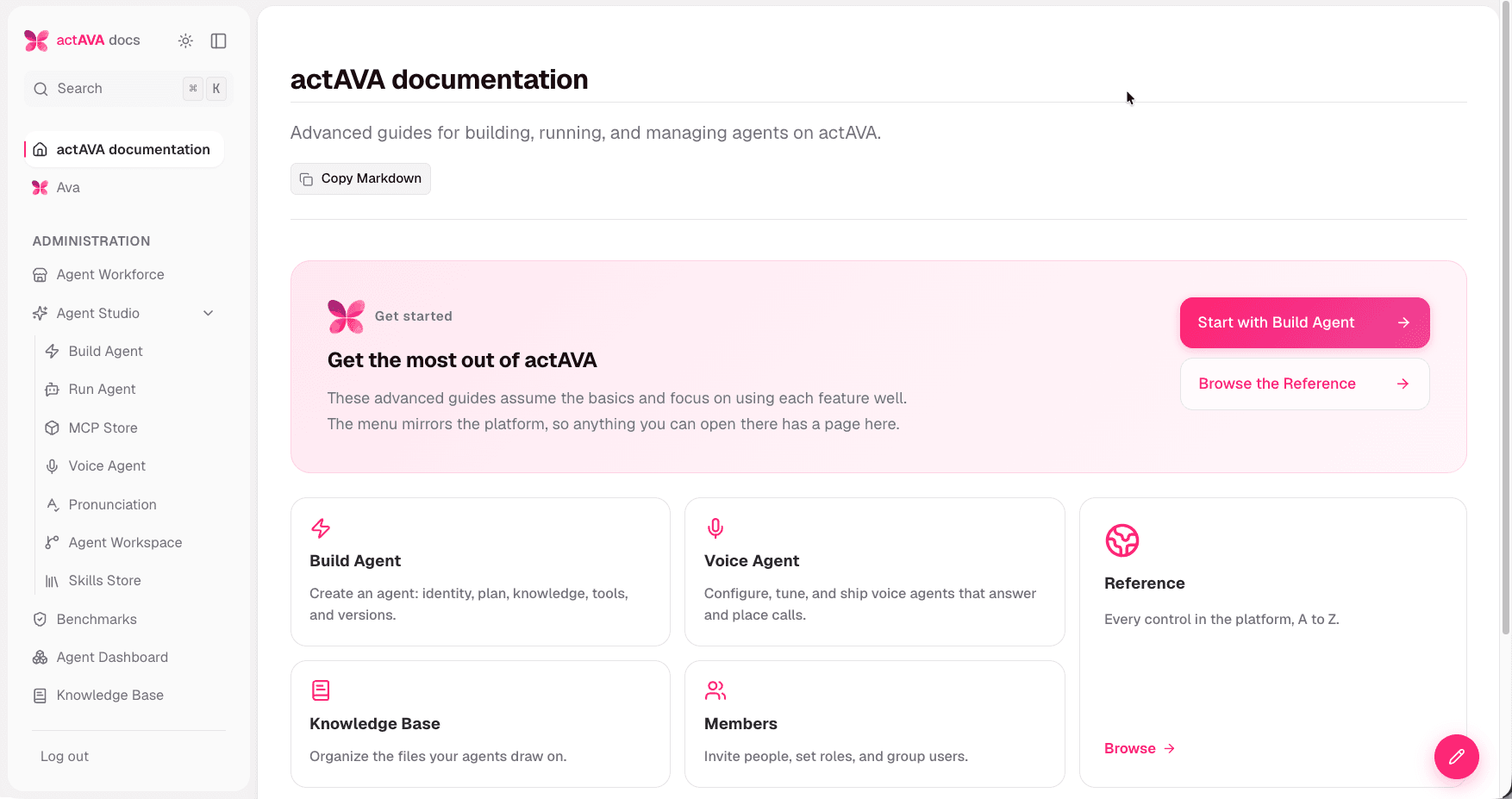
ACTAVA is an enterprise agentic platform built for the long tail of admin work, the workflows everyone else skips. That already maps to the 90% I keep coming back to.
The part that excites me is ownership. You come out of it owning a post-trained model. It costs 20 to 100 times less to run, it's your IP, and it's trained on your data. You co-develop it inside the platform with their engineers. If you don't know where to start, you pull from the agent library. Then you benchmark your own workflows and use that to fine-tune a model that fits how you work, starting from an open-source model of your choice.
A post-trained model that's yours to keep runs 20 to 100 times cheaper per token than renting a frontier model for the same work. That matters when a single agentic task can burn millions of tokens re-reading records. Cheaper to run, and it's IP you own instead of a bill you keep paying.
Owning your workflows matters. Owning the model that runs them is what makes you AI-native and keeps you ahead.
Why does this matter beyond your center?
Because tackling the other 90% changes the math. One plus one becomes three. Run AI across 100% of your workflows instead of the top 10, and you transform the whole organization.
That advantage goes beyond quantity. It becomes qualitatively different. Five years out, the market splits into the haves and the have-nots, the organizations that got AI right and the ones that missed it.
Build the AI the market won't sell
Dr. Alvin Liu is building with ACTAVA at the Gills AI Innovation Center. See how ACTAVA helps healthcare teams own the model, not just rent the intelligence underneath it.
Explore ACTAVA KORA
Written by
Joey Kennedy
Chief Sales Officer