Measuring AI return is the next stage of the enterprise AI maturity curve. And right now, most of healthcare is stuck on the wrong rung. That's not a cynical take. It's what the data keeps surfacing. According to IBM's research, 76% of executives are developing or scaling proofs of concept for autonomous AI. 61% of CEOs say they're actively adopting agents across their organizations. The investment is real, the urgency is real, and the expectations are high.
And yet only 25% of AI initiatives have delivered the ROI those executives expected.
In healthcare, that gap doesn't just sting financially. It stalls trust. When a pilot is shelved due to unclear results, the clinical teams who were counting on it lose confidence, the IT teams who built it lose momentum, and leadership becomes cautious at exactly the wrong time. The next initiative starts from a deeper hole.
So the question worth asking isn't "should we deploy AI agents?" Most organizations have already answered that. The question is: why aren't the returns showing up, and what are the organizations seeing that are doing differently?
The three places healthcare AI gets stuck
IBM's research identifies three barriers that consistently block ROI from agentic AI. All three hit healthcare harder than almost any other sector.
Unstructured data. AI agents are only as good as the context they work with. In healthcare, that means EHR data scattered across systems, clinical notes that live in free text fields, referral paperwork that arrives by fax, and lab results that don't always route cleanly. Agents built on top of fragmented data don't make good decisions. They make confident-sounding bad ones, which is worse.
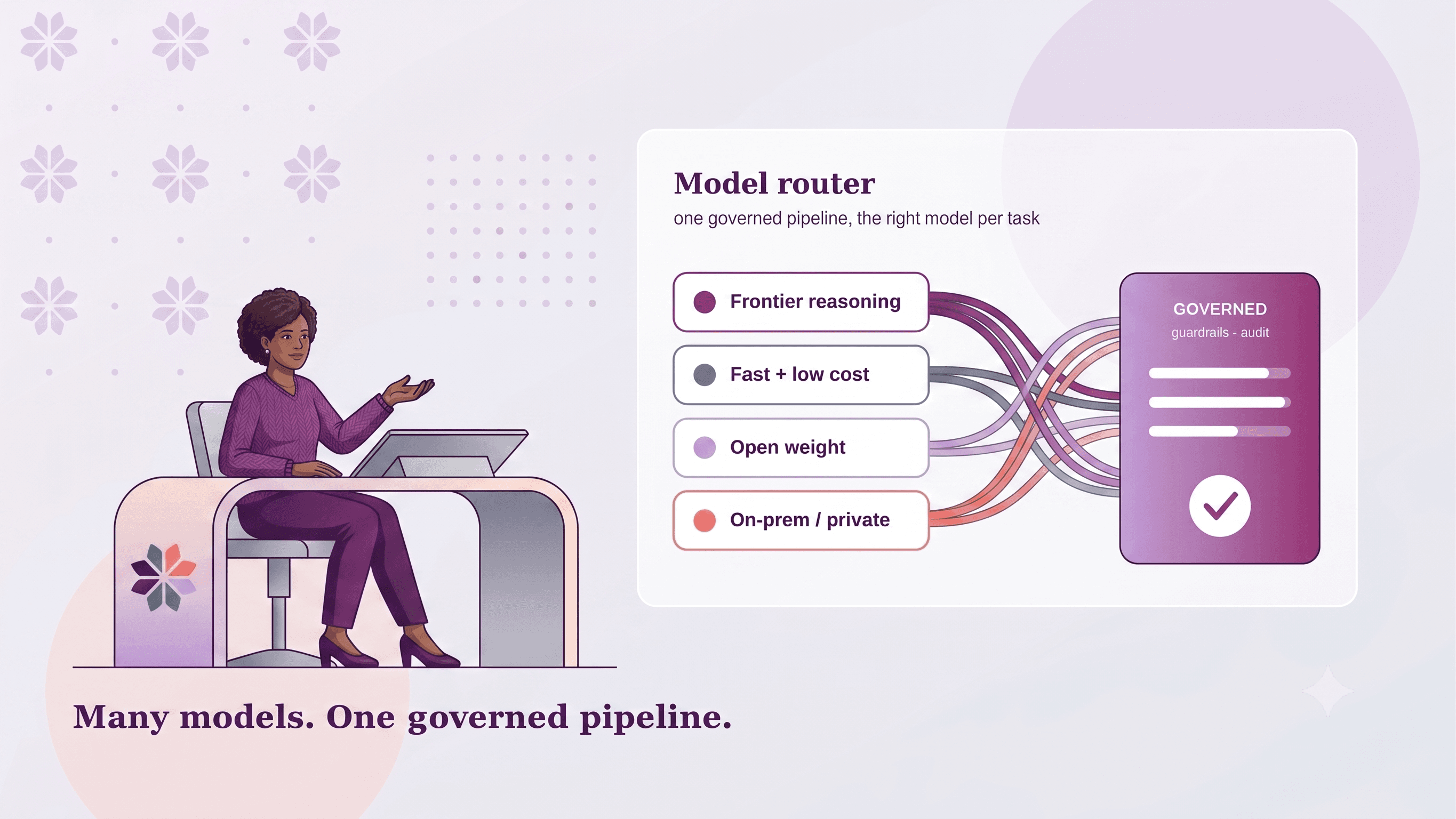
Poor governance. There's pressure in every organization to deploy fast. Healthcare feels it differently because the stakes are higher. An agent who makes an insurance recommendation or flags a care gap based on bad data isn't just an operational problem; it's a liability. IBM's research found that 56% of CEOs are delaying major AI investments specifically because they lack clarity on governance. That hesitation is rational. Governance isn't overhead. It's what makes scale possible.
Automating tasks instead of transforming workflows. This one is the most common, and probably the most damaging. It's easy to build an agent that handles a single step in a process. It's harder and far more valuable to rethink the whole process end to end. Organizations that focused on point automation ended up with a fragmented collection of agents that don't talk to each other, don't share context, and don't compound value. PwC describes this as "agent sprawl," and it's a real problem. You get marginal efficiency gains when you need transformational ones.
What the winners are actually doing
The organizations seeing real ROI aren't smarter. They're more deliberate. A few patterns show up consistently.
They define what ROI means before they build anything. That sounds obvious. It isn't.
The KPI and the goals you define are really about the business outcome you want to drive: process efficiency, cost saving, revenue impact. IBM, on getting agentic AI ROI right
Not "the AI is doing things." Not "users seem to like it." Specific, defensible numbers tied to outcomes that matter.
The results, when organizations get this right, are hard to argue with. These aren't experimental results. They're production numbers from organizations that started with a clear target and built toward it.
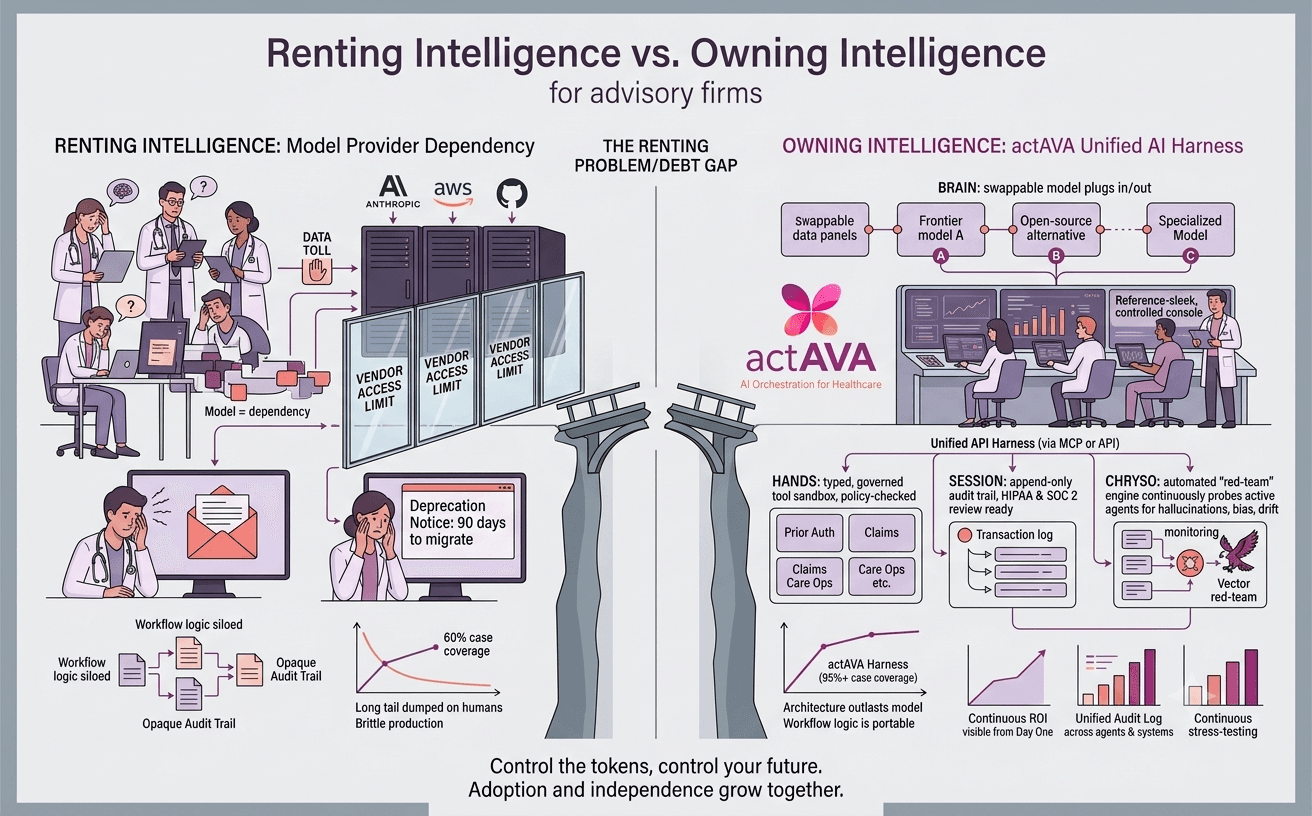
They also invest in governance before they scale, not after. IBM's data shows that 68% of AI-first organizations achieving the highest ROI have mature governance frameworks, compared to just 32% of others. That's not a coincidence. The organizations that built oversight, compliance tracking, and agent behavior monitoring into their foundations scaled faster and incurred fewer costly corrections.
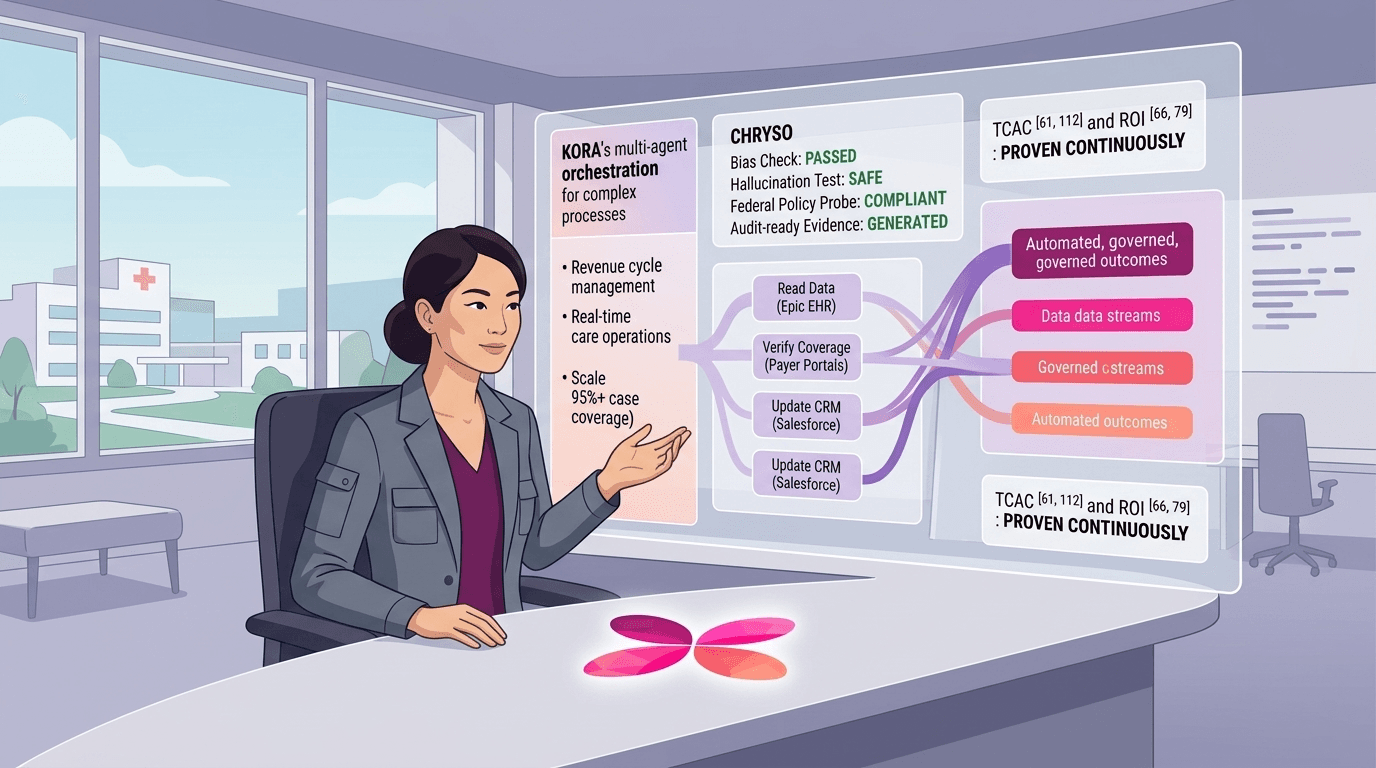
And they build orchestration layers that let agents work together. The real productivity gains from agentic AI come from connected systems, not isolated automations. When agents share context, hand off tasks cleanly, and operate against shared business objectives, the ROI compounds. When they don't, you get expensive silos that happen to have AI in them.
What this looks like in healthcare
Healthcare workflows are unusually well-suited for end-to-end agentic transformation. The processes are long, multi-step, and involve handoffs across teams, systems, and sometimes facilities. That's exactly the environment where isolated task automation underperforms and orchestrated workflows outperform.
Take prior authorization. A single PA request can touch a clinician, a coder, a billing specialist, a payer portal, and a patient communication system, sometimes over the course of days. An agent that automates one of those steps saves a few minutes. An agentic workflow that moves the whole process, surfaces the right clinical evidence, routes to the right reviewer, and tracks status across systems changes the department's economics.
Same logic applies to care gap identification, discharge coordination, referral management, and coding accuracy. Each of these is a multi-step, data-intensive, handoff-heavy process. Each one is a better target for workflow transformation than for task automation.
The 83% of executives who say they expect process efficiency to improve with AI agents aren't wrong to be optimistic. And 90% believe agents will empower their teams to go beyond reporting and deliver real-time, actionable insights by 2027. That only happens if the underlying workflows are designed for it.
A framework that actually holds up
Before any build, three questions are worth getting sharp answers to.
1. What's the specific business outcome, and how will you measure it?
Not "improve efficiency." Something measurable: reduce prior auth turnaround from 4 days to 1 day, cut coding error rate from 12% to 4%, and reduce time-to-discharge documentation by 30%. The specificity forces you to be honest about what you're actually building.
2. Is the data clean enough to support autonomous decision-making?
If the answer is "mostly," that's worth slowing down for. Agents built on incomplete or inconsistently structured data will hallucinate at scale. The time spent cleaning and structuring source data before deployment isn't a delay. It's the work.
3. What does governance look like after go-live?
Who monitors agent behavior? What triggers a human review? How do you catch drift before it becomes a liability? The organizations seeing sustained ROI treat their agents like any other critical system: monitored, audited, and tuned on a regular cadence.
The honest assessment
Agentic AI works. The numbers are real, and they're going to keep improving as the tooling matures. But the organizations that will actually realize those numbers in healthcare are the ones willing to do the less exciting work first: aligning on outcomes, cleaning the data, building governance into the foundation, and designing workflows end-to-end rather than automating pieces.
Forrester projects that 25% of planned AI spend will be deferred by 2027 due to ROI concerns. Some of that deferral will be warranted. Pilots that can't show measurable impact probably shouldn't scale. But the organizations that do the foundational work now won't be among them.
The gap between 25% ROI realization and 75% isn't a technology gap. It's a strategy gap. And in healthcare, closing it matters more than in most places.
Build for orchestration, not sprawl
ACTAVA's KORA platform turns fragmented healthcare AI into governed, deployable multi-agent systems. Outcomes first, governance built in.
See how KORA worksData points referenced from IBM research on enterprise agentic AI adoption and ROI, PwC commentary on "agent sprawl," and Forrester projections on deferred AI spend. Production results (AskHR, D&B, UFC) are drawn from IBM's published figures.