Blog
The State of AI Pilots in Healthcare & The 7 Ways Healthcare Agents Fail Before You Deploy Them
Three-quarters of enterprise leaders say they're adopting agentic AI. Only a small minority have it running in real production beyond chatbots, and Gartner expects over 40% of agentic projects to be canceled by 2027. Forrester calls it the chase-catch gap. The companies catching up aren't the ones with the most agents; they're the ones who understand that the infrastructure layer (MCP, A2A, frontier models) has already been commoditized, and the real value lies above it: in workflow design, domain logic, deployment speed, and measurable outcomes. Nowhere is that clearer than in healthcare, where governance isn't best practice but a HIPAA and liability requirement. Here's why the gap exists, why it's closing, and what it takes to be on the right side of it.
By Steve Brown
ACTAVA · AI in Healthcare
Forrester's June 2026 state-of-the-market report on agentic AI opens with a line worth sitting with: "The technology is a runaway train. The enterprise is the heavy load it has to pull."
Three-quarters of enterprise leaders tell Forrester they're adopting agentic AI. Only a small minority have it running in meaningful production, beyond what the report dryly labels "agentish chatbots." True scaled multi-agent systems are rarer still.
That gap between chasing and catching is the defining story of enterprise AI in 2026. It has a precise shape, specific causes, and (from where we sit) a clear resolution that has nothing to do with which frontier model you choose.
These four numbers describe the same market. Enormous interest. Real capability. A production gap that's wide, stubborn, and getting more expensive to ignore.
The companies on the right side of that gap aren't the ones with the most agents. They're the ones who figured out something the rest of the market is still learning: the value was never in the agent infrastructure. It's in what the agent infrastructure runs.
Why the gap exists
Three reasons enterprises are stuck in pilot mode
Forrester identifies three causes of the chase-catch gap, and they're worth restating precisely because they're consistently misdiagnosed. The gap isn't a model quality problem. The models are capable. The gap is organizational, architectural, and economic.
1. ROI uncertainty traps budgets in pilot mode
Most enterprises can't justify moving to production when the return on agentic AI is measured in narrow efficiency gains rather than workflow transformation. When the metric is "cost per task saved," the bar for production is arbitrary, and the comparisons are weak. When the metric is what a transformed workflow produces (resolution rates, cycle times, error rates, claim throughput), the ROI is defensible. Most enterprises haven't made the shift in measurement yet.
2. Governance gaps drive agentic sprawl
More than half of enterprises report agentic sprawl even after adopting the NIST AI RMF. A policy document can't control an autonomous, tool-invoking system running at midnight against production data. Governance only works when it's enforced as code at runtime, before execution, not logged after the fact. The "trust tax" Forrester describes, where every autonomous action must be logged and defensible to an auditor, is real. Most current deployments are accruing it without paying it.
3. Scaling fails on task complexity, not agent count
The report notes something important and underappreciated: long-running agents behave like distributed systems, not like chatbots. They demand orchestration, identity discipline, shared context management, and hand-off patterns that most teams have never built. Stitch a dozen isolated agents together without shared registries and routing, and coordination collapses into duplication and drift. Most enterprise architectures aren't designed for this, yet most agent deployments assume they are.
Forrester's BNY example makes the point. Bank of New York is about as far ahead as any regulated enterprise in deploying agentic AI. It still hasn't captured the full value the technology promises. But BNY has something most enterprises don't: a workforce ready to manage highly autonomous agents inside a tightly regulated business. That readiness is organizational, not technical, and it's the differentiating asset. The infrastructure is table stakes. The operational model around the infrastructure is the moat.
The infrastructure layer is settled
OpenAI, Anthropic, Google, and Microsoft have decided the foundation
While enterprises have been debating which agent framework to build on, the major model providers and cloud platforms have been quietly making that debate less relevant. The agent infrastructure layer (the protocols, the identity standards, the tool invocation contracts) is consolidating at a pace that rarely happens this cleanly in enterprise software.
Anthropic's Model Context Protocol (MCP) has reached 97 million downloads and been adopted by OpenAI, Google, and Microsoft, the companies that were nominally competing with it. Google's Agent-to-Agent (A2A) protocol has 50+ launch partners including Salesforce, PayPal, and Atlassian. Both now sit under Linux Foundation oversight alongside ACP, signaling that the industry has agreed to treat the interoperability layer as shared infrastructure, like TCP/IP, not like a competitive moat.
| Standard / Platform | What it does | Who's adopted it |
|---|---|---|
| MCP (Anthropic) |
Agent-to-tool protocol. Authenticated, schema-based tool discovery and invocation | Anthropic, OpenAI, Google, Microsoft. 97M+ downloads |
| A2A (Google) |
Agent-to-agent protocol. Direct agent communication and capability delegation | 50+ launch partners incl. Salesforce, PayPal, Atlassian. Linux Foundation governance |
| Microsoft Agent Framework | GA on Azure. Identity (Entra Agent ID), governance (Purview), cost visibility | GA April 2026 for .NET and Azure |
The practical implication: the infrastructure layer race is effectively over. The wiring has been standardized. Any competent team can now assemble a working agent runtime from open protocols, cloud-managed tooling, and frontier model APIs in weeks, not months. That speed is real, and it means the infrastructure itself is no longer a source of competitive differentiation. What runs on the infrastructure is.
Where value lives now
The stack is commoditizing from the bottom up
This is the pattern that repeats every time infrastructure standardizes. The value doesn't disappear from the stack; it moves up. When TCP/IP became table stakes, the value moved to applications. When cloud compute became table stakes, the value moved to data and services. When SaaS became table stakes, the value moved to vertical depth and workflow integration. The agent infrastructure layer is undergoing the same shift, and it's doing so faster than most markets have historically moved.
Commoditizing fast
- The infrastructure race
- Which frontier model to use
- Agent-to-tool connectivity (MCP)
- Agent-to-agent communication (A2A)
- Cloud runtime and orchestration
- Basic identity and logging
Where differentiation lives
- Workflow design: rebuilding the work around autonomy, not bolting agents onto human-paced processes
- Domain logic: the policy knowledge, clinical rules, and regulatory interpretation baked into how agents behave
- Deployment speed: the organizational capability to move from defined workflow to governed production
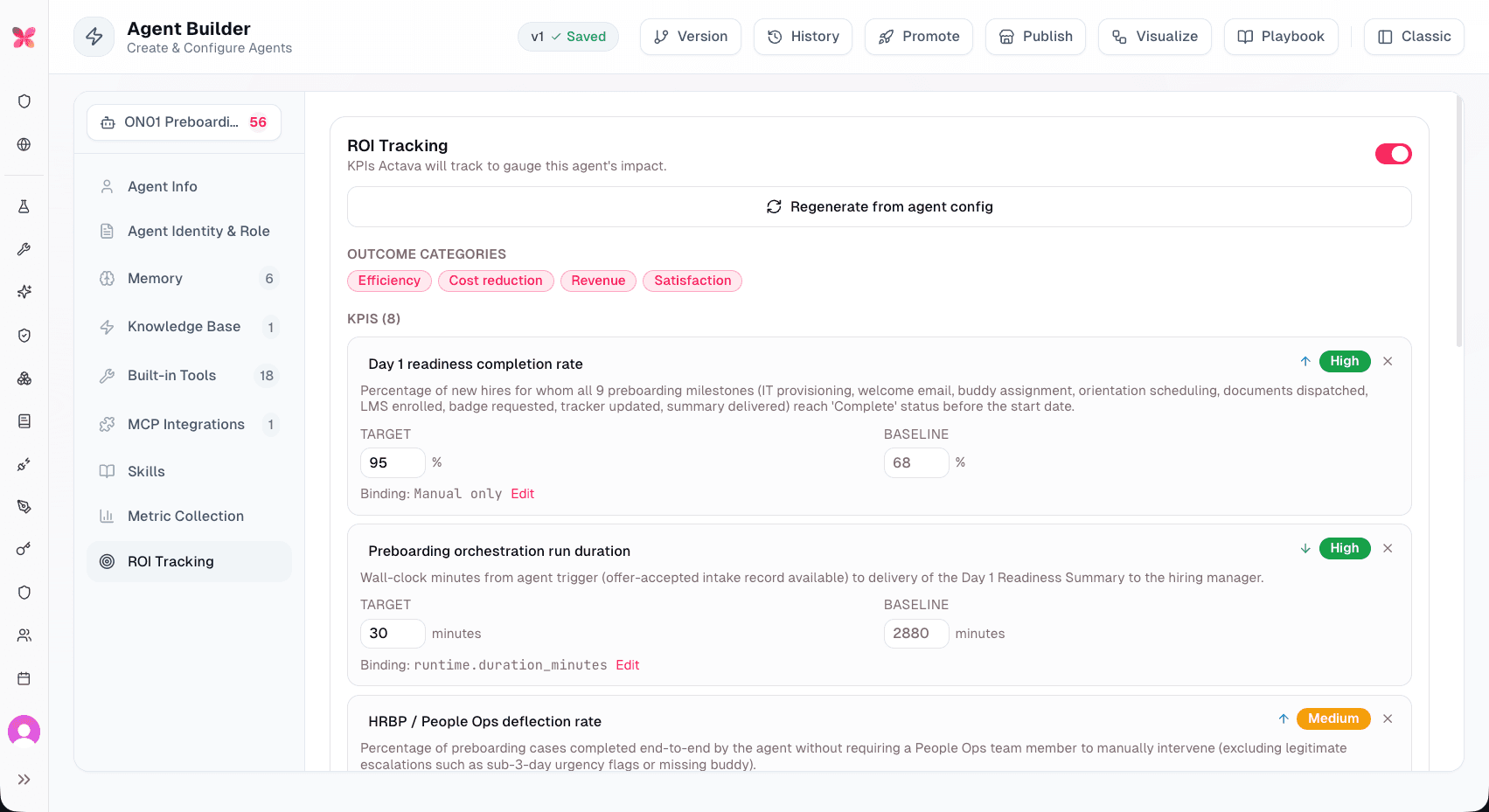
- Measurable outcomes: the ROI attribution that makes the next deployment easier to approve
Forrester's three recommendations for closing the chase-catch gap are all on the right side of that table: invest in orchestration before adding agents; redesign the work, not just the tooling; treat every agent as a governed identity with a named owner and a managed lifecycle. None of these are infrastructure questions. They're workflow, domain, and governance questions.
The enterprises that will capture the 10× ROI that Microsoft and PwC's research attributes to top-performing AI deployments aren't the ones who picked the best model in 2025. They're the ones who invested in the organizational capability to design governed, accountable, outcome-measured agent workflows, and who had an infrastructure beneath them that enforced those properties at runtime rather than relying on documentation and hope.
The healthcare argument
Why regulated industries make this concrete
Healthcare is the clearest case study for everything Forrester and Gartner have described. The "trust tax," where every autonomous action is logged and defensible to an auditor, isn't abstract in a clinical or payer environment. It's a HIPAA requirement, a state AI disclosure mandate, a malpractice exposure. The governance gaps that drive agentic sprawl in general enterprise are, in healthcare, clinical and regulatory liability.
The ROI uncertainty that traps pilots is real too. Prior authorization workflows carry a $12 to $40 manual transaction cost and a $3 to $4 electronic equivalent. That gap is arithmetically real, but only reachable through workflows that have been specifically designed, governed, and measured, not through deploying a general-purpose agent into a legacy process.
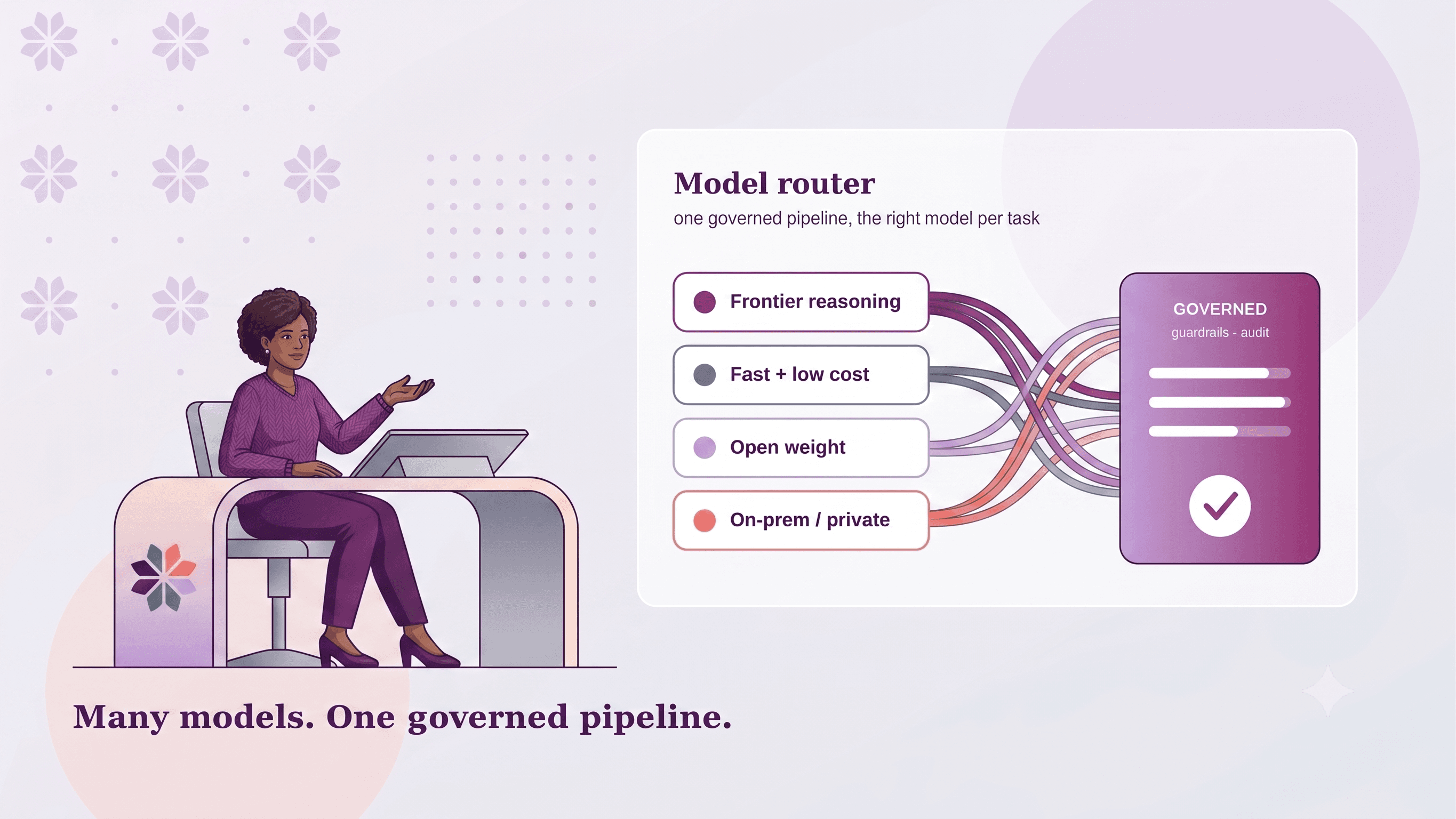
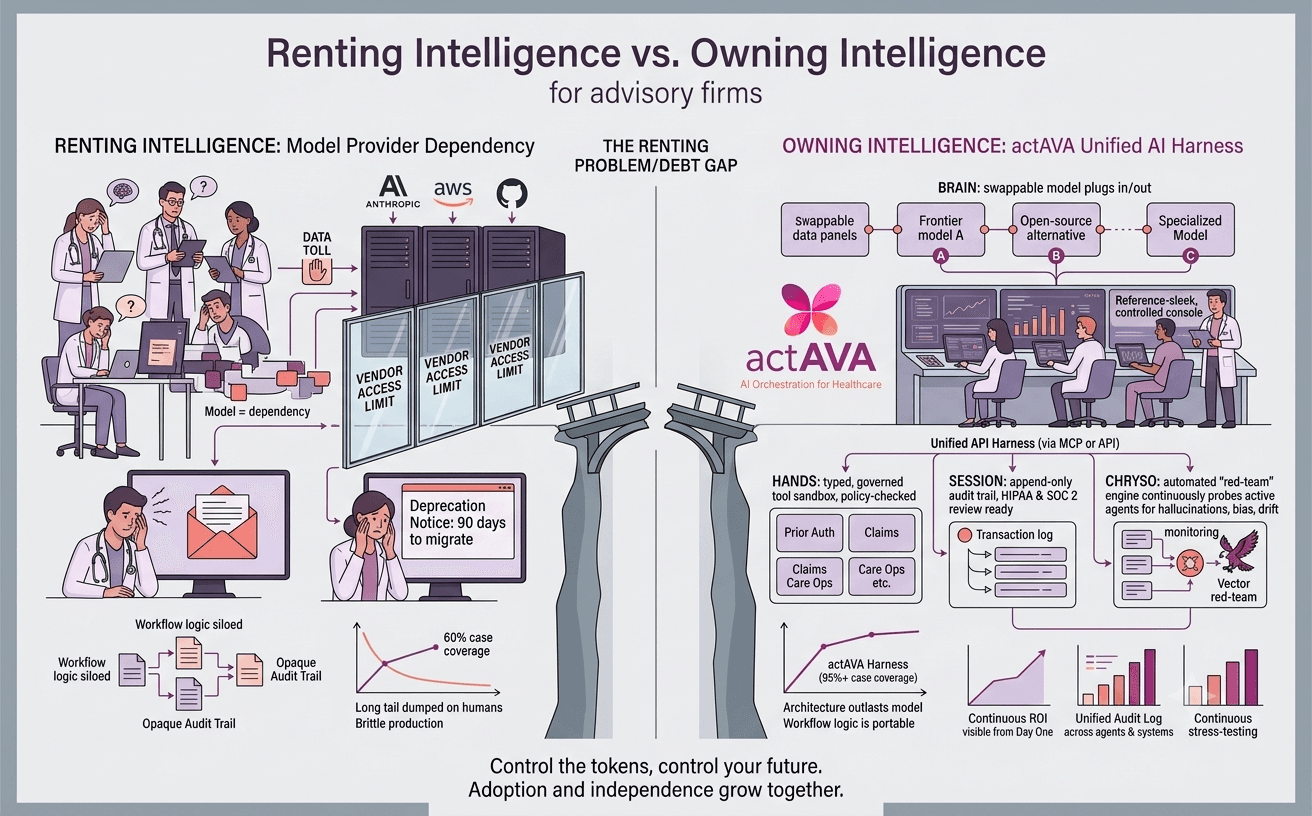
This is why KORA is built the way it is. The Brain / Hands / Session architecture (swappable frontier model, governed tool sandbox, append-only audit log) is a direct implementation of the principle that the infrastructure layer is commoditizing and the differentiation lives above it. We're not in the model race. We're not in the protocol race. MCP and A2A are already supported, and whatever replaces them in two years will be too. We're in the workflow design, domain logic, deployment speed, and measurable outcomes race, in the one domain where those things are hardest to get right and most consequential when you do.
Forrester's three moves for closing the gap, applied to healthcare:
Invest in orchestration before adding agents
In healthcare, this means the approval lifecycle, HITL gates, and versioned audit trail that make unattended agent execution defensible.
Redesign the work, not just the tooling
In healthcare, this means rebuilding prior auth, utilization management, and care coordination around what agents can do, not layering AI onto fax-era workflows.
Treat every agent as a governed identity
In healthcare, this isn't best practice. It's a legal and regulatory requirement.
The chase-catch gap Forrester describes isn't a permanent condition. It's an organizational maturity gap, and organizations are crossing it. The ones who cross it first in healthcare will set the cost-per-outcome benchmarks that every other health system and health plan will be measured against. The infrastructure to do it is standardized. The models are capable. The only remaining question is whether the organizational model around the infrastructure is built to make it work.
"The companies pulling ahead aren't the ones with the most agents. They're the ones laying the track the train will run on."
Brian Hopkins, VP Emerging Tech Portfolio, Forrester1In healthcare, the track is governance, domain logic, and outcome attribution. KORA is built to lay it.
See how KORA turns governed agent workflows into measurable clinical and payer outcomes.
Learn more at actava.ai/why-koraSources
1. Forrester, The State Of Agentic AI In 2026: Companies Are Chasing, Few Are Catching, Brian Hopkins et al., June 3, 2026.
2. Gartner, Gartner Predicts Over 40% of Agentic AI Projects Will Be Canceled by End of 2027, June 25, 2025.
MCP adoption data: Agent Interoperability Protocols 2026: MCP, A2A, ACP and the Path to Convergence, Zylos Research, March 2026.

Written by
Steve Brown
Chief Customer Officer
Technology executive who transforms horizontal platforms into vertical industry solutions across global enterprise markets. Over 25 years, Steve has built high-performing pre-sales, solution engineering, and enablement teams in enterprise software. At Salesforce, he served as SVP of Global Solution Engineering for Industries, growing the team past 200 and achieving 200% revenue growth in FY22. At ACTAVA, he leads forward-deployed engineering, delivering agentic AI infrastructure that bridges business needs and technology. He scaled Vlocity's global solution engineering team from 10 to 120, helping drive Salesforce's $1.33B acquisition; he holds a B.Sc. in Computer Science from Western Ontario.