Blog
Meet Yudi Sutanto
Yudi Sutanto joins ACTAVA as Head of Quality Engineering, bringing distributed-systems testing discipline from Salesforce and Google to healthcare AI agents. He talks about why some prior authorizations still travel by physical mail, how he builds quality gates into agent development, and why 2026 belongs to AI that executes. Yudi brings deep expertise in building resilient, enterprise-grade automation frameworks and mission-critical verification platforms from the ground up. His experience includes validating complex distributed systems at Salesforce and scaling high-throughput delivery pipelines for enterprise platforms at Google. Across these roles, he has applied rigorous engineering discipline to CI/CD, quality automation, and distributed-systems reliability. He specializes in designing scalable, end-to-end quality strategies that accelerate release cycles while reducing regression risk across large, complex environments. By treating verification as a core software engineering function—not an afterthought—he connects distributed backend architecture with automated quality gates and practical release confidence.
Meet Yudi Sutanto, Head of Quality Engineering at ACTAVA.ai
We are thrilled to welcome Yudi to the team as our newest Engineer!
Beyond technical execution, Yudi is a high-impact engineering leader and cross-functional partner. He aligns engineering velocity with business priorities, breaks down siloed workflows, and embeds testability into system design from the outset. Through mentorship, clear engineering standards, and autonomous, data-driven test automation, he helps teams move quickly without compromising software reliability.
We took this Friday to interview Yudi about his new role at ACTAVA and his vision for the future of agentic AI in healthcare.
Question 1: Why did you decide to join ACTAVA.AI now?
Healthcare is deeply personal because it reaches people at their most vulnerable. Unfortunately, the industry's technology gap is genuinely frustrating: we have AI that can diagnose patients more accurately than most human doctors, yet healthcare remains remarkably slow to adopt new tools. In my experience, even some authorizations still use physical mail—taking days for something an email would handle in seconds. That's not a technical limitation; it's a process failure, and it costs everyone their valuable time.
I joined ACTAVA because I wanted to do more than build smart models — I wanted to help fix these outdated processes so people get the care they need, faster. Combining advanced AI with high-stakes, real-world infrastructure is exactly the kind of work I was looking for.
Question 2: What do you do day-to-day at ACTAVA, walk me through your role.
My day-to-day focus at ACTAVA is making sure our AI agents are dependable, safe, and ready to perform in real-world healthcare environments. My role centers on two areas:
Quality infrastructure: I build testing systems embedded throughout the software development lifecycle—from unit and end-to-end tests to stress and performance testing—so we can catch issues early. As AI accelerates code generation, testing must evolve as well. A key part of my work is designing next-generation quality systems that can scale with faster development cycles and increasingly complex workloads.
System reliability: I build the infrastructure and operating practices that allow developers to move quickly while maintaining confidence in what they release. This includes developing agentic systems that generate and maintain comprehensive test coverage, establishing clear incident-response processes to reduce downtime and speed recovery, and continuously benchmarking our agents against key performance indicators to identify opportunities to improve reliability, quality, and performance.
Question 3: What are some of the challenges healthcare companies face in their AI transformation journey?
The biggest challenge is not the technology itself—it’s adoption and prioritization. Because AI can be applied in so many ways, healthcare organizations often struggle to separate high-impact use cases from experimental ones.
The key is to focus on the few applications that can deliver outsized value, rather than trying to deploy AI everywhere at once. In healthcare, where trust, accuracy, and accountability are essential, that means targeting real operational pain points—such as administrative bottlenecks and prior-authorization workflows—where AI can improve efficiency while supporting better experiences for patients and care teams.
Ultimately, a successful AI transformation is less about adopting AI for its own sake and more about making disciplined, strategic choices about where it can solve meaningful problems.
Bonus Round: What is your prediction for the biggest AI trend impacting your customers in 2026?
I see the biggest trend as the shift from AI that advises to AI that executes. In 2026, agentic AI will move beyond pilots and into production—especially in administrative workflows such as prior authorization.
For health plans, the opportunity is to use AI agents to reduce manual work, navigate growing regulatory complexity, and lower operational costs. The organizations that realize the most value will pair automation with strong safeguards, clear oversight, and well-defined accountability.
Thanks for your time today, Yudi.
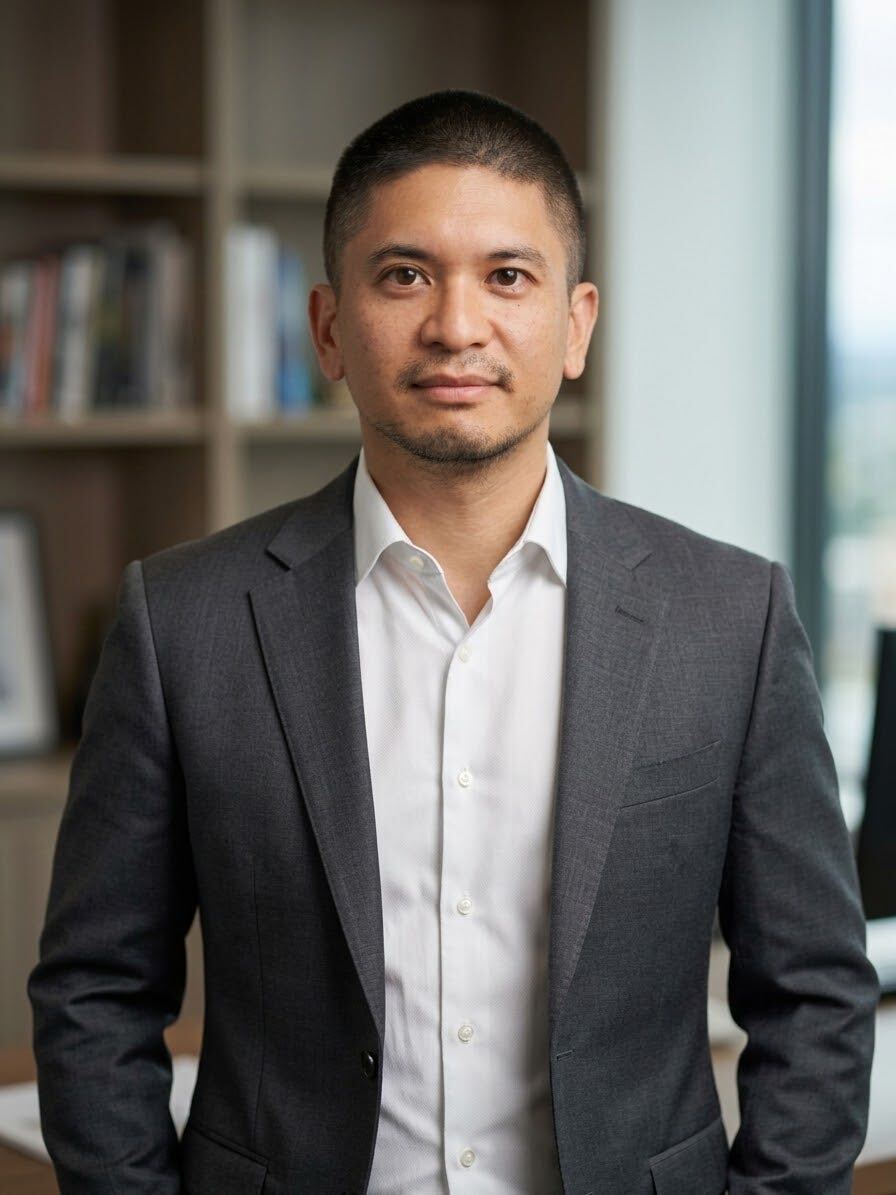
Yudi is deeply committed to improving his health and views functional fitness as a vital part of his daily regimen. When he is not engineering resilient systems, he applies that same disciplined focus to CrossFit training and outdoor hiking, prioritizing sustainable health and peak performance as a lifelong mission.
We are incredibly excited to have Yudi's expertise, analytical mindset, and collaborative spirit on board.
Welcome to the team, Yudi!